The impact of trauma on communities and societies ravaged by conflict and war – Part Three in a series on Trauma and Conflict

How trauma and reconciliation are linked needs to be examined from the perspective of an individual, a community, and a society. Reconciling⁠1 means to restore to friendship or harmony, or to settle or solve conflicts. Thus, an individual may heal from consequences of a traumatic event by restoring inner harmony, integrating memory and behavioral impact of trauma into a healthy form of living. In that sense an individual reconciles his/her memory as a condition for a path to learn healthier forms of behavior than those which he/she suffered from through trauma. Psychotherapy is based on that, and so are all, very successful, self-help groups following the 12-Step-principles⁠2.

But what happens if trauma, triggered by the same events, essentially affects all members of a community, or a majority? What happens if these events last for a long time, when those who suffer have no way to escape? Recent history is filled with so many examples, whether Syria, Yemen, or so many more. 

However, let me introduce a country in which I spent four years of my life: I lived in Sarajevo, the capital of Bosnia & Herzegovina, between 2008 and 2012, arriving twelve years after the end of an all-out war.

When Bosnia&Herzegovina declared it’s independence from Yugoslavia, the Yugoslav People’s Army laid siege to the town between April 1992 and February 1996. For 1425 days⁠3, Sarajevo’s citizens had to move under sniper fire and mortar shelling raining down on them from hilltops overlooking the city. They had to flee from violence along frontlines moving backward and forward multiple times. Frontlines where ground forces of the Yugoslav People’s Army and the Bosnian government defense forces clashed for years. Every surviving Sarajevan who came out of that with severe trauma. Bosniaks, Croats, and remaining Serbs.

Bosnia & Herzegovina is home to a multi-ethnic society in which individuals mainly identify themselves as members of either the Bosniak, the Croat, or the Serb nation. For centuries they had lived together in peace. Sarajevo was the glaring example for a multi-ethnic and multi-religious society, Muslims, Catholics, and Orthodox Christians lived together, the rate of inter-marriages was high. Sarajevo’s hospitality and friendliness during the Olympic Winter Games of 1984 are unforgotten. 

The brutal atrocities between 1992 and 1996, carried out under General Ratko Mladic and under political control of Radovan Karadzic and Slobodan Milosevic changed that, forever. Between 2008 and 2012 I was the Head of a European Union Mission assisting in restoring police and the rule of law. In this Mission hundreds of local Bosnian staff members served alongside their international colleagues. Thus, I had ample opportunity to listen to members from all walks of life of today’s Bosnian society. The memories of the war, the impact of traumatic memories, they run deep in every individual I met. Bosniaks, Serbs, Croats have slowly restored a way of living peacefully together. However, the fearful memories of the past impact on them in every aspect of today’s life.

What struck me most was the seeming inability of these three nations living in one State to move on into reconciling with the past. The historical narrative has become very different: Bosniaks in Bosnia will tell a different history opposed to, say the Bosnian Serbs. Nowhere is this more visible than in acknowledging the Srebrenica genocide. There is simply no joint narrative, and I have not seen successful efforts to find a path towards reconciliation. The efforts of all sides are frozen. Until today, the annual commemoration at the Potocari memorial and graveyard site happens without participation of political representatives of the Republica Srpska, the Serb part of the Federation of Bosnia & Herzegovina. As another example, Bosnia & Herzegovina knows the concept of “Two Schools Under One Roof⁠4”. An unknowing passer-by would see Bosniak and Croat school children use the same school. But in reality, they are enlisted into two distinctly different schools. Why else than for the purpose of establishing a different history, and maintaining a different identity?

Years earlier, between 2000 and 2004, I lived in Kosovo. The violent conflict between Milosevic’s Serbian Forces and the Kosovo-Albanian Kosovo Liberation Army had just ended less than a year earlier, through a military campaign carried out against Milosevic by NATO. Very early at the beginning of the post-conflict period in Kosovo, I saw the same like later in Bosnia: Ethnic Albanian and ethnic Serb children did not receive any joint education⁠5. The memory of communities in Kosovo is altered forever. I lived both in Albanian neighborhoods and Serb enclaves. Especially in Serb enclaves, depression and fear ran high. 

These are just two illuminating examples of a more comprehensive personal experience which I made in post-conflict societies all over the World. I share this experience with hundreds of thousands of people in the peace and humanitarian community. One has to get out of the “international bubble”, out of the walled compounds and protected hotels and out of heavily armored vehicles. By living with and within ravaged communities, the heuristic knowledge about the depth of impact of trauma is gained. But what is it that academic research tells us?

The PubMed Central (PMC)⁠6 is a free full-text archive of biomedical and life sciences journal literature at the U.S. National Institutes of Health’s National Library of Medicine (NIH/NLM). As of this writing, it offers access to 4.9 Million articles from 2138 journals that participate fully, 330 NIH portfolio journals, and 4692 selective deposit journals.

 A research of it’s database with the search term “PTSD” offers 33.829 articles. The search term “PTSD conflict war” leads to 3273 references. “PTSD reconciliation” leads to 362 offerings.  “PTSD reconciliation war” references 219 articles. Amongst these, I have undertaken an initial scoping which is not complete. I selected articles that could give some answers to the questions above. To document this, all examined literature can be found in the footnote section⁠7. 

I find the following statements being supported by the selection of scientific research that I have examined:

  • Communities and societies that have come out of conflict include an extraordinary high percentage of individuals with health conditions including PTSD, and other forms of trauma impact, including depression. The impact of war on the mental health of members of communities is most significant.
  • Women are more affected than men, other significant groups with high numbers of trauma survivors include children, elderly, and the disabled.
  • Some studies find very high percentages of trauma survivors in children in refugee camps and displaced populations, and almost as high amongst their caregivers.
  • Among war-affected youth, the association between war exposure and psychological distress is mediated by daily stressors. The breakdown of societal structures in conflict directly affects the impact of trauma on mental health. Within childhood, experiences of family violence and external violence were significantly related to increased mental health symptoms.
  • The availability (or not) of physical and emotional support affects the consequences of traumatization. The use of cultural and religious coping strategies is frequent in developing countries. Where such traditional spiritual and religious support structure break down, coping strategies are severely hampered.
  • Physical disability and depression and PTSD correlate. 
  • Mental disturbances and feeling upset correlate.
  • Trauma effects from conflict, such as somatization, PTSD, anxiety disorder, major depression, alcohol and drug misuse, and functional disability are trans-cultural.
  • Studies support that the above symptoms are the same for victims of rape and forms of conflict-related sexual exploitation and abuse. 
  • Effective public mental health services are needed to address large scale effects of traumatization.
  • The impact of trauma in such societies can be traced for decades, there is also supporting evidence for intergenerational consequences.
  • The trauma impacting on victims and perpetrators of violence leads to different coping strategies. Perpetrators of violence against civilian populations might display less symptoms. The impact of trauma on former child-soldiers can be mediated through family- and community-based care. Conversely, where this is not the case, severe traumatization persists.
  • Some studies mention that there is no established consensus on how war- and conflict-related traumatization should be addressed from a public health perspective.
  • One study (South Sudan) finds that most participants thought reconciliation was not possible without prosecuting perpetrators or compensating victims and did not support amnesty. Participants with probable PTSD were more likely to endorse confessions, apologies, and amnesty, and to report that compensation and prosecution were not necessary for reconciliation. The more traumatic events people experienced, the more they endorsed criminal punishment for perpetrators and the less they endorsed confessions.
  • One study, based on 160 reports, finds that the five most commonly reported activities were basic counseling for individuals; facilitation of community support of vulnerable individuals; provision of child-friendly spaces; support of community-initiated social support; and basic counseling for groups and families. Most interventions took place and were funded outside national mental health and protection systems.

To reduce the findings and my own conclusions even more: 

(1) Conflict- and war-related trauma affects communities and societies significantly and this impact spans over generations.

(2) The most vulnerable suffer most.

(3) Large scale coping strategies depend on the availability of culture-specific services and functions that often have broken down in conflict.

(4) There is little analysis of the effects of traumatization on post-conflict reconciliation.

(5) There is, however, a dire need to look into how the international community factors this context into work assisting in peacekeeping, peacebuilding, and conflict prevention processes.

August 26, 2002, the General Assembly of the World Psychiatric Organization approved a statement on mental health implications of disasters. It begins as follows⁠8: 


“The World Psychiatric Association would like to draw the attention of psychiatrists and other mental health professionals, health authorities, decision-makers and the general public to the serious and potentially catastrophic psychological and psychopathological effects of disasters. These effects can be diverse in character, intensity and potential for chronicity, but acute stress reactions, post-traumatic stress disorder (PTSD), mood, anxiety and psychotic disorders, and permanent changes in the personality are the ones that, if left untreated, may have the most serious consequences. Disasters can result from a variety of causes such as earthquakes, floods, hurricanes, fires, naval and plane accidents and terrorist attacks, but also from acts and consequences of war and negative conditions affecting important groups of population like famine, sanctions, forced migrations and similar deprivations. All of them produce very serious effects on the population and particularly on children, having a negative impact on the social structure and systems, which increases the effect of the disaster on individuals and population.”


So, whilst it appears that a context between trauma and reconciliation can be established, these findings are a first indicator for that the context with reconciliation, and thus the context with efforts to sustain peace, requires more attention.

Do policy of the United Nations and political decision-making processes such as by the Security Council take the above impact into account? What do we know about systematic or non-systematic efforts of peace operations to factor this into their mandated work. What do we know to which extent peace building efforts take this into account? Are there practices and best-practices?

1 https://www.merriam-webster.com/dictionary/reconciled

2 A twelve-step program is a set of guiding principles outlining a course of action for recovery from addiction, compulsion, or other behavioral problems.

https://en.wikipedia.org/wiki/Twelve-step_program; retrieved June 19, 2018

3 For many more comprehensive documentaries, here a brief video:

4 https://en.wikipedia.org/wiki/Two_schools_under_one_roof

5 At least for ten years preceding the Kosovo-Albanian insurgency, Milosevic maintained rigid control over the previous largely autonomous province of the former Yugoslavia, surely leading to the same effect, but with the curricular written under Belgrade’s control. After the war, the Kosovo-Albanian leadership in Pristina wrote the curriculae for the Albanian schools, and Belgrade maintained as much control as possible over the northern parts of Kosovo and Kosovo-Serb enclaves south of the river Ibar.

6 https://www.ncbi.nlm.nih.gov/pmc/

7 (1) Mental health consequences of war: a brief review of research findings; R. SRINIVASA MURTHY, RASHMI LAKSHMINARAYANA; in World Psychiatry 5:1, February 2006; 

retrieved from https://www.ncbi.nlm.nih.gov/pmc/articles/PMC1472271/pdf/wpa050025.pdf, June 20, 2018

(2) Post-traumatic stress symptoms among former child soldiers in Sierra Leone: follow-up study, Theresa S. Betancourt, Elizabeth A. Newnham, Ryan McBain, and Robert T. Brennan;  THE BRITISH JOURNAL OF PSYCHIATRY, 2013 Sep; 203(3): 196–202; 

Retrieved from https://www.ncbi.nlm.nih.gov/pmc/articles/PMC3759030/, June 20, 2018

(3) Psychological Consequences of Rape on Women in 1991-1995 War in Croatia and Bosnia and Herzegovina; Mladen Lončar, Vesna Medved, Nikolina Jovanović, and Ljubomir Hotujac; in Croat Med J. 2006 Feb; 47(1): 67–75.

https://www.ncbi.nlm.nih.gov/pmc/articles/PMC2080379/, retrieved June 20, 2018

(4) Mental health of victims of sexual violence in eastern Congo: associations with daily stressors, stigma, and labeling; An Verelst, 1 Maarten De Schryver,2 Eric Broekaert,3 and Ilse Derluyn; BMC Womens Health. 2014; 14: 106; Published online 2014 Sep 6. doi: 10.1186/1472-6874-14-106

Retrieved from https://www.ncbi.nlm.nih.gov/pmc/articles/PMC4237834/, June 20, 2018

(5) The structure of post-traumatic stress disorder and complex post-traumatic stress disorder amongst West Papuan refugees; Alvin Kuowei Tay, Susan Rees, Jack Chen, Moses Kareth, and Derrick Silove; in: BMC Psychiatry. 2015; 15: 111; Published online 2015 May 7. doi: 10.1186/s12888-015-0480-3;

Retrieved from https://www.ncbi.nlm.nih.gov/pmc/articles/PMC4459680/, June 20, 2018

(6) Youth mental health after civil war: the importance of daily stressors; Elizabeth A. Newnham, Rebecca M. Pearson, Alan Stein, and Theresa S. Betancourt; in: Br J Psychiatry. 2015 Feb; 206(2): 116–121; doi: 10.1192/bjp.bp.114.146324

Retrieved from https://www.ncbi.nlm.nih.gov/pmc/articles/PMC4312966/, June 20, 2018

(7) Prevalence and factors associated with Posttraumatic Stress Disorder seven years after the conflict in three districts in northern Uganda (The Wayo-Nero Study); James Mugisha, Herbert Muyinda, Peter Wandiembe, and Eugene Kinyanda; in BMC Psychiatry. 2015; 15: 170. PMCID: PMC4513792; Published online 2015 Jul 24. doi: 10.1186/s12888-015-0551-5

Retrieved from https://www.ncbi.nlm.nih.gov/pmc/articles/PMC4513792/, June 20, 2018

(8) Relationships of Childhood Adverse Experiences With Mental Health and Quality of Life at Treatment Start for Adult Refugees Traumatized by Pre- Flight Experiences of War and Human Rights Violations; Marianne Opaas, and Sverre Varvin, Dr.Philos, MD; in J Nerv Ment Dis. 2015 Sep; 203(9): 684–695. PMCID: PMC4554230; Published online 2015 Aug 31. doi: 10.1097/NMD.0000000000000330

Retrieved from https://www.ncbi.nlm.nih.gov/pmc/articles/PMC4554230/, June 20, 2018

(9) Cognitive-Behavioral Therapy versus Other PTSD Psychotherapies as Treatment for Women Victims of War-Related Violence: A Systematic Review; N. Inès Dossa and Marie Hatem; in ScientificWorldJournal. 2012; 2012: 181847. PMCID: PMC3345529; Published online 2012 Apr 19. doi: 10.1100/2012/181847

Retrieved from https://www.ncbi.nlm.nih.gov/pmc/articles/PMC3345529/, June 20, 2018

(10) Trauma and posttraumatic stress disorder in South Africa: analysis from the South African Stress and Health Study; Lukoye Atwoli, Dan J Stein, David R Williams, Katie A Mclaughlin, Maria Petukhova, Ronald C Kessler, and Karestan C Koenen; in BMC Psychiatry. 2013; 13: 182; Published online 2013 Jul 3. doi: 10.1186/1471-244X-13-182 

Retrieved from https://www.ncbi.nlm.nih.gov/pmc/articles/PMC3716970/, June 20, 2018

(11) Pathways from Victimization to Substance Use: Post Traumatic Stress Disorder as a Mediator; Jung Yeon Lee, Judith S. Brook, Stephen J. Finch, and David W. Brook; in Psychiatry Res. 2016 Mar 30; 237: 153–158; Published online 2016 Jan 22. doi: 10.1016/j.psychres.2016.01.049

Retrieved from https://www.ncbi.nlm.nih.gov/pmc/articles/PMC4769948/, June 20, 2018

(12) Posttraumatic stress disorder, trauma, and reconciliation in South Sudan; Lauren C. Ng, Belkys López, Matthew Pritchard, and David Deng; in Soc Psychiatry Psychiatr Epidemiol. 2017 Jun; 52(6): 705–714; Published online 2017 Apr 11. doi: 10.1007/s00127-017-1376-y;

Retrieved from https://www.ncbi.nlm.nih.gov/pmc/articles/PMC5510537/, June 20, 2018

(13) From War to Classroom: PTSD and Depression in Formerly Abducted Youth in Uganda; Nina Winkler, Martina Ruf-Leuschner, Verena Ertl, Anett Pfeiffer, Inga Schalinski, Emilio Ovuga, Frank Neuner and Thomas Elbert; in Front Psychiatry. 2015; 6: 2. PMCID: PMC4348469;  Published online 2015 Mar 3. doi: 10.3389/fpsyt.2015.00002

Retrieved from https://www.ncbi.nlm.nih.gov/pmc/articles/PMC4348469/, June 20, 2018

(14) Mental health and psychosocial support in humanitarian settings: linking practice and research; Wietse A Tol, Corrado Barbui, Ananda Galappatti, Derrick Silove, Theresa S Betancourt, Renato Souza, Anne Golaz, and Mark van Ommeren; in Lancet. 2011 Oct 29; 378(9802): 1581–1591; Published online 2011 Oct 16. doi: 10.1016/S0140-6736(11)61094-5

Retrieved from https://www.ncbi.nlm.nih.gov/pmc/articles/PMC3985411/, June 20, 2018

(15) The enduring mental health impact of mass violence: A community comparison study of Cambodian civilians living in Cambodia and Thailand; Richard F Mollica, Robert Brooks, Svang Tor, Barbara Lopes-Cardozo, and Derrick Silove; in Int J Soc Psychiatry. 2014 Feb; 60(1): 6–20; Published online 2013 Feb 7. doi: 10.1177/0020764012471597

PMCID: PMC4737641 NIHMSID: NIHMS753770 PMID: 23396287

Retrieved from https://www.ncbi.nlm.nih.gov/pmc/articles/PMC4737641/, June 20, 2018

(16) Transgenerational consequences of PTSD: risk factors for the mental health of children whose mothers have been exposed to the Rwandan genocide; Maria Roth, Frank Neuner, and Thomas Elbert; in Int J Ment Health Syst. 2014; 8: 12. PMCID: PMC3978019 Published online 2014 Apr 1. doi: 10.1186/1752-4458-8-12

Retrieved from https://www.ncbi.nlm.nih.gov/pmc/articles/PMC3978019/, June 20, 2018

(17) Traumatic episodes and mental health effects in young men and women in Rwanda, 17 years after the genocide; Lawrence Rugema, Ingrid Mogren, Joseph Ntaganira, and Gunilla Krantz; in BMJ Open. 2015; 5(6): e006778. PMCID: PMC4480039; Published online 2015 Jun 24. doi: 10.1136/bmjopen-2014-006778

Retrieved from https://www.ncbi.nlm.nih.gov/pmc/articles/PMC4480039/ Jun 20, 2018

(18) Aggression inoculates against PTSD symptom severity—insights from armed groups in the eastern DR Congo; Tobias Hecker, Katharin Hermenau, Anna Maedl, Maggie Schauer, and Thomas Elbert; in Eur J Psychotraumatol. 2013; 4: 10.3402/ejpt.v4i0.20070. PMCID: PMC3651955; Published online 2013 May 13. doi: 10.3402/ejpt.v4i0.20070

Retrieved from https://www.ncbi.nlm.nih.gov/pmc/articles/PMC3651955/ June 20, 2018

8 Disasters and Mental Health (World Psychiatric Association) (Kindle Locations 3385-3390). Kindle Edition.  Emphasis (bold text) added by me.
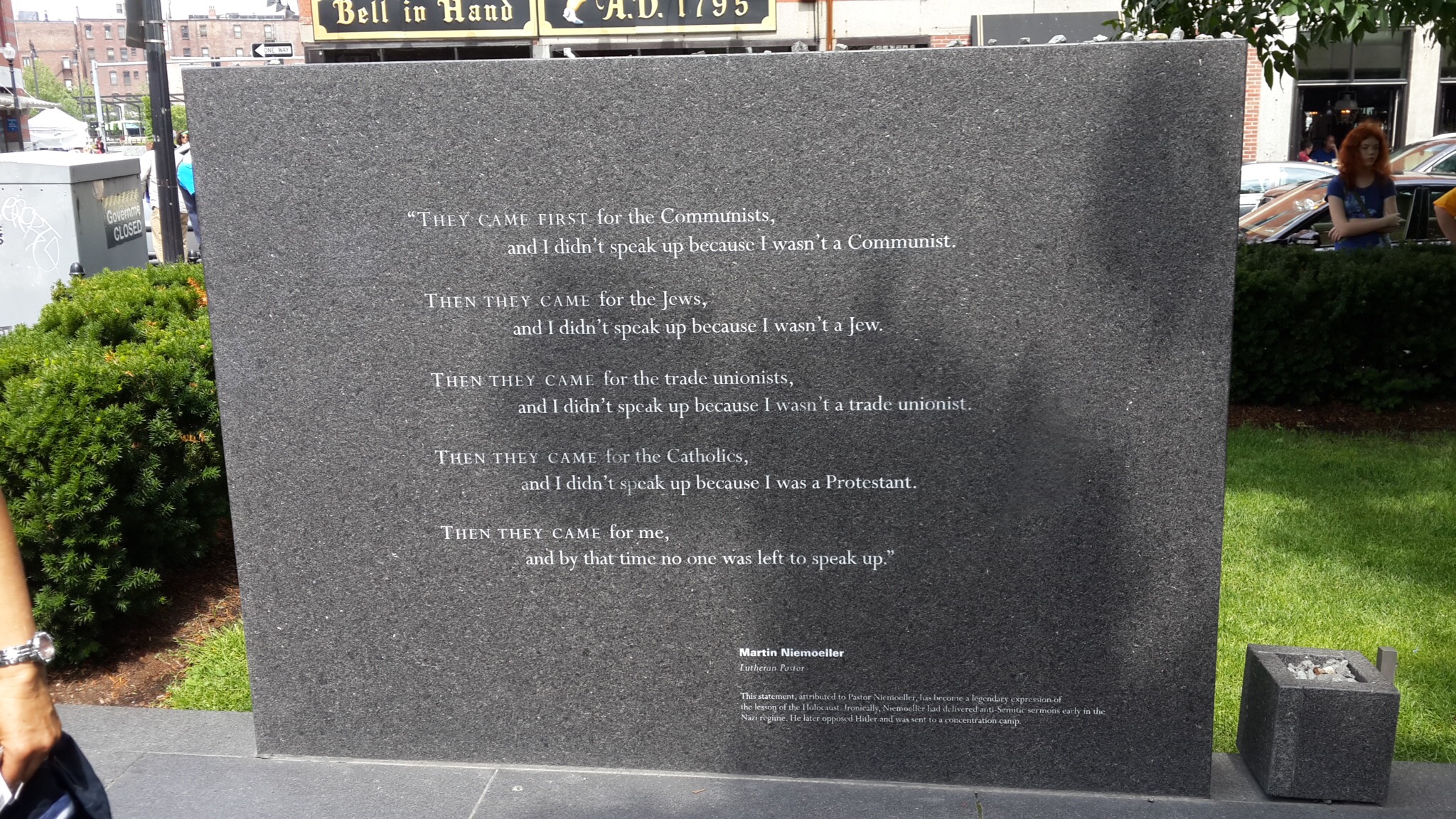
The Trauma of Children in Conflict and War – Part Two in a series on Trauma and Conflict

The stories about pillaging and raping soldiers and marauding militias are part of the entire history of mankind. There is no doubt that this shameful aspect of human cruelty haunts us since our earliest pre-historical times. In narratives it plays a side role at best. The heroism and the suffering of the soldier comes first. However, at all times children have witnessed their fathers being killed and their mothers being brutally raped, and they have suffered from the same cruelties themselves, committed by armies, militias, gangs, and mobs. Children have been separated from their parents, endured unspeakable atrocities, survived the murder of their peers under piles of dead bodies or hiding in the bush. This is the reality until today. And never before in human history the number of civilian casualties has outnumbered the military casualties as much as today.

Nowhere this is more devastating for communities and societies than when acts of genocide are being committed. Generations suffer. The Holocaust, the genocide of Srebrenica, or the genocide in Rwanda are only examples of these darkest chapters of mankind, which is still persisting against all vows to let it never happen again. Ethnic and political cleansing by brutal dictators adds, during World War II, and today: Even where genocide could be prevented by bold action, such as perhaps recently in Burundi, or the Central African Republic, the run-up violence exceeds all imagination, creating thousands or hundreds of thousands of victims surviving the worst atrocities of mankind.

Children grow up with the consequences of what has been done to them and their parents, others again grow up with the knowledge that they are born because their mothers were raped. Raped mothers struggle with acceptance in patriarchal societies. Raped men even more. Children of rape, raised by a traumatized raped mother already struggling to love her unwanted child unconditionally, they also experience being pariahs in their communities1. As has been said earlier, childhood trauma is different from the trauma of adult survivors of conflict in that trauma is perceived as an event or a series of events in life for adults. It is defining the life of children. It is their never ending reality, and the younger they are, the fewer, if any, cognitive tools they have to comprehend what happens to them and to put it into a context of accountability of others. For young children, often the only way to make sense to painful events is to believe that they themselves must be responsible for it.

If their mothers and fathers suffer from being unable to love them unconditionally, they inevitably believe they are responsible for what happens. If a mother is separated by militias from her infant, and if the mother or the infant, or both, are abused, the infant will conclude that it is punishment for something they are responsible for themselves. If children are abducted by Boko Haram, or recruited as child soldiers by the Lord’s Resistance Army, mere survival under conditions known as “Stockholm Syndrome” will add.

Trauma therapy is over-boarding with stories of adult survivors of childhood abuse who finally recognize that the inability, say for example, of their mother to prevent them from their father’s rage, also constitutes abuse: Their mothers could not save them. Understanding abuse requires to take the view of the victim, notwithstanding whether malicious intent, involuntary action, or omission constituted the trauma. Abuse profoundly impacts on the world of a toddler who has no concept of complex human relations. Subsequently, the adult abuse survivor will suffer from a deformed capacity to establish human relations, in countless variations.

That black sheep within their own peacekeeping forces and civilian parts of peace operations contribute to this trauma in conflict and post-conflict situations, is collectively shame-driving the International Community. This sits at the heart of current zero-tolerance efforts against sexual exploitation and abuse of local populations by soldiers, police, and civilians in national or multilateral engagement of United Nations2 and regional actors, such as NATO, EU, AU, and others. Being aware of the harm beyond imagination, the International Community at least has begun to “clean it’s own side of the street”, which is laudable.

But the International Community is also defined by the helplessness of many who care about humanity and decry the atrocities through soldiers, militia, gangs, mobs, violent extremists and international terrorists against civilian populations including children, whether in Syria, Yemen, Afghanistan, Iraq, Somalia, Sudan/Darfur, South Sudan, Central African Republic, Democratic of Congo, Burundi, Niger, Mali, Libya, recently Mozambique, Myanmar, and so many other places. Increasingly the divisions within the UN Security Council do not allow finding a common position that can be enforced. In cases of mandates being given to UN or partner organizations, we are confronted with an increasing inability to stop atrocities under our eyes, and to help countless trauma victims in the aftermath of conflict: Respect for ceasefires or commitment to peace agreements is as much waning as the acceptance of the UN itself, not least because of the disunity amongst those who constitute the UN: Member States, and especially the Security Council Members. Peace operations that can not sufficiently engage in deterring atrocities will lose political credibility, such as in South Sudan, peace operations that engage in order to protect civilian populations with robust means, such as in Mali or the Democratic Republic of Congo find themselves being accused of bias, increasingly getting under fire themselves. The plight of civilians, especially children, continues.

The situation is getting worse: The systematic use of violence against civilian populations, and especially of sexual violence as a weapon of war and conflict, spreads. Until recently the opinion that conflicts and victims of armed conflict constantly fell to a low after the end of the Cold War could be heard frequently3. Since a few years however, voices, including the Secretary General of the United Nations himself, express worry about the renewed increase of conflicts4 and the return of the Cold War5. These messages seem to indicate another, reverse, trend in terms of numbers of conflicts. Research is surfacing that demonstrates that 60 % of conflicts in the early 2000s relapsed within five years6. The trend towards an ever more increasing share of civilians in casualties from conflict and war is reaching horrible numbers: In contemporary conflicts, as much as 90 percent of casualties are among civilians, most of whom are women and children7. Women in war-torn societies can face specific and devastating forms of sexual violence, which are sometimes deployed systematically to achieve military or political objectives. It is in this context that entire traumatized generations emerge.

Global migration of surviving traumatized young people throws them into the merciless arms of organized criminals8 and spills them into societies which are overwhelmed and increasingly hostile. Families with cruel abuse stories at their place of origin, attempting to get into the United States, find themselves in another horror: The arrest of the adults and the forced and cruel separation of their infants, toddlers and children from them without any prospect to know how to maintain contact, or when they may be re-unified9. Across the globe, whether in the U.S., Europe, or in Bangladesh facing refugees from Myanmar10, traumatized children continue to experience severe traumatizing even in places they have been told might be their hope for a better future. Children who have been thrown on smuggler’s boats in Libya by their parents experience that a European country denies access to a port of entry11. Trauma becomes a constant fact of life. Alienation both on the side of victims and receiving host societies’ communities leads to “why bother”. Antagonization leads to mutual resentment and hate. The spiral of conflict continues.

Heartbreaking stories on display in memorial sites such as Potocari12 on the Srebrenica genocide, or the memorial site in Kigali on the Rwandese genocide exemplify the plight of children with examples. And every now and then, media is creating attention, such as on the children of rape in Rwanda. The world needs examples in order to generate understanding and compassion, but does this translate into action in light of the sheer size? What do we know about the impact of mass trauma on children and adults by conflict and war? How well do we understand the connection between healing of individuals and communities, and societies, on the one hand and reconciliation as a core pre-condition for lasting peace?

So, how well do we understand the threat, how well do we understand the vulnerability of peace processes by this threat, and how much do we know about mitigation of this threat? As a deeply involved practitioner since almost twenty years my answer is depressing: Those who know appear to be overwhelmed. Political operatives defining policy are aware but have to make priority decisions that have to exclude this problem, simply because of it’s magnitude and the limitations both on knowledge how to help, and how to generate willingness and resources to do so. Boots on the ground come first. But if the trauma of entire generations contributes to most crucial impediments to reconciliation processes, is it not that we should focus on, at least, to the same extent? Again, as a practitioner, my experience is that prevention will be acknowledged as being necessary by All, but it does not generate awareness and public willingness to act: The story of a dog biting a man does not carry news. The story of a man biting a dog will make the news. The story of preventing a man to bite a dog hasn’t been tested and may be similarly boring than the story of a dog biting a man, except from a bit of amusement in social media. In the same vein, robust military action may catch the public attention, but the more silent work of civilians, and international police under the UN umbrella, assisting in the recovery of communities and societies from conflict, does not.

If this already is true, how much more must be true in relation to a phenomenon of whole young generations being badly traumatized and how this may carry forward the potential for future conflicts? In his book “The Responsibility to Protect”13 Gareth Evans sums up a disappointing account of scientific methods to predict conflict, so that preventative action can focus on it. At the end we only know one thing, he says: The likelihood of conflict is twice as high in countries where there was a conflict earlier. For me, a link to entirely traumatized generations is obvious.

11A very insightful example is this documentation by France24:

Against the odds: The Rwandan women raising a family despite genocide and rape – France 24

http://www.france24.com/en/20180531-focus-rwanda-genocide-rape-children-born-women-discrimination-hutu-tutsi-families

22For the UN: https://peacekeeping.un.org/en/standards-of-conduct; retrieved June 18, 2018

Other organizatons have established similar policies

33http://www.fallen.io/ww2/ leads to an amazing data visualisation within an interactive documentary that examines the human cost of the second World War and the decline of battle deaths in the years since the war.

This is the crucial point: this extraordinary visualization puts battle field deaths and civilian deaths until WW2 into a proportion that demonstrates the ever higher number of civilian casualties. However, the project is not able to generate other figures than battle field deaths for the time post WW2 until 2015. Towards the end of the demonstration, the argument that we live within an extraordinary long period of peace is being upheld.

44Sebastian von Einsiedel, Louise Bosetti, James Cockayne, Cale Salih & Wilfred Wan – Civil War Trends and the Changing Nature of Armed Conflict;

United Nations University, Centre for Policy Research; April 25, 2017;

https://cpr.unu.edu/civil-war-trends-and-the-changing-nature-of-armed-conflict.html, retrieved June 17, 2018

66Ibid

88See my article “Why global cooperation on peace and security is needed – An argument against divisiveness from the perspective of fighting organized crime”, June 9, 2018

https://durabile.me/2018/06/09/why-global-cooperation-on-peace-and-security-is-needed-an-argument-against-divisiveness-from-the-perspective-of-fighting-organized-crime/

99For many:

I Can’t Go Without My Son,’ a Mother Pleaded as She Was Deported to Guatemala – The New York Times

https://www.nytimes.com/2018/06/17/us/immigration-deported-parents.html

Statement of APA President Regarding the Traumatic Effects of Separating Immigrant Families

http://www.apa.org/news/press/releases/2018/05/separating-immigrant-families.aspx

U.N. Rights Chief Tells U.S. to Stop Taking Migrant Children From Parents – The New York Times

https://www.nytimes.com/2018/06/18/world/europe/trump-migrant-children-un.html

1111Italy’s New Populist Government Turns Away Ship With 600 Migrants Aboard – The New York Times

https://www.nytimes.com/2018/06/11/world/europe/italy-migrant-boat-aquarius.html

1313Gareth Evans: The Responsibility to Protect: Ending Mass Atrocity Crimes Once and For All; Brookings Institution Press (September 4, 2009)

The Impact of Trauma on Individuals – Part One in a series on Trauma and Conflict

Trauma1

a : an injury (such as a wound) to living tissue caused by an extrinsic agent

b : a disordered psychic or behavioral state resulting from severe mental or emotional stress or physical injury

c : an emotional upset

Work in neurophysiology has altered traditional views on brain development and the impact of trauma. It is now better understood how thought processes, behavior and memory are formed. The notion that the brain develops until early adulthood and then remains neurologically static for the rest of its life is replaced by the concept of neuroplasticity2 which teaches that literally everything we do or get exposed to creates physical pathways between neurons or leads to pruning of existing pathways between connected neurons. The brain keeps resonating to external stimuli by changing itself on a physiological level for its entire life.

The view that traumatic experiences cause a disordered psychic or behavioral state is too narrow. A quick Google search finds many variations of an understanding that differenciates between physical damage by physical trauma, and psychological trauma as a damage inflicted to the psyche. However, it is now increasingly acknowledged that every traumatic event leads to neuronal changes which are beginning to be understood and which include temporary or lasting brain damage. In plain language: Some physical trauma leads to wounds that one can see because they are bleeding, traumatic events can inflict physical damage that is visible on a MRI or PET scan3. Survivors of severe trauma often suffer from a brain condition with biological, psychological, social and spiritual manifestations. Lacking public awareness is responsible for erroneous or plainly wrong, even moral, judgment of trauma survivors and their struggle.

Ever since the end of the Vietnam war psychology and psychotherapy grappled with what became known as post-traumatic stress disorder, or PTSD. Growing understanding about its severe impact led to efforts helping soldiers, police officers, public servants, nurses and other vulnerable groups, all of which are mostly composed of adults, with exceptions being mostly cases of catastrophes that include children. Responses comprise first-line support which includes a debriefing by a trained individual who will refer cases of visible and more severe affects to specialists. Public views often equal trauma with PTSD, the understanding of consequences of all forms of trauma and it’s consequences is too limited. A huge variety of known self-harming and self-destructive behavior is rooted in exposure to trauma. Depression and addiction medicine present examples of a growing understanding how childhood abuse affects the entire lifetime4 of individuals. This still evades broader public awareness: The view that depression equals weakness and addiction equals moral failure can be found in large swaths of discussions which would occasionally be sprinkled with sensational news such as about mass shootings by military veterans, for example.

In cases of mass exposure to traumatic events the coping ability of a society is limited: Man-made catastrophes and natural disasters with large numbers of victims strain first-line responders and second-line support mechanisms beyond limitations and imagination. Whilst the size of societies can act as a buffering mechanism that mitigates the societal effect of trauma on individuals, mass exposure of a community alters the entire community, not only individual members. Like in the case of individuals, these consequences can affect following generations.

It is the impact of trauma on the brain development of infants and children that gives reason to most serious concern: Significant consequences for the concept of self, self-esteem, empathy and the capacity for intimacy are amongst those aspects documented by a sound body of scientific research, at least in the Western world. Today we know that brief exposure of infants, children and adolescents to highly traumatic situations and longer exposure to less traumatic but longer-lasting events cause the same catastrophic consequences5. Child abuse in all forms belong to the events that constitute extreme forms of this trauma. Yet, a public understanding of the term “child abuse” is too narrow as well6. Immediate7 and life-long deviation from a healthy norm include depression, self-destructive behavior ranging from compulsive disorders to addiction, rage and anxiety and premature death in countless forms, from suicide through overdosing to cancer.

The life-long manifestations from early childhood trauma root in the specific vulnerability of the developing brain. As David Eagleman8 puts it: “In a newborn brain, neurons are relatively unconnected to each other. Over the first two to three years, the branches grow and the cells become increasingly connected. After that, the connections are pruned back, becoming fewer and stronger in adulthood.” It is, therefore, that early childhood trauma impacts on the neurophysiological development of the brain. This is also the reason why long-lasting exposure to trauma has a lasting impact notwithstanding its intensity.

Imagine a pristine piece of grassland. Once trespassers begin to cross this land, there will not be a random use of all possible connections between all possible points. Instead, after a short while pathways will emerge. Some of them will get more trodden over time, some remain small, some will not be used after some time. From now on trespassers will use existing paths. Just crossing the land the shortest possible way will not be a convincing option any longer. After years or decades main paths may have become roads. Within human society roads are known that exist for thousands of years, today’s super highway may have carried caravans of traders millenia ago. In the same way the developed brain builds and prunes along pathways that have formed during the initial development phase. Because the brain learns from any event, trauma throughout this formative period is especially prone to form lifelong consequences. Trauma can deform vital pathways in the brain and affects whole regions and their interaction and contribution to the whole. Pruning and building new pathways may lead to later correction, but only partially. Like a severe wound leaves a life-long scar, and pain, the same is true for the physical reality of the brain.

A second profound impact of early childhood trauma may be especially related to longer lasting traumatic events: They cause stress. Stress leads to release of stress hormones9. A part of the brain’s response to stress is a cascade of biochemical changes in hypothalamus, pituitary, and adrenal glands, as well as in the sympathetic nervous system. According to Louis Cozolino10, increased levels of glucocorticoids, epinephrine, and endogenous opioids are particularly relevant to a discussion of the psychological impact of stress and trauma, in that they alter attention, cognition, and memory. Long exposure of the developing brain to trauma effectively leads to that it is permanently exposed to hormones that hold functions both in the realm of pain and the realm of pleasure. A proneness to mental disorders such as depression and addiction is created early on. Likewise, the permanent activation of the amygdala within a fight-or-flight reaction causes the permanent repetition under exposure of events or situations that the brain later associates to the initially learned trigger during childhood trauma, as they do for PTSD victims11. However, to the child traumas are not experienced as events in life, but as life defining12. The effects of early and severe trauma are extremely widespread, devastating, and difficult to treat13.

Whilst it can be assumed that these two major consequences are culturally neutral, a third complex of trauma consequences may depend on a social context. In western societies it is well documented that early childhood trauma, especially through forms of abuse, creates psychological and spiritual manifestations: The concept of self, and of self-esteem, is negatively affected. “Abusive parenting creates a painful sense of shame, inadequacy, or superiority in children, which, if left unacknowledged and untreated, results in the prolongation of these wounds into adulthood14.” It is very obvious that the wide definition of childhood abuse often runs confrontational to traditional parenting. Sentences about the forming of character through (mild) forms of physical violence can be found in many societies, and as long as, for example, the punishment of children is still legal if approved by parents in some jurisdictions in the United States of America, this will continue. However, contemporary science and therapeutic fieldwork tell another story.

11 Merriam Webster Dictionary

https://merriam-webster.com/dictionary/trauma

22 Neuroplasticity: The brain’s ability to reorganize itself by forming new neural connections throughout life. Neuroplasticity allows the neurons (nerve cells) in the brain to compensate for injury and disease and to adjust their activities in response to new situations or to changes in their environment.

https://www.medicinenet.com/script/main/art.asp?articlekey=40362

33 Encyclopedia Britannica:

“Studies employing positron emission tomography (PET) and functional magnetic resonance imaging (MRI) have shown that people with symptoms of PTSD have altered activity in the brain, primarily in the regions of the medial prefrontal cortex, thalamus, and anterior cingulate gyrus.”

https://www.britannica.com/science/post-traumatic-stress-disorder

44 Centers for Disease Control and Prevention

https://www.cdc.gov/violenceprevention/acestudy/about_ace.html

Page last reviewed April 01, 2016, retrieved June 16, 2018

55 A very good example is the self-examination abuse-checklist in: Carnes, Patrick J., A Gentle Path Through the Twelve Steps: A Classic Guide for All People in the Process of Recovery; Hazelden Publishing; Expanded, Updated edition, June 1, 2012; Kindle edition; pg. Loc 662 of 3435

66 For Pia Mellody, childhood abuse can be constituted by any less than nurturing behavior of parents and caregivers.

77 Complex Trauma in Early Childhood

by Kim Cross LSCSW, B.C.E.T.S.;

The American Academy of Experts in Traumatic Stress;

http://www.aaets.org/article174.html;

Copyright 2014, retrieved June 16, 2018

88 David Eagleman, The Brain: The Story of You; Vintage; Reprint edition (October 6, 2015); Kindle eBook edition, pg 9

99 A good general description:”

Adrenaline, Cortisol, Norepinephrine: The Three Major Stress Hormones, Explained”

The Huffington Post, https://www.huffingtonpost.com/2013/04/19/adrenaline-cortisol-stress-hormones_n_3112800.html; April 19, 2013, retrieved June 16, 2018

1010 Cozolino, Louis, The Neuroscience of Psychotherapy: Healing the Social Brain; Second Edition; Norton Series on Interpersonal Neurobiology; W.W. Norton & Company, June 21, 2010; Kindle Edition; pg 240

1111 Ibid, pg 264 ff.

1212 Ibid, quotation of Christopher Bollas, pg. 267

1313 Ibid, pg. 267

1414 Pia Mellody, Lawrence S. Freundlich, The Intimacy Factor; HarperOne; Reprint edition (October 13, 2009); Kindle edition, pg 11

Slaying the Hydra

This blog article for the Global Initiative Against Transnational Organized Crime is the more condensed and edited version of my previous article “Why global cooperation on peace and security is needed – An argument against divisiveness from the perspective of fighting organized crime.”

“UN Police – Slaying The Hydra, UN Police challenges to respond to organized crime” was published June 14, 2018 in the UN-TOC Watch section of the blog of the Global Initiative Against Transnational Organized Crime:

International policing must gear up to tackle the challenge of organized crime as a major transnational threat to peace and stability, otherwise the many-headed beast will continue to thrive.

During my five years as the police adviser to the UN, the UN Police did a lot to raise awareness about the importance of fighting transnational organized crime within the broader context of peace and security, as evidenced by two groundbreaking resolutions in 2014 and 2017. The message is simple: for conflict prevention, and for peacebuilding efforts to be successful, the relevance of organized crime must be understood, its threats identified and vulnerabilities mitigated.

In contemporary conflict environments, actors who are not party to ceasefire processes or peace agreements may threaten such efforts towards stability. Many belong to a nexus that links transnational organized crime, violent extremism and international terrorism. Organized crime takes advantage of conflict and war to counter law-enforcement efforts, while extremism and international terrorism use organized crime as a business model. Thus, efforts aimed at re-establishing governance are attacked by criminals and violent extremists. This is a menace for countries shaken by conflict, as peace depends on legitimate governance in which all communities find their space.

The consequences of transnational organized crime – such as trafficking in human beings, forms of exploitation and slavery, and trafficking in weapons or narcotics – may also contribute to the current global rise of nationalism and populism. And, more recently, peace operations have become a target themselves.

Organized crime and violent extremism not only weaken existing governance, they also establish their own governance systems. Islamic State is a case in point, being an extremist ideology that has imposed an entire bureaucratic, public-services and tax system. The organization also uses criminal enterprise to generate revenue, much of it transnational. Hence it can be difficult to distinguish between individuals and networks representing ‘classical’ transnational organized crime and violent extremists who benefit from it.

Diplomatic and military efforts are limited or rendered toothless given the complex nature of the organized-crime threat. Individual states and the international community struggle against a faceless, multidimensional and highly secretive enemy. Unlike Islamic State, which exploits a sophisticated media machine, transnational organized crime has no public voice; instead, it thrives on deception, bringing to mind the many-headed Hydra of Greek mythology, which proved almost impossible to slay.

When faced with this sort of complex challenge, the authorities often resort to efforts of disruption. But every experienced law-enforcement officer knows that disruption can never be more than a temporary alternative to the real objective: permanently disbanding the network. Multinational organizations need long-term strategies – something that tends not to come naturally to political processes. And neither foreign ministries nor military forces have experts on transnational organized crime, crime prevention, community-oriented policing or intelligence collection within a civilian legal framework. Responding to organized crime in complex settings requires careful, thoughtful engagement, capable of sustaining a long-term effort. Policing expertise is essential. However, this sort of expertise has often played second fiddle to military responses, often with negative consequences.

Transnational organized crime is like a highly complex technological system that functions through an untold number of connections and nodes. Similarly, responding to it, much like operating a complicated piece of machinery, necessitates a detailed understanding of how the system works, otherwise there is a risk of further destabilization and thriving illicit activity.


Strengthening the peacekeeping/law enforcement response to organized crime

In June 2016, ministers of the interior, chiefs of police and other high-level officials from more than 100 member states gathered at the UN headquarters for the first-ever summit of UN police chiefs. Participants called for the need to tackle transnational organized crime and deploy more specialist expertise – based on specific capacity gaps within national institutions and priorities requested by host states. They encouraged stronger partnerships between the UN Police, the African Union, the European Union, INTERPOL, EUROPOL, the emerging AFRIPOL, AMERIPOL, ASEANAPOL, the Organization for Security and Co-operation in Europe, the International Association of Chiefs of Police and other partner organizations. In June 2018, the UN will host the second UN Chiefs of Police Summit, which will aim to take stock and move forward on organized crime.

Meanwhile, Secretary General António Guterres argues that the future of peacekeeping operations is linked to UN Police and that more investment in this area will be essential. The same sentiment can be found in the 2016 European Union Global Strategy. The EU is working on getting EUROPOL closer to crisis management missions of the EU abroad. The recognition that experts on transnational organized crime need to be provided to support actions within a foreign-policy context is slowly growing, although I don’t see this reflected in national police budgets.

Between 2014 and 2016, the UN also finalized the policy of the Strategic Guidance Framework (SGF). This long-standing, worldwide effort, supported by a global network of law-enforcement professionals, enhances the effectiveness of the UN Police in peace operations. Mapping out the interdependency of community-oriented policing and intelligence-led policing is but one of many examples of how the SGF tackles the challenges presented by transnational threats, including that of organized crime. The SGF has become an internationally acknowledged reference point for how to strengthen host states’ law-enforcement capacities and capabilities, giving international policing a first-ever framework. Meanwhile, the establishment of a Serious and Organized Crime Team in the UN Police Division, and the creation of an entire network of focal points on transnational organized crime are examples of efforts to translate the SGF framework into practice.

Such efforts are key to an effective global response to a global threat. But there is no space for complacency. We need to be seriously concerned. We are witnessing the erosion of a willingness to think globally in the face of global challenges and threats, in an environment where no local event can be separated from the global, and vice versa – often with unforeseen consequences. But populism thrives on the pretence that there are easy solutions to the world’s problems and that those who say otherwise are merchants of ‘fake news’. Nationalist sentiment rolls back global and regional achievements, and presents a threat to more integration. And, at the extreme end of the scale, a new wave of fascist movements are intent on destroying what has been achieved by liberal societies, including the rule of law. I know of no examples in contemporary history where such assaults on the rule of law and increasing patterns of authoritarianism have not led to greater levels of organized crime and corruption.

Impressive steps have been made in bringing about a truly global approach to international policing. But these achievements can easily be wiped out. New and resolute thinking is now needed to prevent organized crime from benefiting from the erosion of the rule of law. We have to better acknowledge the complex effects of transnational crime on conflict and war; we have to acknowledge that inadequate efforts to deal with conflict, or to help rebuild post-conflict settings, nurture transnational crime’s ability to thrive.

Ultimately, fighting crime is a civilian core function within society. As the Global Initiative advocates, networks can only be fought by networks – in this case, networks of law-enforcement and criminal-justice organizations. In states and regions already weakened by conflict and war, transnational crime thrives and domestic law-enforcement partner organizations struggle. Whether through outright assistance or temporary international involvement, we have to help our partners from the outset. It requires our active commitment not only with diplomats and soldiers, but also with police and justice expertise. And it requires doing things together, including with national and international law-enforcement agencies.

Why global cooperation on peace and security is needed – An argument against divisiveness from the perspective of fighting organized crime

Over the past five years United Nations Police significantly increased the awareness of the impact of serious and organized crime on conflict and war. In two groundbreaking resolutions on policing, (2185/2014 and 2382/2017) the UN Security Council recognized the relevance of efforts supporting the fight against transnational organized crime within the continuum of peace and security. For conflict prevention, peace operations and peacebuilding efforts to become successful, its relevance must be understood.

It’s as simple as that: First comes the threat identification, followed by the identification of vulnerabilities. Then there must be decisive mitigation.

In contemporary conflict environments, asymmetric threats originate from actors who are not party to ceasefire processes or peace agreements. Add interlocutors to the mix who are involved into peace processes and have second and third agendas. The former have no interest in supporting peace processes, the latter’s commitment is limited by the extent to which their own, often hidden, agendas can be implemented. The entire initial process might become unidentifiable, leaving us with the question “How did we end up here?”

All of these actors belong to a nexus tying transnational crime, violent extremism and international terrorism together. They thrive on and create corruption. Organized crime uses conflict and war to counter enforcement efforts, and extremism and international terrorism use organized crime as a business model.

This is a menace for host-countries affected by conflict or shaken by war, as peace requires security and depends on legitimate governance in which all communities find their space. Thus, the efforts of reestablishing governance are attacked by criminals and violent extremists. More recently, peace operations have become a target themselves. Whether peace operations make it or break it in assisting in mitigating this threat is something direly felt by neighbors, or even neighboring regions: The threat affects whole regions and has global implications.

More than that: Rampant consequences of transnational organized crime, such as trafficking in human beings and forms of exploitation and slavery, trafficking in weapons, or narcotics, all have an impact on the global rise of nationalism and populism.

Organized crime and violent extremism do not only weaken existing governance, they also establish their own governance: We know all too well that criminal networks regularly control societal aspects of the life of people. The Islamic State is an example for an ideology establishing the whole gamut of a bureaucracy, public services and taxes. Such extremism again uses crime for generating revenue, and most of it is transnational. When we draw network-relationship-diagrammes, it is sometimes difficult to separate persons and networks representing “classical’ transnational organized crime and those on the side of violent extremism. However, the immense role of transnational crime is undeniable.

Diplomatic and military efforts are limited or rendered even toothless because of the complex nature of the threat: Committed actors in host States and the International Community struggle with a faceless, multidimensional and highly secretive enemy. Unlike Islamic State using the entire media machine, transnational organized crime has no public voice, but is uses deception. Ancient Greek mythology comes to mind, every decapitation of one head of the Hydra causes its replacement with two new heads. When we are faced with this complexity, we often resort to efforts of disruption. Every experienced law enforcement officer knows that disruption can never be more than a temporary alternative to the real objective: Disbanding the network.

International, regional and foreign national actors in the same theater of operations are faced with an extremely high degree of complexity. Formulating a mandate for action by multinational organizations is challenged right from the beginning by the need for long-term strategies to be factored in from the outset. That doesn’t come natural for political processes. Secondly, the effective implementation of mandates by multiple actors depends both on coherent political backing and having the right means. They are usually provided by member States. But neither foreign ministries nor the military has experts on transnational organized crime, crime prevention, community-oriented policing, and intelligence collection within a civilian legal framework. This leads, thirdly, to that we all are willing to acknowledge complexity, but we do not always accept the consequence: a resulting need for a gentle, thoughtful engagement, with highly capable expertise from the beginning, sustainable in its ability to adapt within a long-term support effort. Traditionally, this sort of expertise often comes second when political decision-makers hear it. The military is heard first.

Imagine a board with many instruments and switches, and you have almost no knowledge of most connections under the hood. Transnational crime is part of an unknown number of such connections. Would you use a careful approach, attempting to understand better before operating the switches? Would you apply gentle changes that can be corrected, reverted, fine tuned as you go and understand better? Or would you use a wrench? Would you say “Yes, that’s a complicated thing, that’s for later and for others, I’m using the wrench anyway because I lack finer tools.” For the hammer, all things look like nails. The result of inadequate action on complexity is often the opposite of what was intended: Further destabilization and illicit control thrive.

In reality this means that (1) we have to do better to acknowledge the complex effects of transnational crime on conflict and war and (2) we have to acknowledge that inadequate handling from the beginning of any effort to prevent or handle conflict, or to help re-building post-conflict, nurtures transnational crime’s ability to thrive.

Ultimately, fighting crime is a civilian core function within a society. As transnational crime is a network of networks affecting many societies, networks can only be fought by networks. In this case, networks of law enforcement and criminal justice organizations. But within States and regions weakened by conflict and war, transnational crime thrives and domestic law enforcement partner organizations struggle and are suffocated. Whether through outright assistance or temporary international executive involvement, we have to help our partners from the outset on. Because our partners they are, they are peers in dire need, undermined by the enemy. It requires our active commitment not only with diplomats and soldiers, but with a wide range of police and justice expertise. And it requires doing things together, including national and international law enforcement agencies.

In June 2016, Ministers of the Interior, Chiefs of Police and high-level officials from more than 100 Member States gathered at the United Nations Headquarters in New York. Organized by the Police Division of DPKO, this first ever summit of Police Chiefs under the United Nation’s umbrella (UN COPS) called, amongst other important issues, on tackling transnational organized crime, acknowledging the need to deploy more specialized expertise – based on specific capacity gaps of national institutions and priorities requested by host States. Participants encouraged fostering strengthened partnerships between the United Nations Police, the African Union, the European Union, INTERPOL, EUROPOL, the emerging AFRIPOL, AMERIPOL, ASEANAPOL, the Organization for Security and Co-operation in Europe, the International Association of Chiefs of Police and other partner organizations.

In June 2018, the United Nations will witness the second UN COPS, taking stock and moving forward, if possible. In the invitation, UN Secretary General Antonio Guterres states that the future of peacekeeping operations is linked to UN Police and that more investment in this area will be essential. The UN maps the context: “Violent conflict and global challenges, including organized crime, violence and extremism conducive to terrorism, affect the safety, security and livelihoods of communities. These challenges undermine rule of law institutions, as well as the ability of police to prevent, detect and investigate crime, protect persons and property, and maintain public order.

This statement goes far beyond peacekeeping: It is a global challenge of great urgency. The same can be found in the 2016 European Union Global Strategy. The EU is working on getting EUROPOL closer to crisis management missions of the EU abroad. The recognition that experts on transnational organized crime need to be provided to actions within a foreign policy context is slowly growing, but I don’t see it reflected in national police budgets.

Between 2014 and 2016 the United Nations finalized the policy of the Strategic Guidance Framework SGF (https://police.un.org/en/sgf). This longstanding and worldwide effort, supported by a global network of law enforcement professionals, enhances the effectiveness of UN police in peace operations. It presents a consistent approach to how UN Police works, and especially the provision of support to host-State police services. Mapping out the interdependency of community-oriented policing and intelligence-led policing is but one of many examples for how the SGF tackles the challenges presented by transnational threats including organized crime. Handbooks are being produced and command training is being rolled out. The SGF has become an internationally acknowledged reference point for how to strengthen host State’s law enforcement capacities and capabilities, giving international policing a first-ever framework.

Such efforts are key for a global response to a global threat.

There is, however, no space for complacency. As a matter of fact, there is space for serious concern. We witness the erosion of a willingness to think globally in light of global challenges and global threats. Ours are times in which no local event can be separated from global, and no global event can be separated from local consequences. Because our world is complex, these consequences show up in often unforeseen ways. But populism pretends that there are easy solutions to the World’s problems and that those who say otherwise are “fake news”. Nationalism rolls back global and regional achievements and presents a threat to more integration. On the extreme end, a new fascism attacks achievements of liberal societies, including the rule of law.

How would the rule of the powerful instead of the rule of law not translate into more organized crime and corruption? I know of no example in contemporary history where it would have not. We have come an impressive part of the way, but it can easily be reverted during these times. New and resolute thinking is required to prevent organized crime from benefiting from the erosion of the rule of law.

Hoch geschätzt und dringend benötigt: Deutsche Polizeifähigkeiten

https://peacelab.blog/2018/04/hoch-geschaetzt-und-dringend-benoetigt-deutsche-polizeifaehigkeiten

Believe it or not, from time to time I do relapse into my native language, especially when it comes to rallying support for international issues within a German political environment. So, those fluent in German: Enjoy!

The article was published on the blog “PeaceLab”. It is run by the Global Public Policy Institute GPPI – http://www.gppi.net/home/ (Yes, largely in English language) – in support of the development of bottom-up discussions informing German foreign policy decisions. The blog is run in co-operation with the German Federal Government.

Please add the blog to your sources of information, it’s awesome, and it’s not fake news.

Hoch geschätzt und dringend benötigt: Deutsche Polizeifähigkeiten

Deutschland leistet kritische Beiträge zur Reform und Stärkung der Vereinten Nationen sowie zur Weiterentwicklung der Europäischen Union und zur Vertiefung der gemeinsamen europäischen Identität. Deutsche Institutionen der Inneren Sicherheit beteiligen sich seit vielen Jahren an globaler Konfliktprävention, Friedenssicherung und Friedensaufbau, einem Schwerpunktthema deutscher Außenpolitik. Die Leitlinien der Bundesregierung “Krisen verhindern, Konflikte bewältigen, Frieden fördern” vom 14. Juni 2017 bilden einen überzeugenden Rahmen für eine konzeptionelle Diskussion von ressortübergreifenden Aspekten der Sicherheitssektorreform und der öffentlichen Verwaltung (Governance), aber auch für einen von Prinzipien und Werten geleiteten Diskurs: Die Leitlinien beziehen sich auf den im deutschen Grundgesetz verankerten Willen, als gleichberechtigtes Glied in einem vereinten Europa dem Frieden der Welt zu dienen. Sie zitieren die Charta der Vereinten Nationen, die in ihrer Einleitung die Entschlossenheit der Weltgemeinschaft zum Ausdruck bringt, “künftige Geschlechter vor der Geißel des Krieges zu bewahren”.

Globalisierung, Grundwerte und Vereinte Nationen zunehmend in Frage gestellt

Die 2016 und Anfang 2017 entwickelten Leitlinien analysieren zu Beginn diese Welt, die “aus den Fugen geraten” zu sein scheint. Was ist seit dieser Zeit noch deutlicher geworden?

  • Eine Grundannahme der Leitlinien ist die andauernde Globalisierung. Diese Entwicklung wird zunehmend von nationalistischen Strömungen bekämpft. Der grassierende und teilweise vorsätzlich vorangetriebene Zerfall einer auf gemeinsamen Werten basierenden Diskussionskultur ist hier besonders besorgniserregend. Nicht selten ersetzen Zorn und blinde Emotion Vernunft und Respekt für Wahrheit und kollektive Werte.
  • Die Bedeutung der Vereinten Nationen als Plattform einer globalen Willensbildung zu Fragen von Frieden und Sicherheit wird zunehmend infrage gestellt: Wie zu Zeiten des Kalten Krieges sind gemeinsame Positionen im Sicherheitsrat schwieriger zu erreichen und von nationalstaatlichen Interessen überlagert. Dies erschwert politische und technische Maßnahmen zur Stützung von Konfliktprävention, Friedenssicherung und Friedensaufbau zunehmend: Mandate für VN oder andere Organisationen wie EU und AU können nicht formuliert werden oder sind unangemessen und schwach. Nicht selten nutzen Mitgliedsstaaten unterschiedliche Maßstäbe. Eine entschlossene Unterstützung für mit politischen Widerständen und Angriffen konfrontierten Friedensmissionen wird immer schwieriger.
  • Wertediskussionen werden zunehmend durch machtpolitisch dominierte nationalstaatliche Positionen infrage gestellt: Die derzeitige global sichtbare Tendenz, Menschenrechts- und humanitäre Fragen wieder nachrangig zu diskutieren, erlebt man derzeit sehr konkret im täglichen VN-Alltag. Derartige Signale werden von anderer interessierter Seite genutzt, um die Legitimität von Institutionen der internationalen Strafjustiz zunehmend infrage zu stellen. Gleichzeitig nehmen unverhohlene Angriffe auf Grundwerte eines entwickelten Demokratieverständnisses einschließlich des Grundrechts auf Presse- und Meinungsfreiheit global zu. Dies wird in Krisenländern zunehmend als Einladung verstanden, Schutz, Wohlergehen und Humanität der eigenen Bevölkerung oder von Minderheiten und verletzlichen Gruppen mit Füßen zu treten, ohne Sanktionen befürchten zu müssen.
  • Die Zukunft und die Rolle der Europäischen Union wird von innen und außen kritisch hinterfragt.

Deutsche Außenpolitik: Aufgeben ist keine Alternative

So findet sich deutsche Politik international im Mittelpunkt von Hoffnungen und Ängsten wieder: Die Hoffnung auf eine starke Rolle Deutschlands in Erhalt und Fortentwicklung der europäischen Idee und in Stützung der Gründungswerte der Vereinten Nationen ist in gleichgesinnten internationalen Kreisen größer als vielleicht im Inland vermutet. Im Umkehrschluss fragen sich viele Partner Deutschlands mit Sorge, ob die als standfest wertverbundene und multilateral empfundene starke deutsche Außenpolitik fortdauern wird.

Die Konsequenzen für Art und Umfang von Unterstützungsmaßnahmen zur Stärkung und Reform des Sicherheitssektors und der öffentlichen Verwaltung in Krisen- und Konfliktgebieten müssen im Rahmen der politischen Willensbildung der Bundesregierung sorgfältig betrachtet werden: Nie war es wichtiger als heute, um den richtigen Weg für Friedensprävention, Friedensunterstützung und Friedensaufbau zu ringen.

Nie war es wichtiger als heute, um den richtigen Weg für Friedensprävention, Friedensunterstützung und Friedensaufbau zu ringen.

Aufgeben ist keine Alternative. Kohärente und wirksame nationale Beiträge erfordern politischen Konsens auf internationaler Ebene. Am Ende gilt das Primat der Politik für jegliche technische Unterstützung der Stärkung und Reform von Institutionen im Bereich der Sicherheit und des Rechts.

Keine Sicherheit ohne Grundwerte

Die Interessenkollision zwischen politischem Pragmatismus und Grundwerten des Handelns war schon immer herausfordernd. Die Unterstützung von Krisen- und Konfliktstaaten beim Aufbau und der Reform des Sicherheitssektors und der öffentlichen Verwaltung muss ihre Grenzen dort finden, wo Grundwerte der internationalen Staatengemeinschaft in ihrem Wesensgehalt beeinträchtigt sind: Sicherheit ohne Freiheit darf es ebenso wenig geben wie Freiheit und Sicherheit ohne humane und soziale Werte. Partnerschaftliche Unterstützung im Rahmen von Konfliktprävention muss auf einem durch alle Partner von Beginn an akzeptierten Werteverständnis aufsetzen. Das Einhalten dieser Vereinbarungen muss Bedingung für die Fortsetzung von Unterstützung sein. Ebenso setzt Friedenssicherung voraus, dass hieran beteiligte uniformierte und zivile Kräfte die Werte der Entsendeorganisationen vorleben: Friedenssicherung ohne Wertorientierung und ohne entschlossenes Handeln gegen eigene Mitarbeiter, die Menschenrechte verletzen, de-legitimiert sich.

In der VN-Polizeiabteilung haben wir zu dieser Werteorientierung in den letzten Jahren konzeptionell wesentliche Beiträge geleistet: Die Vereinten Nationen definieren “Polizeiarbeit” als eine Funktion öffentlicher Verwaltung, die Aufgaben im Bereich der Prävention, Feststellung und Ermittlung von Straftaten wahrnimmt, Personen und Eigentum schützt und öffentliche Sicherheit und Ordnung aufrechterhält. Aufgaben im Bereich der Polizei sollten Hoheitsträger wahrnehmen, die der Polizei oder anderen Strafverfolgungs- und Sicherheitsbehörden auf nationaler, regionaler oder lokaler Ebene angehören. Diese Behörden agieren in einem auf Prinzipien der Rechtsstaatlichkeit aufbauenden gesetzlichen Rahmen. Hoheitsträger von Polizei und anderen Strafverfolgungs- und Sicherheitsbehörden sind zur Einhaltung und zum Schutz von Menschenrechten verpflichtet.

Die Agenda des VN-Generalsekretärs ist eine Chance für die deutsche SSR-Strategie

Durch die Entwicklung im Bereich der Friedensoperationen der VN in den letzten Jahren wird die Unterstützung des Wiederaufbaus und die Stärkung von Polizei und Rechtsstaatsinstitutionen nun stärker betont. Jüngste Beispiele sind der Wandel von MINUSTAH zu MINUJUSTH in Haiti und die andauernde Transformation von UNAMID in Darfur (Sudan). Gleichzeitig betont der VN-Generalsekretär die große Bedeutung von Konfliktprävention und nachhaltigem Friedensaufbau. Die Reformanstrengungen der VN verfolgen die Verwirklichung eines integrierten ganzheitlichen Ansatzes: Ressortschranken innerhalb der VN sollen abgebaut werden. Welch’ eine Chance für eine deutsche Diskussion über eine ressortübergreifende Strategie!

Polizeifunktionen sind Kernfunktionen in allen Gesellschaften  

Trotz enormer Fortschritte in den letzten Jahren haben weder die Gremien der VN noch die Mitgliedsstaaten die inhaltliche Diskussion zur Bedeutung von Polizei- und Justizfragen sowie zur Reform des Sicherheitssektors entschlossen genug geführt. In meiner Arbeit habe ich die folgenden Punkte noch im letzten Jahr aus Anlass meiner Amtsübergabe formuliert:

Polizeifunktionen sind Kernfunktionen in allen Gesellschaften. Richtig verstanden und ausgeführt tragen sie zu Frieden, Sicherheit und Stabilität der Gesellschaft und der sie konstituierenden Gruppen bei. Auf dem Pfad von Friedenszerfall zu gewaltsamem Konflikt sind Institutionen der Sicherheit und des Rechts oft unter den ersten Tätern oder Opfern. Je widerstandsfähiger sie gegen politische Vereinnahmung sind, je standfester sie dem Schutz und der Sicherheit der Bevölkerung verpflichtet bleiben, umso größer ist die Chance, dass ein aufkommender Konflikt durch Dialog und Mediation bewältigt werden kann.

Dort, wo Prävention versagt hat, gehört bürgerorientierte und wehrhafte Polizeiarbeit zu den ersten Opfern. Daher ist es eine kritische Voraussetzung für jeden Friedensprozess, den Wiederaufbau einer gut funktionierenden Polizei zu unterstützen. Polizeiarbeit muss sich durch nationale und örtliche Akzeptanz und Beteiligung aller relevanten Gesellschaftsgruppen legitimieren. Wehrhaftigkeit gegen Diskriminierung, Rechtsstaatlichkeit allen Handelns, Gleichberechtigung aller Geschlechter und Repräsentation der örtlichen Gemeinschaften müssen von der ersten Stunde der Unterstützung im Vordergrund stehen.

Bereits Konfliktprävention muss Polizei stärken

Polizeifunktionen sind wesentlicher Teil des Immunsystems von Gesellschaften. Daher muss Konfliktprävention bereits konzeptionelle Beiträge zur Stärkung des Immunsystems beinhalten. Falls Friedenssicherung notwendig wird, muss die internationale Unterstützung zum Wiederaufbau von Polizei als Teil eines Rettungseinsatzes verstanden werden, der “die Blutung des schwerverletzten Patienten stoppt”. Um im Bild zu bleiben, schützt diese Ersthilfe die bedrohten und verletzten Gruppierungen verwundeter Gesellschaften und beugt Infektionen durch transnationale Bedrohungen wie schwere und organisierte Kriminalität, gewaltbereiter Extremismus und internationaler Terrorismus vor. Hilfe im Wiederaufbau muss dies bereits in der ersten Stunde berücksichtigen und auch den Boden für die folgenden Bemühungen zur Sicherheitssektorreform bereiten. Wie in den Leitlinien der Bundesregierung betont, ist der Weg von Konflikt zu nachhaltigem Frieden ein langwieriges Unterfangen. Daher muss der Stabilisierung nach Konfliktende ein nachhaltiger und lang andauernder Beitrag zur Restauration des “Immunsystems” folgen: Friedensförderung muss Unterstützung für die Reintegration von Sicherheitsorganen in regionale und internationale Sicherheitsmechanismen beinhalten.

Die Strategie der Bundesregierung muss VN-Polizei stärken

Eine ressortübergreifende Strategie der Bundesregierung muss die Rolle und Fähigkeiten der VN-Polizei in Konfliktprävention, Friedenssicherung und nachhaltiger Friedensförderung stärken: Obwohl Prävention das edelste aller Ziele ist, diktiert die Realität zunehmender Konflikte die entschiedene Stärkung fähiger Polizeikräfte der VN, um die Zivilbevölkerung zu schützen und den Wiederaufbau lokaler Institutionen der Sicherheit und des Rechts zu unterstützen. Wo frühzeitige und entschlossene Integration spezialisierter Polizeiexpertise versagt, ist der Friedensprozess selbst in Gefahr: Heutige Friedensmissionen sehen sich asymmetrischen Bedrohungen durch nichtstaatliche Akteure ausgesetzt, die weder Bestandteil von Friedensprozessen sind, noch ein Interesse an erfolgreicher Friedensarbeit haben oder Friedensabkommen respektieren. Organisierte Kriminalität nutzt Konflikt und Krieg; Extremismus und internationaler Terrorismus nutzen organisierte Kriminalität als Mittel zur Finanzierung und Kontrolle.

Spezialisierte deutsche Polizeiexpertise wird dringend benötigt

Internationale Polizeiarbeit unter dem Dach der VN, der EU oder der Afrikanischen Union trägt zur Friedensbildung bei und ist daher eine praktische Form der Konfliktprophylaxe und der Rückfallvermeidung. Wer die Herstellung akzeptabler Bedingungen für Sicherheit und Rechtsstaatlichkeit unterstützen möchte, hat keine Alternative: Die Leitlinien der Bundesregierung verdeutlichen die globalen Entwicklungen, die zu Flucht und Migration führen und von denen Extremismus, Gewalt und Kriminalität profitieren. Das Argument, dass Polizeiressourcen für den Einsatz “zu Hause” geplant und finanziert sind, und dass daher jeder Beitrag zu internationalen Friedensbemühungen der VN und auswärtigem Handeln der EU Ausnahme sein muss, geht fehl.

Spezialisierte deutsche Polizeiexpertise ist sowohl für VN-Polizei (von Prävention bis zum Friedensaufbau) als auch für SSR eine dringend benötigte Ressource.

Eine ressortübergreifende Strategie muss die systematische Stärkung spezialisierter Polizeifähigkeiten beinhalten. Deutschland genießt hier einen hervorragenden Ruf und deutsche Bemühungen, die Stärkung polizeilicher Fähigkeiten und Maßnahmen zur Reform des Sicherheitssektors miteinander zu integrieren, werden ausdrücklich wahrgenommen. SSR profitiert von breiter Akzeptanz erfolgreicher VN-Polizei-Unterstützung in Bevölkerung und Regierung. Spezialisierte deutsche Polizeiexpertise ist sowohl für VN-Polizei (von Prävention bis zum Friedensaufbau) als auch für SSR eine dringend benötigte Ressource.

Policing – Done Right

“When there is so much to be known, when there are so many fields of knowledge in which the same words are used with different meanings, when everyone knows a little about a great many things, it becomes increasingly difficult for anyone to know whether he knows what he is talking about or not. And in such circumstances, when we do not know, or when we do not know enough, we tend always to substitute emotions for thoughts.”

T.S. Eliot, “The Perfect Critic”; 1920, in: Jacobs, Alan. How to Think: A Survival Guide for a World at Odds (p. 22). The Crown Publishing Group; 2017.

The United Nations defines “policing” as a function of governance responsible for the prevention, detection and investigation of crime; the protection of persons and property; and the maintenance of public order and safety. Policing must be entrusted to civil servants who are members of police or other law enforcement agencies of national, regional or local governments, within a legal framework that is based on the rule of law. Police and law enforcement officials have the obligation to respect and protect human rights.

(1) Policing is a core function of communities and societies. Done right, it crucially contributes to peace and security for citizens. On the slippery slope from peace to conflict security institutions always show early signs of entanglement, in varying combinations becoming part of the emerging conflict, or a deliberate target. Security institutions that are resilient to undue political control and that understand their function as a commitment to citizens, actively contribute to conflict prevention and allow conflict resolution based on dialogue and mediation. Where prevention and resolution fail within an intra-state conflict, policing will be damaged. A restored policing function post-conflict is essential for sustainable peace and security. It must be based on consensual domestic ownership, gender and community representation, and prioritized early on after a conflict ends:

(2) Policing is part of a society’s immune system. Conflict prevention must include efforts strengthening the immune system of a society. Where conflict prevention fails, assistance to restoration of policing is the paramedic approach needed to stop the patient from bleeding, and to prevent wounded communities and societies from becoming infected by transnational threats, including serious and organized crime, violent extremism, and international terrorism. Where assistance to protection of civilians, and to capacity building of their immune system fails, affected societies and States struggle. More often than not they may end up riddled with endemic corruption, crime, and continued conflict. Threats for international peace and security thrive on this weakness. Finally, after post-conflict stabilization peace building must include efforts to sustain the restoration of a society’s immune system including through it’s integration into regional and international security mechanisms.

(3) Consequently, strengthening the role of UN policing in conflict prevention and in sustainable peace building on one hand and a more decisive and capable assistance of UN policing to the restoration of post-conflict domestic policing as a core function of modern peace operations on the other hand must be a priority. Where early and decisive efforts of today’s peace operations restoring domestic policing are not mandated or sufficiently resourced and politically prioritized, the peace process itself is at risk: In contemporary conflict environments asymmetric actors evolve who are not party to peace agreements, and who have neither interest in complying with peace processes nor respect for international actors supporting peace. They include transnational crime, violent extremism and international terrorism. These actors increasingly target the UN itself. Military responses alone fail against these, whilst policing provides no solitary answer against violent extremism and terrorism at the early stages of conflict intervention either: Robust peace operations require sufficiently resourced police and military capacities, able to act together. At the same time, any international activity that does not successfully assist in restoring domestic security capacity has no exit strategy, leading to getting stuck, or being defeated, on tactical, operational, strategic, and policy levels.

(4) Successful peace building prevents relapse and is practical conflict prevention. There is no alternative to helping struggling societies in creating conditions for safety, security, and justice. Taken together with other global developments the alternatives simply are displacement and migration as means to flee from insecurity and inhumane oppression. Extremism, violence, and crime, feed on this. United Nations Member States must fully embrace the appreciation that UN international policing needs decisive strengthening as part of a much broader strategy aiming to achieve Sustainable Development Goal SDG 16. The argument that policing resources are to be used in own domestic contexts is leaving a vast security dimension devoid that military means can not address, nor substitute.

(5) In 2015, the report of the High Level Independent on Peace Operations (HIPPO) confirmed UN Police as a critical component for peace operations. September 2015, UN Secretary General (UNSG) Ban Ki-moon presented the HIPPO-Report to the UN General Assembly and the UN Security Council, introducing it, inter alia, with the statement that “…Labels assigned to conflict – internal, inter-state, regional, ethnic or sectarian – have become increasingly irrelevant, as transnational forces of violent extremism and organized crime build on and abet local rivalries.

(6) As borders do not work against crime and terror, neither physically, and even more so not in cyber-space, policing in United Nations’ work on peace and security must become an accepted part of an ever more strengthened international dimension of policing, and it must meet the challenges presented by the global effects of the Internet: There is no local development without global effect any longer, and vice versa.

Standing united – standing up – speaking up

I am standing united with those who call the violence and the manslaughter in Charlottesville as what it is: The horrible and ugly face of white supremacists, nazis, and hateful far-right populists. At least some reason appears to be on the side of those who have a responsibility to unite, and to condemn, rather than taking sides in insidious ways: Sending an ambiguous message appeasing the far-right, from which they always can retract and blame "fake news", that's how it always began. Armageddon's hell hounds and their ideological manipulators need to be put back into the box, here, and worldwide, and now.

Since too long people ask how much worse it can get. I still refuse to believe that it may be too late. I can't stand any longer hearing voices that tone it down, and say that democracy is more vigilant than meets the eye. I have seen it too often that people wake up when it's too late.

We have a responsibility to not accept, and to speak the truth, otherwise history repeats itself. Violence and hate only create violence and hate. Democracy and humanity require active participation and protection. Kristallnaach was possible because of the silence of the many.

The Rule of Law

In what can be considered an unprecedented opinion-piece in the New York Times, former deputy attorney general Sally Yates raises a most serious concern: That the President of the United States is attempting to dismantle the rule of law. I don't know whether such an accusation against a sitting President has ever been raised before, nor it is my place to engage in this discussion.

However, being substantiated, or not, allegations of, and attempts to, undermine the rule of law have also been raised against other Heads of States of countries with a longstanding democratic tradition. Democratic governance serves the people who have decided to subject themselves to a system of elected political leaders, and institutions that hold everyone and themselves accountable to the law and the citizens. Any such system must be able to defend itself against external and internal threats. Both the rule of law and the freedom of press are indispensable for this. Eroding either, or both, has always ended in catastrophes.

If a former deputy attorney general publicly accuses the President of the United States of attempting to dismantle the rule of law, one can not prima facie assume it's fake news, or part of a witch hunt. As Sally Yates herself indicates, serious discussions about such concerns are risking to be drowned in "a daily barrage of alarming news". Moreover, the sheer intensity of distracting sensational noise, be it on social media such as Twitter, or elsewhere, numbs all of us. It is purposely meant to incapacitate, to suffocate, any responsible and accountable discussion. The "next thing" is meant to not allow focusing on "this thing", and checking on whether there is a "next thing" becomes obsessive, and addictive. Sensationalism becoming a weapon of warfare, politics become a soap opera filled with obscenities.

Democratic values, a rule of law applying equally to All, dignity, a culture of unemotional and fact-based discourse, all that and more can easily become a casualty in a firestorm of noise and emotional manipulation: Suggestions to rough up suspects in due course of an arrest, or to label criminals as "animals", serve only one purpose: De-humanization. What would you, mother or father, say if the police would bang your son's or daughter's head bloody against the roof of the police car, after an arrest following a, say, false allegation, and if the police would refer to being encouraged doing this by the President of your country? Where would you seek justice?

Peppering it up with sentences such as that criminal gangs have “transformed peaceful parks and beautiful quiet neighborhoods into bloodstained killing fields” is using mass-psychology in order to manipulate an already angry and emotionalized electorate. Goethe's Faust comes to mind: The ghosts that we called, now they won't go away and they will be haunting us: The divides between an angry electorate and increasingly frustrated opponents become greater day by day. Fueling it is playing with fire, the erosion of a common base may lead to waking up one day and wondering how we all got there.

Thus, it is heart-warming seeing the leadership of the law enforcement community standing up for values such as policing following the rule of law, and respecting human rights.

Ceterum censeo, Carthaginem delendam esse", so said a Cato the Elder, a senator of ancient Rome, in closing any speech in front of the Senate: "By the way, I am of the opinion that Carthage must be destroyed." It is a synonym for standing up for own convictions, no matter what.

Thus, I repeat the United Nation's definition of the rule of law below, and I congratulate, in my personal capacity, the courage of judges, prosecutors, and police chiefs, in affirming the public that the police and justice will stand up for the rule of law, and human rights, no matter what. Ceterum censeo: Torture does not work, and it is one of the most horrific atrocities of mankind.

For the United Nations, the rule of law refers to a principle of governance in which all persons, institutions and entities, public and private, including the State itself, are accountable to laws that are publicly promulgated, equally enforced and independently adjudicated, and which are consistent with international human rights norms and standards. It requires, as well, measures to ensure adherence to the principles of supremacy of law, equality before the law, accountability to the law, fairness in the application of the law, separation of powers, participation in decision-making, legal certainty, avoidance of arbitrariness and procedural and legal transparency.”