On the featured picture: Tigger
Of course I am privileged, I thought when I was enjoying my second cup of coffee outside of my caravan in Berlin, looking back on one month of travel. I racked up roughly 20.000 kilometers, or 12.500 miles, I stayed in Serbia, Canada, Kosovo, Albania, and Germany, I passed through Hungary and Slovakia, I slept over in the Czech Republic. I sat on planes and I traveled for many days with my campervan. Except for the Canada travel by air, my faithful cat friend Tigger accompanied me everywhere.
Christian Christmas celebrations are over, the Orthodox community is still looking forward to it January 06. These are the days in between. New Year’s Eve is quickly advancing. Winter solistice has just passed less than two weeks ago, sun is coming up late in the morning and darkness settles in at a time when I would just go for another afternoon swim during summertime, with six to seven more hours of daylight to go. Right now, forest paths are muddy, nature is in its deepest state of hibernation, leaves on the ground are wet and often greyish. Road surfaces barely dry up. On my way through Hungary, Slovakia and the Czech Republic I passed through heavy blizzards and made myself comfy for the night in a parking lot thickly covered with snow. Passing Prague, the snow all but disappeared. Traveling northbound through Dresden to Berlin just the occasional heavy rain, strong winds, grey nature. One of my self-made worries which I had tried to keep at bay for weeks was related to the consequences of a winter storm which had passed through Berlin early December. Loads of snow had brought the tent down which I have attached to my caravan. There was nothing I could do from thousands of kilometers away, except for a mental exercise not to allow my crazy and often restless mind to plunge into another reason for worrying just about everything. When I arrived in Berlin, removing the puddles of water from the tent’s collapsed roof and putting new pressure on the pylon-system stabilising the tent was all I had to do. Five minutes work, and the tent was up again. Weeks of worry were proven unnecessary. My mind was desperate to find a new thing to worry about, and I tried to keep that at bay.
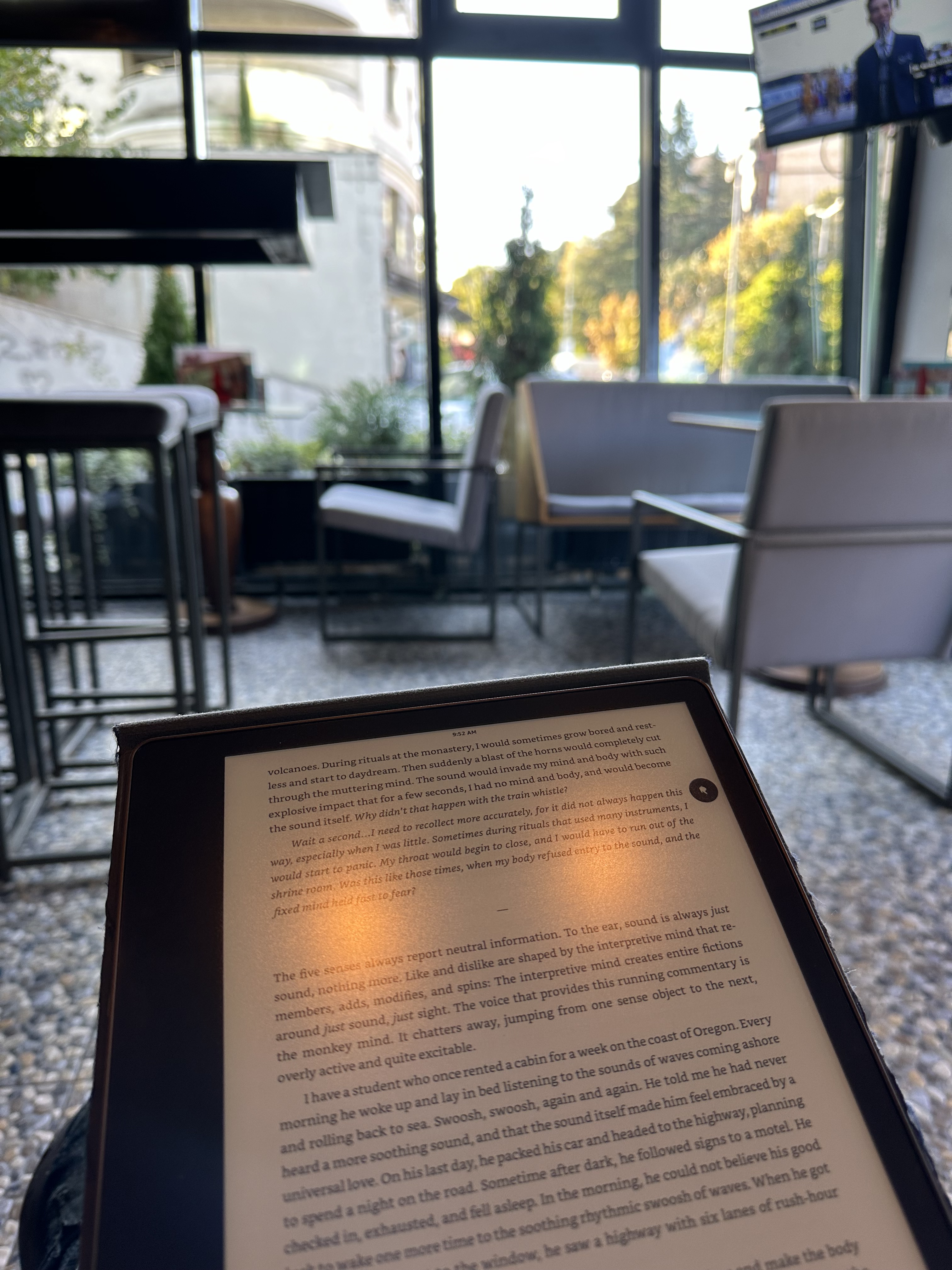
At the beginning of December I prepared for my travel to Toronto. Going through errands which always were a ton easier than they felt, I followed my usual morning routine of having a breakfast in my favorite street cafe in Belgrade. I listened to my neighbors who started to be occupied by the upcoming Serbian elections. Some of them muttered that they would hope for a change in the political system, voices filled with frustration. One of the waiters in my cafe, conversing with me in English with a thick Russian accent, was asking me how life is in Germany. Expressing hope that somehow, some day, he would also end up in Germany. Less frustration in his voice, more something like the hopes that you express when you have a dream. A life dream, since people like this waiter are very young. They know from which circumstances they are coming from, and the future is better anywhere else.
Sometimes I jokingly say that I am an old fart. Which is true to some extent. Physically I am approaching 66 years of age. Yet, the way of life I have choosen, it keeps me agile. For everything in life there is a bill to be paid, the currency in which I pay my dues is restlessness and the constant thinking about how long I will still be able to do this, and what will happen when I will get really old. Remaining as much as possible in a state of gratitude allows me to see how artificial this constant battle is, my mind telling me what I don’t have. When I manage to see, instead, what is given to me, restlessness and dissatisfaction vanish. At least for a while. When I look around myself, I see many people being affected by the same thing which I cope with: I always compare what I have with what my mind is telling me I should have. I compare my current situation with my past, my mind selectively produces memories of residences, houses, fancy cars with a driver, important jobs with status and acknowledgement, business class flights and five-star hotels. Or I compare what I have with what I would like to enjoy like others. When I allow it, it creates a near-constant state of dissatisfaction. In that state I compare my simple apartment with old furniture with the houses my brothers have, or I used to have. In that state I don’t see the freedom of my vagabond life with a campervan and a caravan, instead I obsess about the next better option, the next better thing to have, another job giving me more financial leverage. When I listen to people who look at my lifestyle with admiration, I see that everything comes from comparison, keeping everyone out of the moment. When I then manage to look back with honesty, I remember how unhappy I was. How much I sedated myself, and how unavailable for really meaningful relationships I was.
It feels like we want to constantly compare our own situation with that of others. And since months now, I am trying to find an answer to the question whether there are psychological limits to the ability of feeling empathy for others: The onslaught of news about people who have not even a tiny fraction of what any of us has, it leads to an increasing number of conversations where I hear “But what about me and my needs?” A question which I hear in multiple variations, sometimes with an expression of helpless shame for uttering such an emotion, and sadness, sometimes with an expression of anger and fury. Is it possible that in a situation of “information overload” related to the suffering of other people, a shut-down mechanism emerges which makes people feel: “I can’t listen to this anymore“? Is it possible that, in order to internally justify such a thought then, people must find an argument like “But look around here! There is so much broken here, in my society, why are politicians not taking care of this“? Bold forms of this argument include the exclamation of desperation by saying “We can not always only help others!“
Is it possible that this presents a platform for right-wing forces to run this meme, and to wreak havoc on the ability to empathise with others, by playing the selfish card, a nationalist card, a card where they fuel negative emotions?
When I have conversations about this with my friends in my network, we quickly identify the gasoline which fuels this fire: Egotism. Because it is also correct to say, for example: Germany is one of the most powerful economies around, and with yet a relatively stable political system. We have a responsibility to help others, and by the way, if we don’t, it also will play out very bad for ourselves if all around us is crumbling.
Since the beginning of my international career 24 years ago, at any given time when I came “home”, to Germany, I felt that complaints about own misery were on a level which I could not understand any longer, comparing it with the effects of conflict and war in those areas I was working and living in, or the poverty-stricken perspectiveless of people in societies in which I contributed to assistance, or the frustration of people in the claws of nomenclaturae sucking the life-blood from any perspective of change, compelling people into compliance with a system of multi-layered corruption.
And, beyond Germany, is this a desease affecting the societies of the Western World?
Gratitude. I had a pinched nerve in my lower back when I started my travel to Toronto. Economy class seat, of course in the middle, not an aisle or window seat, squeezed in between two big persons. I had passed through the luxurious business class section on the way to my seat, thinking about the many times when I had the privilege to enjoy a spacious seat, and good food. Now I saw the faces of bored business class travelers when I passed through, and their annoyance when loads of economy class travelers disturbed their serenity. Sitting tight with a painful back, I sensed the travel stress of all others around me. Moving into some form of gratitude, I suddenly recognised that my two big neighbors felt uneasy about taking up so much space, and that they did what they could to give me space. If I would have aggressively claimed my space, I wouldn’t have noticed that. So, instead of an internal battle in which I would have thought about the misery of economy travel, I thought about the fact that one such travel brought me 8.500 kilometers westbound within hours. I was grateful to have an opportunity to see my children.
Arriving in Toronto, poor me (the economy class traveler with undeserved back pain) moved through immigration in minutes. Then, poor me decided to immediately pick up the new fancy MacBook Air 15 which I had ordered in advance at the Apple Store. Canadian prices for that gadget are so attractive. So I stopped at Toronto Eaton Center, the whole place in full Christmas decoration, North America style. Noticing homeless people in the shadow and hiding in corners, and fancy customers strolling through the high-end shopping mall, a trademark sign of Toronto, I picked up this new fancy gadget, immediately back in a cab then and arriving with almost no delay at the place where my children live. Grateful and happy, after a big hello by two teenagers, I fell asleep, privileged to cross one entire ocean in order to see my children, more or less every two or three months. My ex-wife also being grateful that now it was her turn to disengage from parental duties, for a little while.
I could complain about the combination of severe back-pain and jet lag which I experienced during the following days. I won’t. Instead, I recall the quality time of bonding with teenagers at different stages of their tumultous process of preparing to come out of age. I recall amazing talks about empathy in dark times with one of my children. I recall just being there, with nothing I could do, witnessing the pain of the first heartbreak experienced by the other child. I tried just to empathise, not being the parent giving advise, or meddling with the affairs of a teenager who had not intention to talk about this experience with a parent.
Coming back to the invisibilities in a high-powered society like the one my children live in. Living costs in Toronto are extraordinarily high. So has to be the income then, in order to make a living. Those people live in the neighborhoods like the one of my children. I see them coming out of their houses, getting into their SUV’s. Stopping at the neighborhood cafeteria on their way dropping off the kids at school.
Poor me, meanwhile, was limping through the house one evening, the pinched nerve was really incapacitating me. Poor me sat down and opened the fancy new MacBook Air. Domino Pizza has a near-perfect website. Geo-locating my area code, it directed me to the closest pizzeria. Ordering three pizzas, entering credit card details, tipping in advance in order to have “contactless delivery”, the website told me who the person was who fired up the oven and I could see the progress. Once things were out for delivery, a map would show me the exact position of the car on its way to our house. Ping. The very moment I limped out on the porch, the car arrived, I took control over the delivery. I enjoyed pizza with two children more or less bent over their cell-phones, their eyes glued to the Tic-Toc-streams.
Over the next days, I started to pay attention to this invisible layer of society, the low-wage-jobs which made it possible to enjoy such a luxury of, for example, pizza-delivery. Or ordering stuff on Amazon and to have it on our porch next day. I watched the nannies pushing the strollers with babies. I watched the people silently examining the litter boxes for collectible recycables. I watched the people warming up in the shopping malls, and I saw the legion of food-delivery drivers. I tried to imagine their lifes. To walk in their shoes.
Canada is a society with a lot of social compassion, and a lot of empathy. I’d love to live there. Yes, my lovely children, I just can’t, because I need to work the way I do. Go figure and watch this hidden layer of society in the United States, by contrast. And inasmuch as this new global wave of nationalism and xenophobia might be rooted in disenfranchised lower middle class and lower class portions of societies, I feel that the desease of a lack of empathy and of nationalism and xenophobia might be perfectly sitting smack-in-the middle of well-educated middle class people. It does not feel like a bottom-up uprising of the disenfranchised. It feels like memes are being spread by people who are well-educated, and not poor. I guess I am not the only one who can easily name a few examples for this in our own networks of people we know.
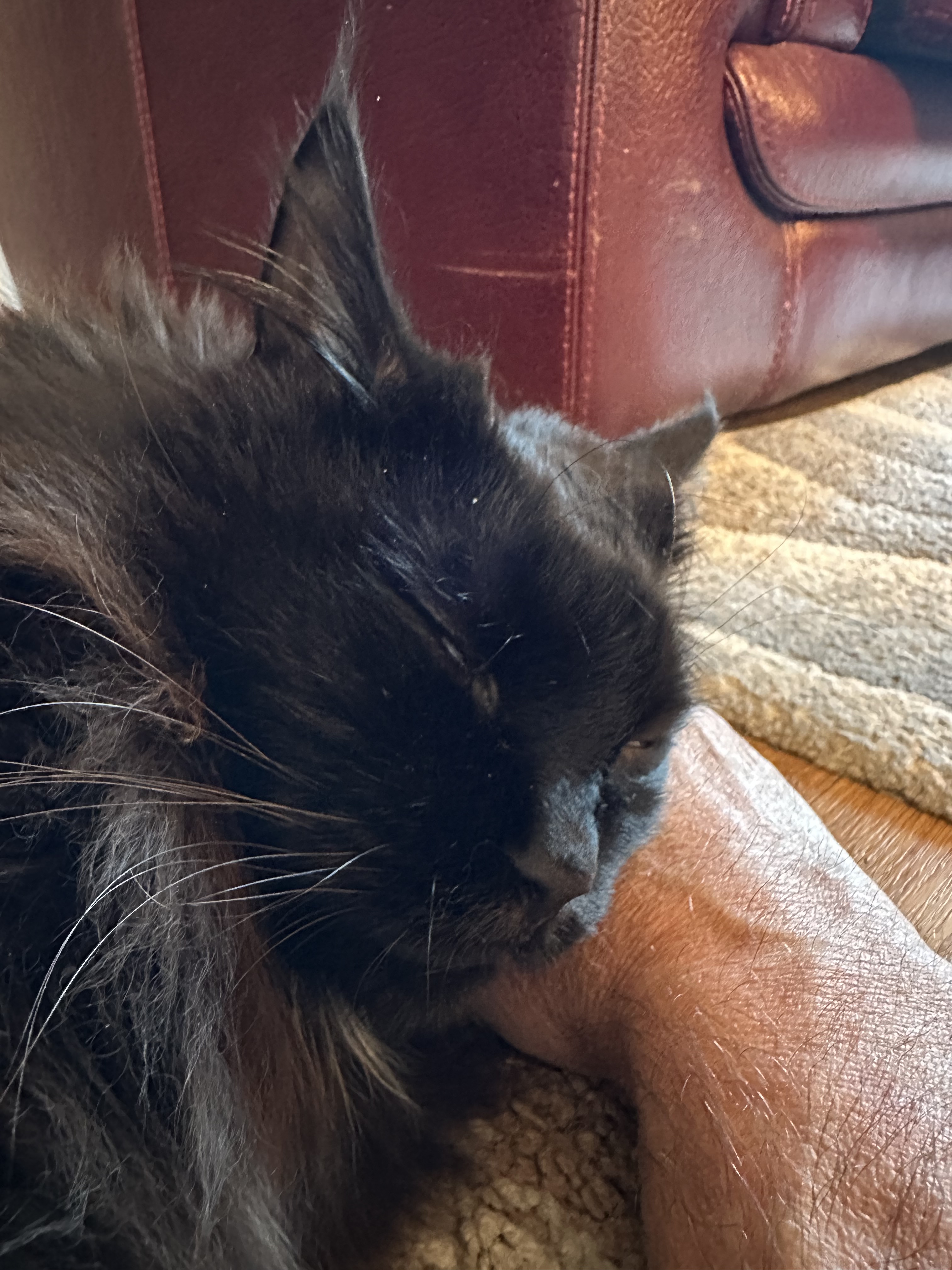
I left Canada eight days later. With a cured back and a new fancy MacBook Air 15. With tremendous sadness about leaving my children behind. On two flights with much better seating arrangements. Well, no sleep, though, which made the five hours layover in Frankfurt a difficult thing. Poor me. Arriving in Belgrade, I settled in my little old apartment and contacted my friends in the “Cat Pension”. Milos and Svetlana love Tigger, and he loves them and the other guest cats. Milos made everything happen to immediately put Tigger into his box and to drive to my place. With Tigger back home, I could witness real gratitude: My cat friend would not stop purring for two days, he would roll over in front of me ever so often, he would literally snuggle up in my arms for the next two nights.
I had five days to go. Five days to cure my jetlag from two times 8.500 kilometers, to finish some work preparation, to clean the van, load up the van, fill up the freshwater tank, activate the heating system. Five days to arrive from a different world, in a different world. My usual constant, my beacon of orientation: My street cafe. And back in European time zone, I could re-establish the pattern of frequent communication with friends, and friends in my recovery network.
One of them lives in South Africa. Another one in Scotland. A third one in Slovenia. Just examples, my friends live all over the world. For us, exercises in gratitude are key for our well-being. So, poor me, in a not so fancy apartment, witnessed the effort of staying grateful in the case of someone who lives on social subsidies, has no job, is coping with life and working hard on developing a positive attitude whilst being in a situation which, compared to mine, is so different. This friend of mine works hard on getting rid of fury, resentment, sadness, feelings of powerlessness. It does not make him or her rich. It will not immediately help in his or her economic troubles. Eventually, it will work. It always does. Like it does “this trick” for me. Well, waking up sometimes still sucks. But I manage to get better on that one too, one day at a time.
Empathy means to be able to listen to another friend of mine who really struggles with a massive depression, and the medication not working, without being brought down myself. Empathy means to just be there, sometimes, and to tell another person that, just today, that persons eyes look lively and good. Even if that person does not feel that way, the information about this is important. Because it will help loosen up the emotional pain. Sometimes, empathy is nothing else than pure love of being there for someone, with no means at your hands other than your sheer presence. Because, if I would would feel such emotional pain, I would want that for me. Just friends being there. And guess what, poor me: I do enjoy that. The very same friend would do everything the same way when it would me my turn to suffer from depression.
Sometimes, empathy means to completely let go, like in the case of one friend of mine.
Yet, poor me went through these five days worrying about each and everything, planning the travel to important work in Tirana, and how to plan the Christmas time, and how to travel. And how to tell another friend that I would not follow her invitation for spending Christmas at her place. Because, on one hand, I needed to take care of my collapsed tent. On the other hand, that travel would have added another 1.200 kilometers between Belgrade and Berlin. And thirdly, poor me wanted to be at a place where poor me would not be a guest, but feel “home”. Which is the caravan where Tigger and I live in Berlin. Not in misery, it is a fancy new caravan. And it is located in one of the most beautiful nature areas around Berlin’s lakes. Poor me.
So, five days later I shut the apartment door. Tigger being happy in the warm van, we traveled from Belgrade to Merdare. Which is in Serbia close to the border with Kosovo, in case you acknowledge Kosovo’s statehood. If you don’t, which Serbia and also a number of other States including some in the European Union do not, then Merdare sits at the Administrative Boundary Line separating Serbia and Kosovo, a former province of Serbia, under international mandate regulated with United Nations Security Council Resolution 1244.
The very same UN Resolution which brought me to Kosovo early 2000.
The border crossing/boundary crossing is run through Integrated Border Management where both Serbian and Kosovan police and customs officers sit in one huge building which was erected and paid by the European Union. I was on my way to Tirana in Albania, and I wanted to do this travel in two days, in order to be easy on me. Having crossed the border, I decided that I would stay in Gracanica for the night. Gracanica is located directly at the fringes of Pristina, Kosovo’s capital. It is a village half-mixed between Kosovo-Albanian and Kosovo-Serb portions, with a core of Gracanica, surrounding a famous orthodox monastry, still constituting somewhat a Kosovo-Serb enclave. I lived in Gracanica for several years in the aftermath of conflict. Much of my work also included preventing violence in these enclaves, and also at times coming from them. It was all about the protection of civilians after conflict and war.
So, my travel from Merdare to Podujevo, from there to Kosovo Polje, and from there through Pristina and into Gracanica, it always fills me with memories. Many of them being awful memories. But also paying attention to what is happening currently, I saw the business of economic progress, mixed with old vehicles, tractors, and carts still pulled either by old machines or even by mules. New since one year or so: Every now and then, at the entry lane of a fuel station, I saw single women, young women, standing there. They always seem to be on the phone. For the passing traveler, it would look like they are waiting to be picked up by a relative or friend. If you look closely, you will notice that they will, for half a second, establish eye contact with you. As soon as you don’t pay further attention, the eye-contact will end. If you would, instead, slow down, you would see them for who they are: Sex-workers. Of the same kind like I can see them in Romania, from Dobreta Turnu Severin towards Craiova, for example.
Why do I mention it? To me, the phenomenon in its visibility was relatively new. It might not be. But this kind of prostitution is the prostitution of the poorest of the poorest. Of course it is managed by pimps, and of course this is part of organised crime. The sex-workers themselves: The poorest of the poorest. And the phenomenon in itself another example for those hidden layers in societies. Layers that we often do not notice. Exept when we want to. Except when we use them. The food-delivery guys, the nannies, or the sex-workers. Just as a matter of precaution, and for the record: Don’t.Do.It!
I do include a “please”. Because I have empathy for them. A lot.
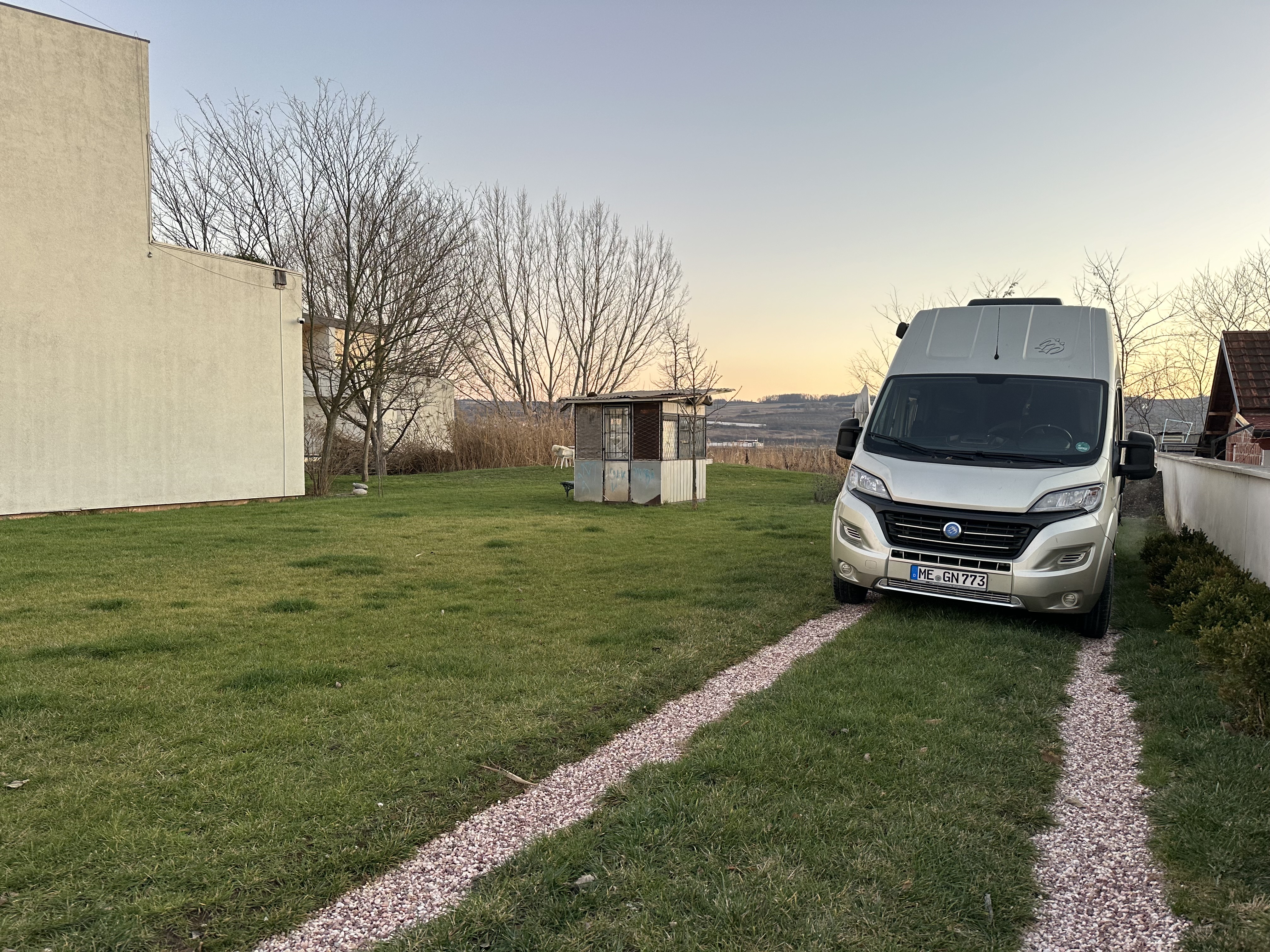
With the sun setting, I arrived at my favorite place, a little hotel, called “Hotel Gracanica”, overlooking wide open fields towards Lipjan. The hotel has nice rooms, a swimming pool, a really nice garden, and space for campervans. It always is a big and friendly hello when I show up there, letting Tigger jump out of the van, happily enjoying another familiar place he loves, sniffing out the vegetable garden.
I was the only guest. The friendly staff firing up the kitchen only for me. So I had a good meal, nice simple conversations, and a night in my van on a secure compound, instead of renting a hotel room. The night was cold outside, my van cozy and warm and lit with warm lights inside. My gratitude included that, and the connection to the WiFi. These people are not rich, nor fancy. They are welcoming. They will speak fluently Albanian and Serbian, and they will use both languages as needed. With me, they will speak English. They are humble. That’s why I always come back. And its only these little details, like the easy-going use of both Albanian and Serbian language, which tell me, an insider, the story of change in Kosovo. Change does not happen overnight. It takes generations. Meanwhile, all who help and assist, they need patience, and they need to be very humble, far off from hypocrisy or impatience. Often enough, our own limitations and impatience sit at the core of why sustainability of peace and reconciliation could not be achieved.
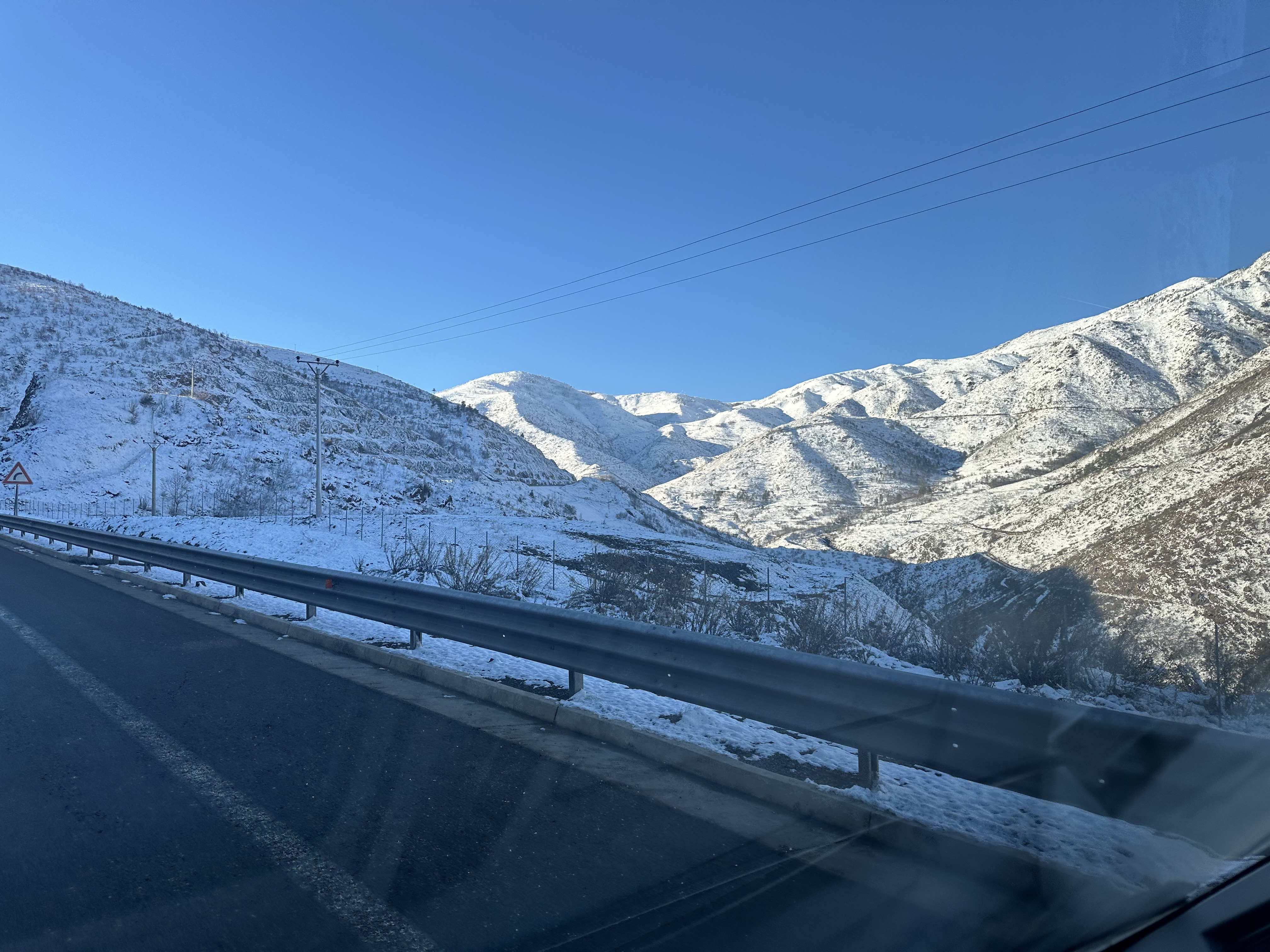
Next day, rested and with a nice little breakfast in my belly, Tigger and I took the travel from Pristina to Tirana. I have little to report about that, because the only thing, really the only thing, to talk about is the marvelous landscape when traveling through the high and snow-clad mountains. Advancing the mountains from Prizren in southern Kosovo already is breathtaking. Passing Morina Border Crossing and traversing through Albania is providing stunning views. Another little detail: Once through, the temperature almost immediately jumped up from sub-zero to mediterranean t-shirt weather.
Poor me arrived in a van at the Rogner Hotel, a five-star hotel in the center of Tirana. Poor me, with the help of colleagues, had secured that I did not have to lodge in a five-star-room, like the more than 80 other participants in the conference marathon to follow, but that a hotel employee jumped into my van and talked me through the small streets towards the garden entrance of the hotel. There was lot of Police around, and a large demonstration adjacent to the Hotel. The employee guiding me explained that this was a protest against the government. Later during conference evenings, I would listen to friends who cursed the mayor of Tirana. Go, walk the town, see the sprawling development of buildings, make your own judgement. Albania is in a critical battle against corruption and on establishing a deeply rooted rule-of-law, on her way towards the European Union. I belong to those who believe Albania will succeed. Because of the Albanian friends I have. I am impressed by their passion and dedication and professionalism.
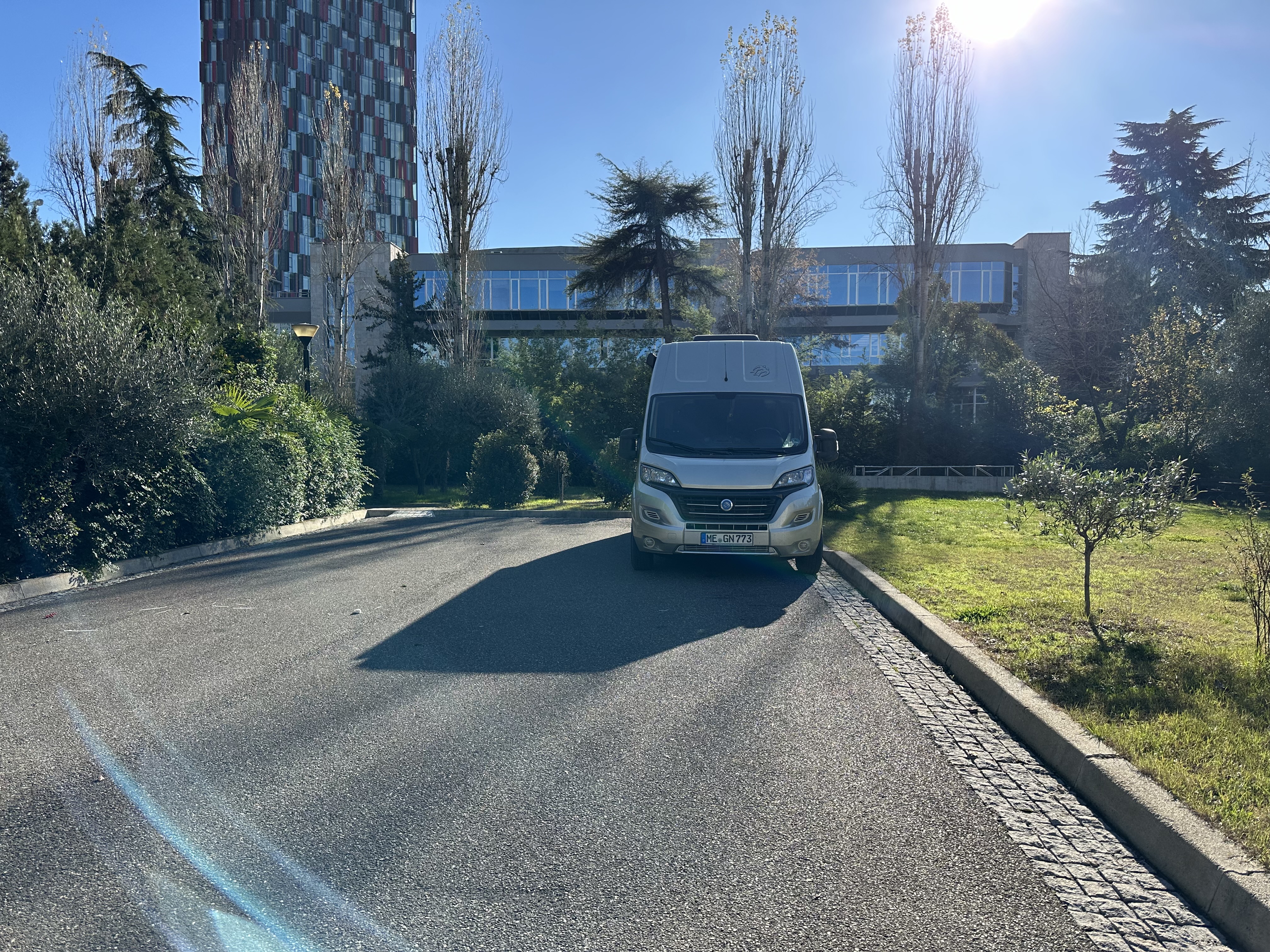
Tigger and I ended up with my camper van in the stunning backyard garden of a five-star hotel, where my autonomous van would sit for the next four nights. Heaven for Tigger. Convenient for me, because I could just walk into the conferences, receptions, meeting rooms, breakfast rooms, lunches. Of course, in a suit. Of course, well showered (my van has a nice shower). Yet, poor me telling me whether this would be okay.
I decided not to listen to poor me. Here is the thing: If you take your time and listen to employees in Tirana in a five-star-environment, you will also get the story including poverty in that country. On another occasion of an earlier conference in 2023, I had combined my travel with stopping over in most rural places in Albania. The combination of poverty, simplicity, and friendliness was overwhelming.
Just saying, poor me: Be grateful.
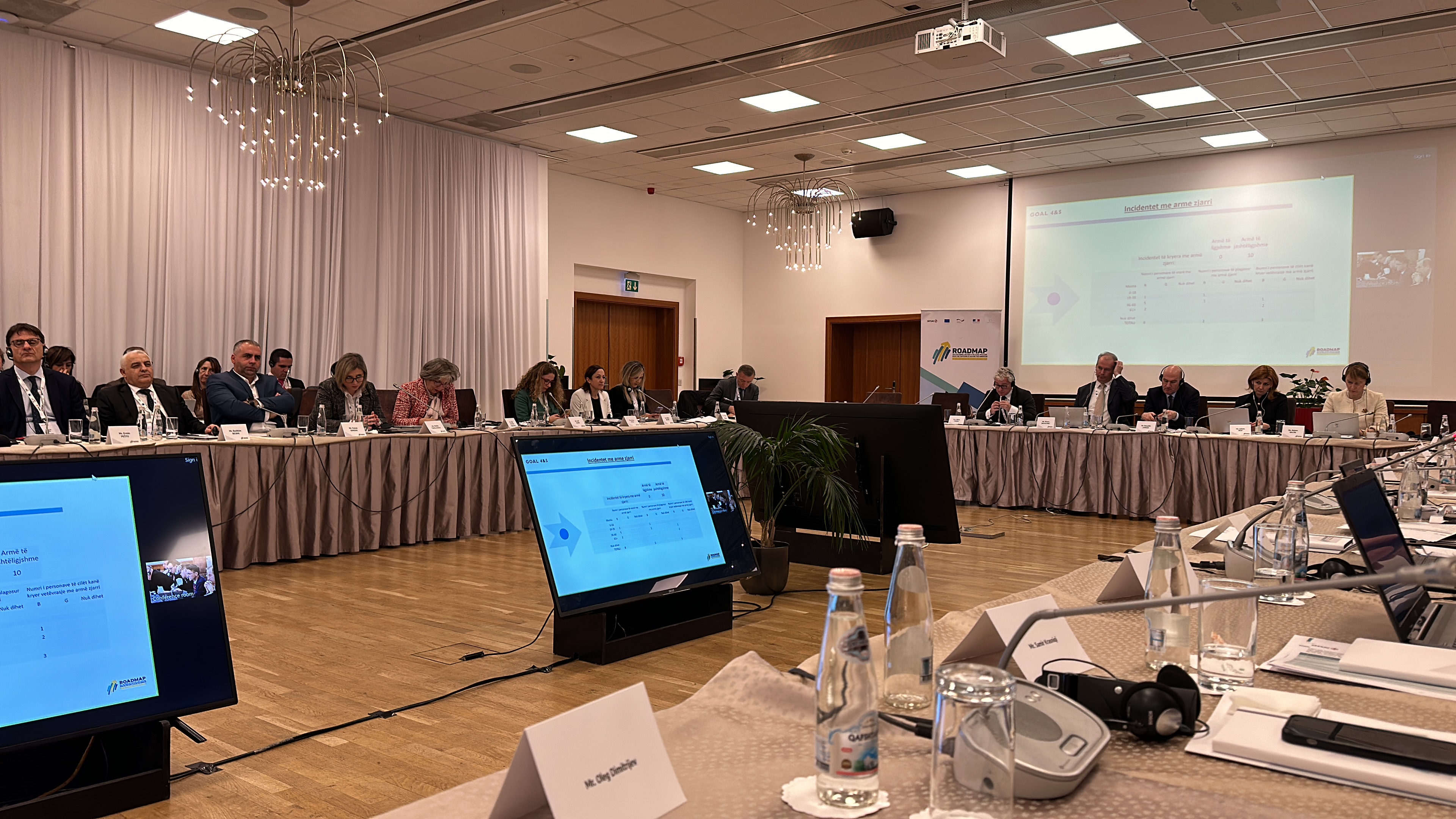
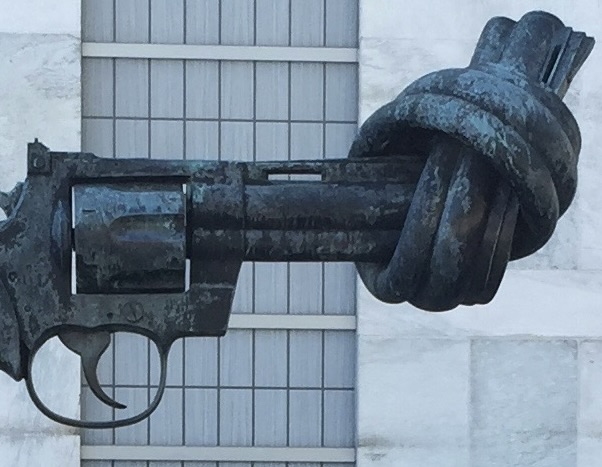
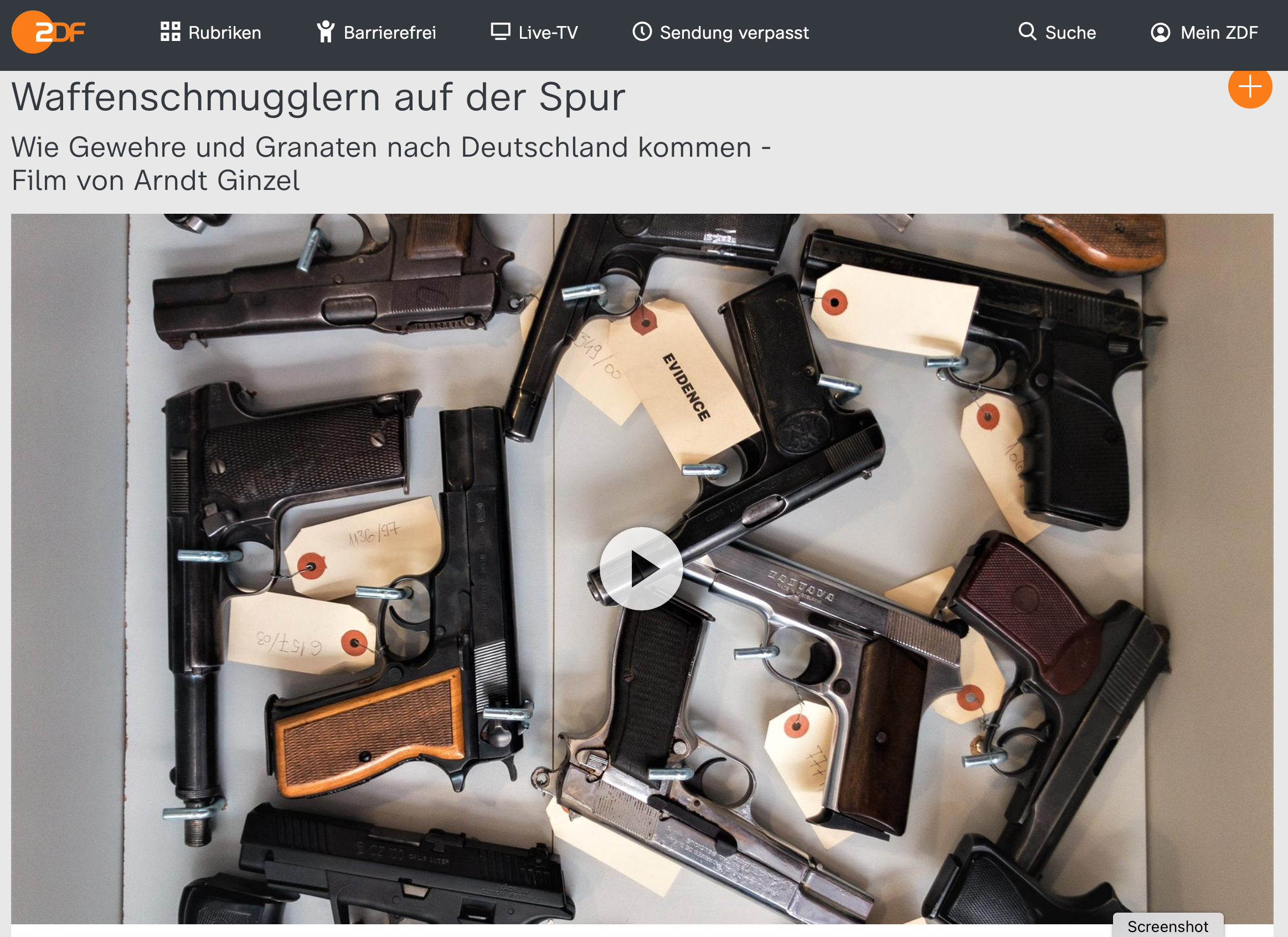
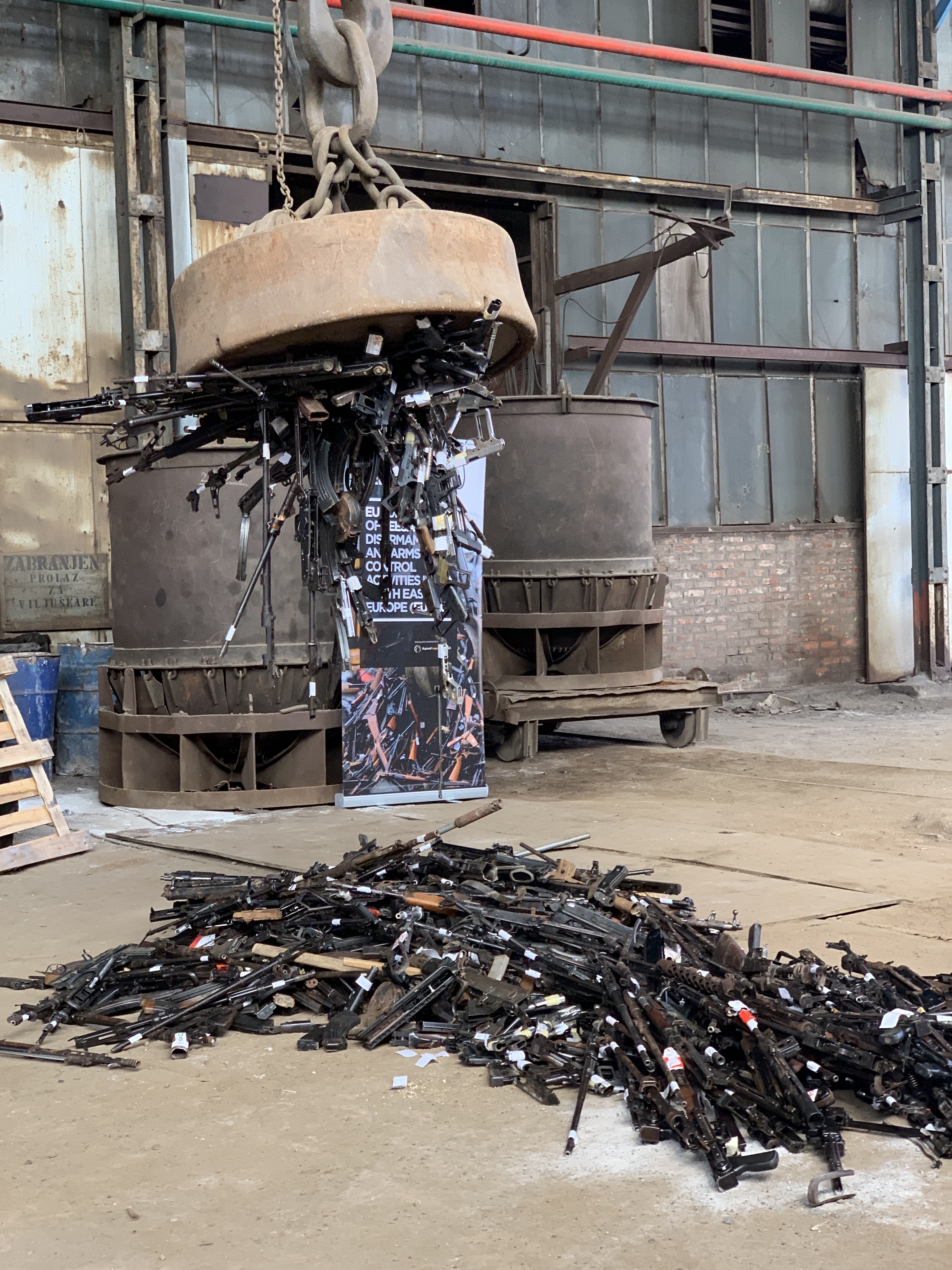
I don’t write about my work often, here. It’s complicated. It’s boring for some of you. It’s about long-term strategies, and a real support to local and regional development. It is not exciting for those who look for bad news stories, because it is the opposite. If you really want, really want, dive into it over here. It is a globally recognised example for how roadmap-based initiatives to control small arms and light weapons make a real difference.
I am biased, of course. Because I have dedicated much of my time since the beginning of 2020 to this endeavor. I don’t want to put it into the bag in which you would also find all things which form the cradle of all civilisations. It is, in many ways, an ordinary undertaking with a limited scope. In many other ways, it is not. One of the most-read entries in my blog is called “On Coherence of International Assistance“. It captures my views on why this work is so successful, on a very abstract and strategic level. In the context of this blog, I want to say something different.
For the tenth time since 2018, a conference room in the Western Balkans was filled with more than 100 participants. Six high-capacity delegations from Belgrade, Podgorica, Pristina, Sarajevo, Skopje, and Tirana, comprised of ministerial officials, law-enforcement and custom officials, prosecutors. High-level delegations from Brussels, Paris, Berlin, and other donor representatives. International organisations such as UNDP, UNODC, OSCE, NATO, EUROPOL and EMPACT in the room, or online. Civil society present.
For.The.Tenth.Time. Implementing, and assisting, a strategic roadmap which ties the six juridictions forming the Western Balkans together. Delegations from those six capitals reporting their own progress in implementing efforts curbing the impact of small arms and light weapons, and intently listening to the reports of their fellow partners. There is a reason why we only refer to “jurisdictions” and name them only by the name of their Capitals. That we do not allow any symbol or name or flag denominating an entity in the room. Because it completely allows that all talk with each other, and we do not get into any of this political tension which we otherwise would witness, and which would make our work impossible.
All of these ten conferences have also seen six local conferences in their preparation. The energy and dedication is not capped by the length of this endeavor. Instead, all six jurisdictions meticulously work on the identification of the strategy for the next five years. They permanently try to find entry points into increased regional cooperation, and at the same time both from their side and the side of the European Union the resulting cooperation is bringing the Region and the European Union ever closer together, in the realm of this topic.
If you would scan the Internet news on such stories of success, you would hardly be successful. Because in the onslaught of negative news, good news are either not recognised, or news outlets would not even bother with reporting on it. And funny enough, sometimes we are even happy about it, because it keeps a technical process of astonishing success away from political antagonisation.
That is as far as I wanted to report about these four days in this blog entry. I just wonder how we can find ways to counter the news which make us depressed, helpless, angry, sad, overwelmed. How we can nurture a culture which also sees the good news, and not only the funny cat stories on YouTube, or the Tic Toc shorts which are meant to keep you in the advertising ecosystem.
This entire initiative is, from a specific viewpoint, a prime example of how, for example, Germany is taking part, and also leading, a support initiative which is meant to help others. And though there is also quite some financial support in it, it is much much more, and it is an example for what others, as I also pointed out earlier, put into question. May be the answer is simple. Helping others is a guarantor for own stability.
Let me come back to “poor me”, once more, and in my final travel report.
Poor me had contracted a serious cold in Tirana (Covid-test is negative). Yet, poor me decided to travel back to Belgrade in one go. Ten hours. Exhausted but happy, I arrived in Belgrade.
Poor me wanted to rest, but also could not get rid of restlessness. So it was only too short after arriving in Belgrade that poor me loaded up the van again. That is how my travel report began in the first paragraphs. That is how I moved through Hungary, Slovakia, and the Czech Republic.
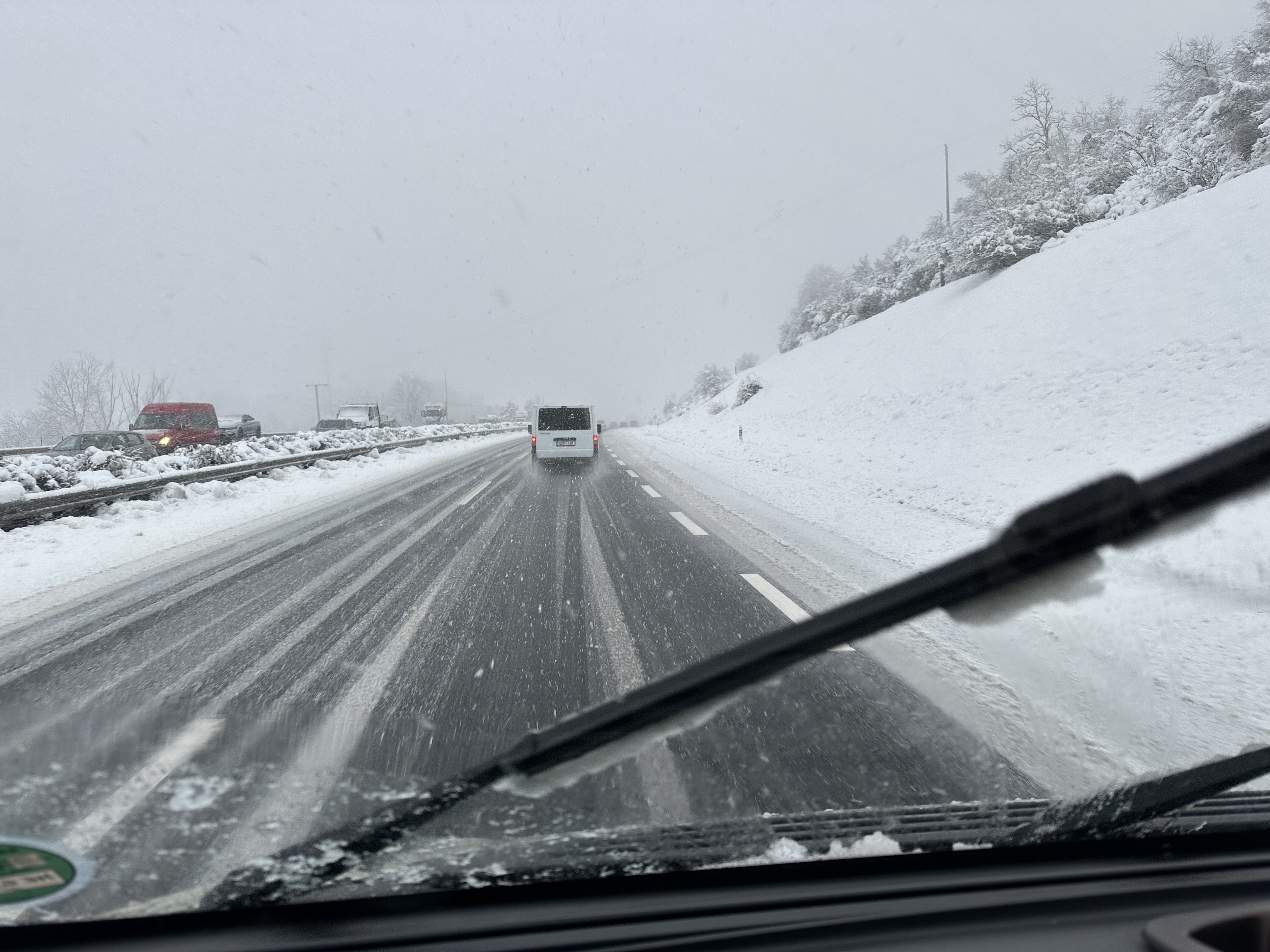
Which constitutes my final comments:
Unlike last time, when arriving at the Serbian border with Hungary, there were no colons of migrants walking up and down the highway stretch. Also there were no military vehicles pointing their guns towards Serbia, on the Serbian side. No helicopters any more. But still, meticulous controlling of every car for illegal migrants on the side of Hungary. The intense cross-border efforts to fight organised crime trafficking migrants had an effect. Well, as always in fighting crime, the effect is to push crime away from one area. It will show up elsewhere. With the same victims. Repressive forms of fighting crime are not able to address root causes. They only can support zero-tolerance, and deterrence. But they do not operate at the root level.
Like last time, exiting Hungary and entering Slovakia was not possible without being flagged down and with polite police officers doing a visual inspection whether my van would carry illegal migrants. The same would happen, like last time, when leaving Slovakia and entering the Czech Republic. This time, approaching Usti Nad Ladem and the German border, I was not flagged down by a police vehicle with blue lights, inspecting my van for illegal migrants. But after the German border, a semi-permanent Police checkpoint forced every vehicle to slow down to walking speed. This time, I was waved through. “A Merry Festive Season” I exclaimed, they smiled, thanked me, and wished me the same.
Ending one day after I began this blog writing, and way too many coffees later, I can report that I am almost alone on my campsite. Most other permanent campers seem to enjoy the Season from the warmth of their homes. I don’t miss the two guys who I overheard in October, when these temporary migration-control measures were established, including Germany announcing to do this at the Polish and the Swiss border. These two guys said: “Now there won’t be any Muslim passing through Poland to Germany any longer”. For the sake of my inner peace, I did not vomit. I just left, because some things one can not control.
At the end, and against this background, special greetings go to my nephew and his Egyptian wife. My nephew converted to Islam. He was very easy on this. And his only reason was that he was so seriously trying to respect the cultural context of the family of his wonderful wife. If you ever come to know Egyptian culture, you will have a glimpse of appreciation what that meant for her parents.
If you, instead, harbor resentments, or would like to make derogatory comments, let me mention that my pregnant mother, a Protestant, was forced to accept at the time of marrying my Catholic father, in 1957, that I and any future children would be baptised Catholic. Otherwise the catholic priest would not have married my parents.
Think about that.
Be grateful. Be compassionate. Cultivate empathy. Before you die. Start now. You don’t know how much time is left to you to become a happy person. Hope you had a good Christmas. I did not put up XMas decorations, I could not get myself into it, with so many children dying in war, whether in the Ukraine, or in Israel/Palestine or Palestine/Israel, in Africa, or elsewhere. And have a peaceful New Year’s celebration. 2024 will not get better. In addition to all the unbearable suffering for which we need empathy, we will need to put every energy into resilience. 2024 the United States democracy will be put to a stress test that has the potential to rip it apart. Donald Trump, President Nr 45, the undisputed contender in the field of Republican candidates for the 47th President of the United States, has already made clear what we can expect.
Migrants are poisoning the blood of our country, he said.
With that, after 20.000 kilometers of migration, being a guest at most places, I end here.
Happy Holidays.
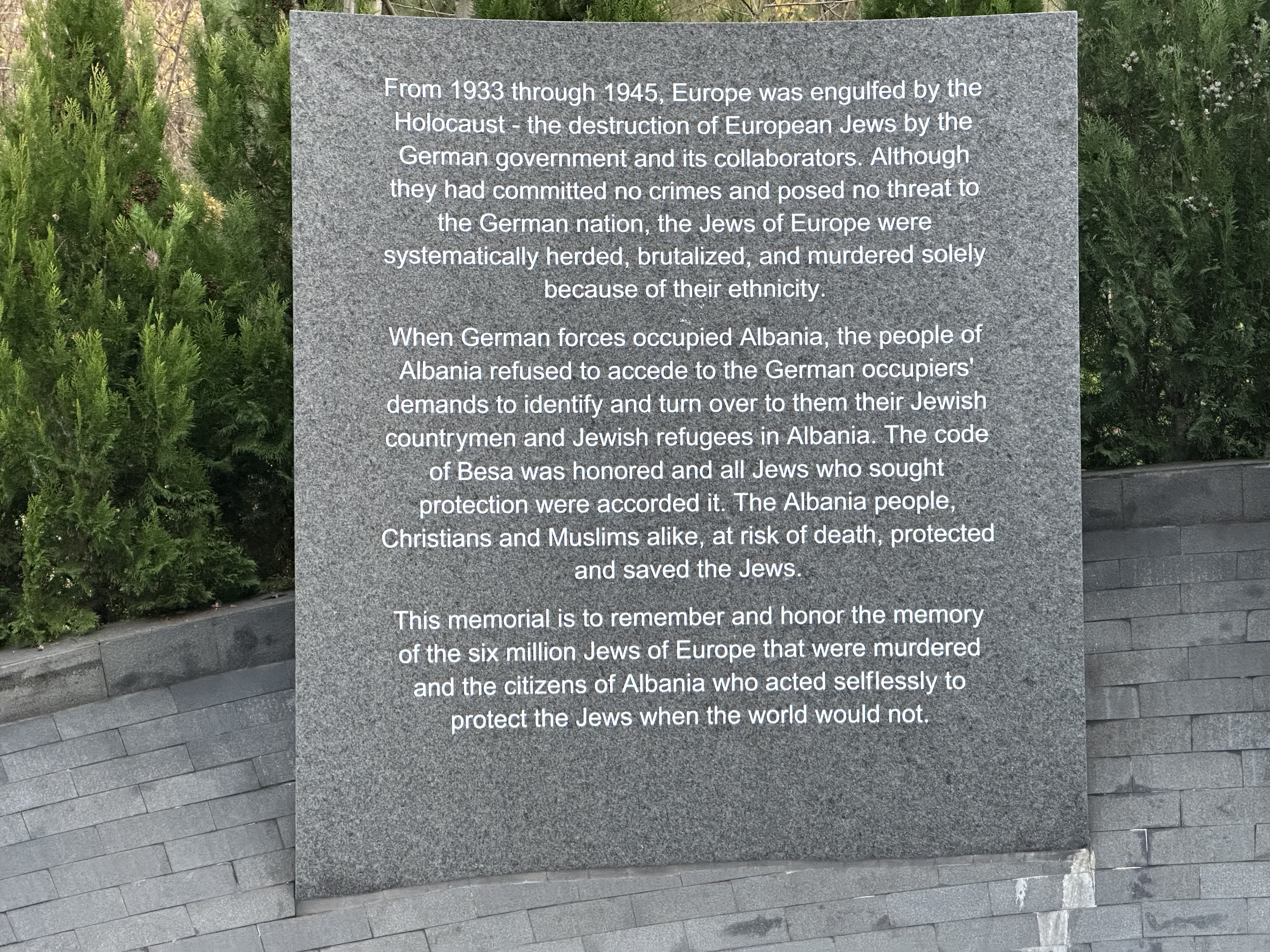
On this picture: I took this in a park in Tirana, December 2023
 Stefan Feller