The news I read these days seem to favor the perspective of disappointment. I hardly pay attention to the side that champions triumph, as it is too painful and a consequence of the most profound animosity in political discourse that I can recall. My newsfeed is replete with sorrow and apprehension. During Zoom meetings where we avoid discussing “outside issues,” I have witnessed an unprecedented outburst of this sentiment, including friends from the United States who burst into tears, filled with shame for the collective will of the majority of voters.
Beyond the United States, where I have friends and where I resided for five years, this sentiment is pervasive, encompassing, of course, countries within the European Union and Europe as a whole.
Friends and family members share news and comments on private channels. For instance, my father shared this comment by Markus Bernath in the Switzerland-based NZZ, or “Neue Zuericher Zeitung,” in the family channel. With a few lines, this comment reflects the enduring human desire for a strong leader. Notably, Markus Bernath concludes a “Zeitenwende,” a paradigm shift, indicating a departure from liberal democracy towards illiberal autocracy.
Inasmuch as I follow the U.S. news, I am closely following on developments within the European Union, in my country of origin Germany, in countries where I engage workwise, such as in the Ukraine and Moldova, or the collection of six jurisdictions forming what is known as the Western Balkans. If I want to name them politically correct, I am referring to Albania, Bosnia&Hercegovina, Kosovo [under UNSCR 1244], Montenegro, North Macedonia, and Serbia.
In all these countries, the reactions are reflecting on the extent to which they are governed by aspiring democracies or are on a path towards illiberal autocracy. For instance, the reactions of the ruling class in Hungary and Serbia differ from those in Albania, Romania, or Moldova. Ukraine, which is currently suffering from a war of aggression by the Russian Federation, is a special case that relates to all the anxiety stemming from the fearful question of whether the second Trump Administration is prepared to avoid making the same rookie mistakes in demolishing the rule of law towards a rule of transactional self-serving thinking. This would leave these countries vulnerable to coldness, current and future aggression and war, or dependence on a fragile strength from the European Union and NATO.
Reflecting on the strong emotions from everyday citizens through those of political operatives towards the common reflections within these societies, these days carry an overarching sense of that the heydays of liberal democracy are gone. And in another very special case, my country Germany with our history of consequences of a dictatorship and fascism leading to the unimaginable suffering through Holocaust and genocide against minorities, we all feel the triumph of the fascist faces of right-wing extremism. Germany’s current government is in a crisis, and be it snap elections after a vote of confidence gone south, or be it the regular elections in fall 2025, we fear the triumphant march of the AfD to power.
I perceive the resignation and the collective anger that is evident in the shame experienced by some of my American friends. Simultaneously, there are outbursts of anger from friends in Europe directed at the entire United States, attributing the consequences of this election solely to its actions. At present, everything appears to be subject to the whims of powerful and profoundly irrational emotions.
I would hope that we get through this very soon. There is a difference between being prepared for worst-case-scenarios and being driven by negative anticipation of events. Those who say “I told you so”, or, “Democracy is gone”, I beg to not fall into the trap being set up for us: The trap of being held hostage by self-fulfilling negative thinking.
We should not allow ourselves to engage in resignation.
Amongst many early assessments of why this all happened there is one which tells us that voters were driven by the perception that the ruling system did not serve people well, that life did not get better, rather worse.
I also note reasonable assessments about how the ruling democratic structures were detached from what people think, feel, and want to have.
In that way, the crisis of democracy is a crisis of detachment from people in their everyday lives. And that I can confirm in my personal experience, when I listen to people in their daily conversations.
So, the crisis of democracy can be looked at as something stemming from the threats by autocrats and wannabe autocrats. But if we are walking on our own side of the street, we can also look at this crisis as a failure of democracy because of detachment of the political and buerocratic class from everyday life of people. That I confirm from every talk where I listen to grievances.
And secondly and lastly, there is the question as to which extent we have one measurement stick, or several measurement sticks which we apply for convenience. The rupture which went through societies when it comes to our position in the conflict between Israel and Palestine (yes, I would hope for a two State solution), it influenced the elections in the U.S., and it tore society apart in Germany, and went straight through my own family. Democracy has a crisis rooting in credibility of our own values.
Now, for a second, let me walk not only in the shoes of Ukrainian friends, Moldovan friends, Western Balkan friends, Israeli and Palestinian friends, but in the shoes of African friends: How could we possibly believe that people in Sudan, in the Darfur region, witnessing the largest crisis and famine since more than twenty years, or anywhere else, would lend trust into us from “The West” if we continue to apply double standards? And why, do you think, Russia has an easy entry point into Mali, the Central African Republic, or elsewhere?
There is no time for resignation. It makes us complicit. There is time for deep soul searching and a revival of a discussion about values. There is time for being prepared to take risks, and there is a time now for standing up for those values which we fear to be torn down.
In this, it does not matter where we live. It is affecting all of us.
The featured image: AI interpreting and visualising the content of my blog entry.
Having read three chapters of Anne Applebaum’s latest book, “Autocracy Inc.,” I found myself compelled to restart my reading. It appears that I had inadvertently lost the narrative thread she is skillfully weaving, which explores the intricate dynamics of collaboration between autocratic structures and the silent, covert, or misguided collaborations that exist within societies that self-identify as part of the West or those that embrace concepts such as democracy, the rule of law, and fundamental human rights.
There’s this cliché about the bully at school: The guy who picks on weaker children in his or her class. He dominates the weaker guy in a menacing way, towering over him, threatening him, or even beating him up. He takes away whatever the bully wants or simply destroys things the weak guy holds dear. We’ve seen this all, whether in the comic Calvin & Hobbes, where Calvin is abused by the bully Moe, or in any Hollywood movie, where the underdog either gets beaten up or suddenly rises to beat up the bully.
Pretty binary stuff, isn’t it? The victim either loses the fight or rises to the challenge for various reasons, including whilst discovering his superpowers, as depicted in numerous movies, such as those in the Marvel Cinematic Universe and the DC Universe. Alternatively, the person with superpowers rescues someone from a bully. I personally enjoy the movie “Venom,” particularly the scene where the bully is a man extorting the owner of a corner store, Mrs. Chen. In this scene, Eddie Brock/Venom emerges to the rescue, unleashing a complex mix of emotions on the side of moviegoers, including fun, anger, joy in exacting revenge and retaliation, intertwined with disgust at the sight of Venom biting heads off. There are countless variations of this theme in pop culture, and these movies are exceptionally adept at evoking profound emotions that resonate with us all, often without our ability to fully comprehend the appeal of such content. However, it’s important to note that these movies primarily tap into purest emotions that we all identify with.
On one hand, as moviegoers, we despise the bully. We identify with the victim, we experience anger when the bully gets away with their actions and satisfaction when they are punished or meet their demise. On the other hand, there’s a crowd that often remains in the background: The bully’s followers. These are the individuals who surround the bully. In some movies, you’ll see a cute girl asking the bully why they’re doing that. In other movies, this person will be almost as mean as the bully themselves. Or this person will stay in the bully’s orbit, feeling a bit of pity for the victim. Sometimes there is a girl who pities the victim and later becomes the victim’s girlfriend after the underdog has finally stood up against or taken revenge on the bully. Again, there are many different variations of this same meme.
My primary question is how and why a bully can get away with their actions. Imagine a bully who constantly abuses others but has no followers. Is this even possible? A stone-cold sociopath who bullies while everyone around them walks away, clearly expressing their aversion for the bully, taking the victim’s side, or simply ignoring the bully when they’re abusing someone, no longer fits the typical image of a bully. It’s more like something out of Hannibal Lecter’s world.
A bully always has a base of followers under their control. They need followers, and they design their actions to keep those followers in their orbit and to increase their number.
The concept of a bully necessitates at least three elements: the bully, the victim (which may even be wrongly labeled as the person attacking the bully), and the bully’s circle of followers. However, there are more: the sea of people who are indifferent, and those who dislike the bully. For the bully, this combined group encompasses both potential future followers and individuals to be labeled as potential enemies. Anyone who doesn’t fall into either category is utterly uninteresting to the bully.
The followers serve as a primary motivation for the bully, who seeks to exert control over them and expand their number, aligning it with their desired objectives. In a school setting, the goal is to accumulate as many followers as possible within a specific class, as it represents the domain within which the bully exerts their influence. Conversely, in a national context, the group encompasses the entire population.
The followers are the ones who empower the bully, but this group is more complex. The bully gains influence over their followers, and typically, the bully is driven by controlling their circle of followers and expanding their support base. In essence, the existence of the bully is contingent upon the presence of those who willingly follow them. In turn, the motivations and actions of these people also have a substantial influence on the bully. In many ways, the bully is the protagonist who is most visible. Which puts the followers second, with some sticking out into the limelight, but most of them staying second or third row. Yet, it is this group which has taken the decision to side with the bully. The interaction between a bully and a group of followers is more complex than that between a pied piper and the children he is marching into doom. People in a bully’s orbit have their own agendas, dreams, motivations, delusions, and rationalizations.
From some point on, the bully and that individuals’ followership develop a corporate identity. History shows that from this point on, individual accountability for consequences of actions becomes very difficult to establish.
As a German national born 14 years after the end of WW II, I witnessed firsthand how painful it was for a society to grapple with the question of moral responsibility of the uncounted individuals who were part of the system producing the Holocaust. As a child, a teenager, and as adult I witnessed the disbelief of people from other societies how a system could be overwhelmed, like when the Republic of Weimar was finished off by the NSDAP, Hitlers’ political party. Those who had not witnessed how this works, they had profound difficulties grappling with some appreciation. It is easier to label persons as malevolent and evil than to acccept that every normal person is vulnerable to becoming complicit.
As a police officer engaging in international work of the UN and the EU in the aftermath of conflict giving birth to war crimes, crimes against humanity and genocide, I always was confronted with the mantra of “Never Again”. I also witnessed firsthand the same process in other societies as I had seen it in post-war Germany: Processes of denial of collective responsibility, they run, just for example, deep related to the Srebrenica genocide. Which is but one example of so many.
Sunday, 27.10., Nr. 45 held one of his last big rally events in the final days of this U.S. election cycle, at New York’s Madison Square Garden. Before His Majesty’s speech, a long procession of members of the Trump Bully Club walked up to the microphones, spitting out every possible hate and disgust imaginable: Against Haitian immigrants in Springfield, Ohio. Symbolic references against Black Americans. Derogatory elements against Palestinians, and anti-semitic jokes. Rude attacks against Vice President Kamala Harris. Transphobia against the LGBTQI community. Vitriol against immigrants at large. See a summary in The Guardian: https://www.theguardian.com/us-news/2024/oct/31/six-racist-bigoted-comments-trump-madison-square-garden
Of course, followed by the Bully in Chief himself. Who, in an interview with Tucker Carlson attacked Liz Cheney, daughter of former Vice President Dick Cheney, with suggesting she should be put in front of a military firing squad: “She’s a radical war hawk. Let’s put her with a rifle standing there with nine barrels shooting at her, OK?” He talks about Liz Cheney who is standing up, like a growing number of senior republican figures including from Trump’s own administration, against a second term of Trump as a U.S. President. To which Nr. 45 responds by talking about the “Enemy from Within”, making it abundantly clear what he will do when he would have a chance: Exacting revenge, and retaliation, by bending the rule of law into a rule of Donald Trump.
All that against a background of people NOT leaving the arena in disgust. People laughing, applauding, clapping.
Wednesday, 06.11., we wake up with the knowledge who is going to be Nr. 47. My children expressing profound shock and disbelief, and despair. Walking into the neighborhood cafe here in suburbian Toronto, there is only one topic. My phone flooded with European messages of disbelief. A joint feeling of emotional hangover.
At the time of this writing, the still ongoing ballot count includes 71.544.343 votes for Nr 45, and bringing him over the threshold of 270 electoral votes he needs for becoming Nr 47. Currently, he has won won 276.
Democracy at its best. Putting on record that the American people, in their majority, have voted for a future President who has taken down all norms of civilised behavior. Europeans rattled, worried, scared, or jubilating (depending on the same question like in the U.S., on which side of this polarized battle of civilisation they have chosen to stand). Make no mistake: We have our own devils in Europe.
To be continued. Everything changes, and this one will, too.
On the featured picture: I asked the AI assistant to create a symbol expressing care and being scared at the same time.
It’s been a while, again. My last blog post “On Aging“ dates back to July 21, 2024. If you read it, you will see a reference “Joe, I pray for you, you will make the right decision“. I meant that the incumbent President of the United States of America would hopefully make the right decision on whether to run for office again, or not. It was literally a few hours later that President Joe Biden announced to step out of the race. Which is pure coincidence. Mr. President, I will never ever forget your commanding voice in the Assembly of Bosnia&Hercegovina, when you reminded leaders, elected officials, politicians in Bosnia&Hercegovina of their duties to their constituencies, to their peoples: That their common welfare should come first. Not that I would feel it changed things in my beloved Bosnia&Hercegovina. But if I can’t forget Joe’s thunder, others may have felt that impact as well, and perhaps the memory will add to change, hopefully to the better, hopefully in not a too distant future.
What happened since President Biden’s decision to pass the baton to a younger generation, it was nothing short of a miracle. Vice President Harris’ nomination as the Democrat’s presidential candidate, the immediate launch of a ground-breaking political campaign, the positive energy and momentum, the rekindled hope and positivism, the difference between dark and hateful gloomy and self-centered fear-mongering and a bright and energetic appearance filled with passion, smiling, and profound substance, it could not have been starker. Moderate Republicans joining the Harris/Walz-Campaign, former civilian officials and retired highest military generals who served under Nr. 45 speaking out on Nr. 45 being fascist to the core, and him being perhaps the biggest contemporary threat, all of this is unprecedented. Despite the fact that numerous polling documented a huge shift in public sympathies towards Kamala Harris, it would appear the jury is still out on what is happening in less than two weeks, after one of the fiercest campaigning battles I have witnessed ever.
And sure, one of the ugliest campaigns ever, on the side of Nr. 45, including awkwardly dancing around for 39 minutes to some music playlist instead of campaigning by substance. A billionaire (Elon Musk, reportedly the richest man on the planet) jumping around on a podium behind Nr. 45, and doling out 1-Million-Dollar-Checks to voters in swing States. A running-mate for the office of the Vice President repeating insulting lies that Haitian migrants eat the cats in their neighborhoods. There is someone attempting to grab the highest office in the United States who acts following the principle “My welfare comes first and nothing else matters“.
Watching U.S. media closely, I am puzzled about how little is being reflected in German public broadcasting. At the time of this writing (October 23), I watched the news from the German “Tagesthemen” on the U.S. electoral battle. A battle it is. The report this morning left me frustrated. Reporting from rural Southern countryside with honest U.S. citizens emphasizing that all they expect is economics lowering their costs of living, some pictures of Nr. 45 handing out french fries at a local McDonalds, and a little bit of footage about Kamala’s intense campaigning. It all feels so awkward because of the paucity of reflection of what I see reflected in U.S. news.
Like, I’d like to see more on the brazen attempt of an “autocrat hopeful” to exact revenge on political opponents, to talk about the “enemy from within”, to attempt silencing media perceived as being hostile by threatening to revoke their licenses if he gets re-elected, to come up with every lunatic conspiracy theory under the sun, to lie, to incite hatred, to endanger legal migrants, to glorify the events of an insurrection on January 06, 2021 as the most peaceful patriotic event ever, not even to talk about his misogynist and xenophobic side, and his affinity for crude sexual remarks for opponents. Watching the bipartisan efforts attempting to make clear how monstrous the consequences of a re-election would be, it is heartening. To see Liz Cheney joining Kamala Harris in a conversation in Pennsylvania, wow. The reflection of all this in German news tastes pale, often dry. But may be that’s just me. Usually it’s just me. If so, I’m sorry. No, I’m not. I am scared.
I am reminded these days of David Faber’s book “Munich, 1938 – Appeasement and World War II“. I read it many years ago. It is still on my mind. For me, a member of generations growing up post World War II, there is no time for complacency when fascism raises its ugly face. It is not easy to define fascism, as I learned when I wrapped my mind around Umberto Eco’s fascinating set of three essays “How to Spot a Fascist“, also many years ago. But I can smell one when I see one. So I take Gen. Mark Milley, former U.S. Joint Chiefs of Staff serious, when he calls Nr. 45 a “fascist to the core“.
Anne Applebaum published her newest book “Autocracy, Inc. – The Dicators Who Want to Run the World“, and I am reading it right now. To quote Amazon’s book description: “All of us have in our minds a cartoon image of what an autocratic state looks like, with a bad man at the top. But in the 21st century, that cartoon bears little resemblance to reality. Nowadays, autocracies are run not by one bad guy, but by sophisticated networks composed of kleptocratic financial structures, security services and professional propagandists. The members of these networks are connected not only within a given country, but among many countries. The corrupt, state-controlled companies in one dictatorship do business with corrupt, state-controlled companies in another.” By the way, Anne has made it on the list of people degraded by Nr. 45. Which I take as a badge of honor.
I am reading the first chapters. And it strikes me how correct she is with the complicity between such self-serving networks, the cold calculating world of financial institutions, and the “double-speak” of the West, often saying one thing, and sometimes silently doing another thing. Or arguing one thing here, and the opposite thing elsewhere. When I listen to friends from the Middle East or Africa, I can so much understand their frustration, and often disbelief in truthfulness when we talk about values. Are we meaning what we are saying? Or are we measured by the consequences of hidden agendas? But inasmuch as I can fully understand the grievances by those who are really suffering from attempts of all sorts of networks preying on them, autocracies, kleptocracies, former colonial powers, own dictators and rulers, and so much more, I remain very concerned when I hear this complaint about “double speak” in conversations here in Germany, from people who slowly but visibly navigate towards the right, or the far right. Because what lies beyond, the extreme right, the fascist right, the angry sick phantasies of restoring the glory of a nationalistic approach, it never happens without a broader support within a larger constituency.
All this appears to be connected, globally.
It’s been three weeks since I listened, again, to Jay W., a fellow recovering friend in 12-Step-Recovery. I always enjoy seeing him in a Zoom window, surrounded by sometimes hundreds of other little pictures of my friends who connect from literally all over the world. Jay’s story began including when, at the age of roughly half a year old, his “mom went out of the door”, never returning. His father remarried and gave Jay away to another family when Jay was three years old. In Jay’s own words, this family locked him in a pitch-black closet, where he lived for the next three years. He slept, toileted, ate, existed in that closet. He was pulled out once a day to be washed, ritualistically tortured, and/or raped by three adults. When he was in the closet, all he wanted was the freedom of getting out of the dark, and when he was out of the closet, all he wanted was the safety and solitude of being back in the closet.
Jay’s story is the story of Jay and Nancy, his late wife, the love of his life. It is the story of “Jancy”, in Jay’s words. It is a story which you can read in his book “Relationship Resilience: Applying the 12 Traditions to Relationships“. Amazon’s review curtails the message of this book a bit: “This small work contains twelve powerful tools to guide couples to transform deep loving feelings into consistent loving behavior. The tools are loosely based on AA’s Twelve Traditions, and they work – quickly and transformatively – whether you are or are not in any 12-Step Program. These tools will change your relationship – whether you’re on the verge of breaking up, in a good partnership but wanting it to be better, or in a great relationship but always open to new tools to cultivate loving closeness.“
Because, in this book, Jay does not only talk about personal relationships, like, family relationships, or intimate relationships. He is talking about any relationship. Whether professional, or private. Whether a spouse, or an employer/employee-relationship. Whether you love this person, or respect this person, or you suffer from this person, or hate this person, or are being subjected to hate.
Inasmuch as 12-Step-Recovery, based on the principles identified first by Alcoholic Anonymous, is based on those 12 Steps, there are the 12 Traditions as well. Many will say that the 12 Traditions guide the way how 12-Step-Groups are being organized, in the most fundamental democratic way you can ever imagine. But Jay is not the only one who is able to describe the power of the 12 Traditions in every aspect of life. Yet, his book contains the most recent demonstration. Like, TRADITION ONE – OUR COMMON WELFARE SHOULD COME FIRST.
I’ll leave it there. Read.The.Book. Love you, bro.
Of course I am privileged, I thought when I was enjoying my second cup of coffee outside of my caravan in Berlin, looking back on one month of travel. I racked up roughly 20.000 kilometers, or 12.500 miles, I stayed in Serbia, Canada, Kosovo, Albania, and Germany, I passed through Hungary and Slovakia, I slept over in the Czech Republic. I sat on planes and I traveled for many days with my campervan. Except for the Canada travel by air, my faithful cat friend Tigger accompanied me everywhere.
Christian Christmas celebrations are over, the Orthodox community is still looking forward to it January 06. These are the days in between. New Year’s Eve is quickly advancing. Winter solistice has just passed less than two weeks ago, sun is coming up late in the morning and darkness settles in at a time when I would just go for another afternoon swim during summertime, with six to seven more hours of daylight to go. Right now, forest paths are muddy, nature is in its deepest state of hibernation, leaves on the ground are wet and often greyish. Road surfaces barely dry up. On my way through Hungary, Slovakia and the Czech Republic I passed through heavy blizzards and made myself comfy for the night in a parking lot thickly covered with snow. Passing Prague, the snow all but disappeared. Traveling northbound through Dresden to Berlin just the occasional heavy rain, strong winds, grey nature. One of my self-made worries which I had tried to keep at bay for weeks was related to the consequences of a winter storm which had passed through Berlin early December. Loads of snow had brought the tent down which I have attached to my caravan. There was nothing I could do from thousands of kilometers away, except for a mental exercise not to allow my crazy and often restless mind to plunge into another reason for worrying just about everything. When I arrived in Berlin, removing the puddles of water from the tent’s collapsed roof and putting new pressure on the pylon-system stabilising the tent was all I had to do. Five minutes work, and the tent was up again. Weeks of worry were proven unnecessary. My mind was desperate to find a new thing to worry about, and I tried to keep that at bay.
At the beginning of December I prepared for my travel to Toronto. Going through errands which always were a ton easier than they felt, I followed my usual morning routine of having a breakfast in my favorite street cafe in Belgrade. I listened to my neighbors who started to be occupied by the upcoming Serbian elections. Some of them muttered that they would hope for a change in the political system, voices filled with frustration. One of the waiters in my cafe, conversing with me in English with a thick Russian accent, was asking me how life is in Germany. Expressing hope that somehow, some day, he would also end up in Germany. Less frustration in his voice, more something like the hopes that you express when you have a dream. A life dream, since people like this waiter are very young. They know from which circumstances they are coming from, and the future is better anywhere else.
Sometimes I jokingly say that I am an old fart. Which is true to some extent. Physically I am approaching 66 years of age. Yet, the way of life I have choosen, it keeps me agile. For everything in life there is a bill to be paid, the currency in which I pay my dues is restlessness and the constant thinking about how long I will still be able to do this, and what will happen when I will get really old. Remaining as much as possible in a state of gratitude allows me to see how artificial this constant battle is, my mind telling me what I don’t have. When I manage to see, instead, what is given to me, restlessness and dissatisfaction vanish. At least for a while. When I look around myself, I see many people being affected by the same thing which I cope with: I always compare what I have with what my mind is telling me I should have. I compare my current situation with my past, my mind selectively produces memories of residences, houses, fancy cars with a driver, important jobs with status and acknowledgement, business class flights and five-star hotels. Or I compare what I have with what I would like to enjoy like others. When I allow it, it creates a near-constant state of dissatisfaction. In that state I compare my simple apartment with old furniture with the houses my brothers have, or I used to have. In that state I don’t see the freedom of my vagabond life with a campervan and a caravan, instead I obsess about the next better option, the next better thing to have, another job giving me more financial leverage. When I listen to people who look at my lifestyle with admiration, I see that everything comes from comparison, keeping everyone out of the moment. When I then manage to look back with honesty, I remember how unhappy I was. How much I sedated myself, and how unavailable for really meaningful relationships I was.
It feels like we want to constantly compare our own situation with that of others. And since months now, I am trying to find an answer to the question whether there are psychological limits to the ability of feeling empathy for others: The onslaught of news about people who have not even a tiny fraction of what any of us has, it leads to an increasing number of conversations where I hear “But what about me and my needs?” A question which I hear in multiple variations, sometimes with an expression of helpless shame for uttering such an emotion, and sadness, sometimes with an expression of anger and fury. Is it possible that in a situation of “information overload” related to the suffering of other people, a shut-down mechanism emerges which makes people feel: “I can’t listen to this anymore“? Is it possible that, in order to internally justify such a thought then, people must find an argument like “But look around here! There is so much broken here, in my society, why are politicians not taking care of this“? Bold forms of this argument include the exclamation of desperation by saying “We can not always only help others!“
Is it possible that this presents a platform for right-wing forces to run this meme, and to wreak havoc on the ability to empathise with others, by playing the selfish card, a nationalist card, a card where they fuel negative emotions?
When I have conversations about this with my friends in my network, we quickly identify the gasoline which fuels this fire: Egotism. Because it is also correct to say, for example: Germany is one of the most powerful economies around, and with yet a relatively stable political system. We have a responsibility to help others, and by the way, if we don’t, it also will play out very bad for ourselves if all around us is crumbling.
Since the beginning of my international career 24 years ago, at any given time when I came “home”, to Germany, I felt that complaints about own misery were on a level which I could not understand any longer, comparing it with the effects of conflict and war in those areas I was working and living in, or the poverty-stricken perspectiveless of people in societies in which I contributed to assistance, or the frustration of people in the claws of nomenclaturae sucking the life-blood from any perspective of change, compelling people into compliance with a system of multi-layered corruption.
And, beyond Germany, is this a desease affecting the societies of the Western World?
Gratitude. I had a pinched nerve in my lower back when I started my travel to Toronto. Economy class seat, of course in the middle, not an aisle or window seat, squeezed in between two big persons. I had passed through the luxurious business class section on the way to my seat, thinking about the many times when I had the privilege to enjoy a spacious seat, and good food. Now I saw the faces of bored business class travelers when I passed through, and their annoyance when loads of economy class travelers disturbed their serenity. Sitting tight with a painful back, I sensed the travel stress of all others around me. Moving into some form of gratitude, I suddenly recognised that my two big neighbors felt uneasy about taking up so much space, and that they did what they could to give me space. If I would have aggressively claimed my space, I wouldn’t have noticed that. So, instead of an internal battle in which I would have thought about the misery of economy travel, I thought about the fact that one such travel brought me 8.500 kilometers westbound within hours. I was grateful to have an opportunity to see my children.
Arriving in Toronto, poor me (the economy class traveler with undeserved back pain) moved through immigration in minutes. Then, poor me decided to immediately pick up the new fancy MacBook Air 15 which I had ordered in advance at the Apple Store. Canadian prices for that gadget are so attractive. So I stopped at Toronto Eaton Center, the whole place in full Christmas decoration, North America style. Noticing homeless people in the shadow and hiding in corners, and fancy customers strolling through the high-end shopping mall, a trademark sign of Toronto, I picked up this new fancy gadget, immediately back in a cab then and arriving with almost no delay at the place where my children live. Grateful and happy, after a big hello by two teenagers, I fell asleep, privileged to cross one entire ocean in order to see my children, more or less every two or three months. My ex-wife also being grateful that now it was her turn to disengage from parental duties, for a little while.
I could complain about the combination of severe back-pain and jet lag which I experienced during the following days. I won’t. Instead, I recall the quality time of bonding with teenagers at different stages of their tumultous process of preparing to come out of age. I recall amazing talks about empathy in dark times with one of my children. I recall just being there, with nothing I could do, witnessing the pain of the first heartbreak experienced by the other child. I tried just to empathise, not being the parent giving advise, or meddling with the affairs of a teenager who had not intention to talk about this experience with a parent.
Coming back to the invisibilities in a high-powered society like the one my children live in. Living costs in Toronto are extraordinarily high. So has to be the income then, in order to make a living. Those people live in the neighborhoods like the one of my children. I see them coming out of their houses, getting into their SUV’s. Stopping at the neighborhood cafeteria on their way dropping off the kids at school.
Poor me, meanwhile, was limping through the house one evening, the pinched nerve was really incapacitating me. Poor me sat down and opened the fancy new MacBook Air. Domino Pizza has a near-perfect website. Geo-locating my area code, it directed me to the closest pizzeria. Ordering three pizzas, entering credit card details, tipping in advance in order to have “contactless delivery”, the website told me who the person was who fired up the oven and I could see the progress. Once things were out for delivery, a map would show me the exact position of the car on its way to our house. Ping. The very moment I limped out on the porch, the car arrived, I took control over the delivery. I enjoyed pizza with two children more or less bent over their cell-phones, their eyes glued to the Tic-Toc-streams.
Over the next days, I started to pay attention to this invisible layer of society, the low-wage-jobs which made it possible to enjoy such a luxury of, for example, pizza-delivery. Or ordering stuff on Amazon and to have it on our porch next day. I watched the nannies pushing the strollers with babies. I watched the people silently examining the litter boxes for collectible recycables. I watched the people warming up in the shopping malls, and I saw the legion of food-delivery drivers. I tried to imagine their lifes. To walk in their shoes.
Canada is a society with a lot of social compassion, and a lot of empathy. I’d love to live there. Yes, my lovely children, I just can’t, because I need to work the way I do. Go figure and watch this hidden layer of society in the United States, by contrast. And inasmuch as this new global wave of nationalism and xenophobia might be rooted in disenfranchised lower middle class and lower class portions of societies, I feel that the desease of a lack of empathy and of nationalism and xenophobia might be perfectly sitting smack-in-the middle of well-educated middle class people. It does not feel like a bottom-up uprising of the disenfranchised. It feels like memes are being spread by people who are well-educated, and not poor. I guess I am not the only one who can easily name a few examples for this in our own networks of people we know.
I left Canada eight days later. With a cured back and a new fancy MacBook Air 15. With tremendous sadness about leaving my children behind. On two flights with much better seating arrangements. Well, no sleep, though, which made the five hours layover in Frankfurt a difficult thing. Poor me. Arriving in Belgrade, I settled in my little old apartment and contacted my friends in the “Cat Pension”. Milos and Svetlana love Tigger, and he loves them and the other guest cats. Milos made everything happen to immediately put Tigger into his box and to drive to my place. With Tigger back home, I could witness real gratitude: My cat friend would not stop purring for two days, he would roll over in front of me ever so often, he would literally snuggle up in my arms for the next two nights.
I had five days to go. Five days to cure my jetlag from two times 8.500 kilometers, to finish some work preparation, to clean the van, load up the van, fill up the freshwater tank, activate the heating system. Five days to arrive from a different world, in a different world. My usual constant, my beacon of orientation: My street cafe. And back in European time zone, I could re-establish the pattern of frequent communication with friends, and friends in my recovery network.
One of them lives in South Africa. Another one in Scotland. A third one in Slovenia. Just examples, my friends live all over the world. For us, exercises in gratitude are key for our well-being. So, poor me, in a not so fancy apartment, witnessed the effort of staying grateful in the case of someone who lives on social subsidies, has no job, is coping with life and working hard on developing a positive attitude whilst being in a situation which, compared to mine, is so different. This friend of mine works hard on getting rid of fury, resentment, sadness, feelings of powerlessness. It does not make him or her rich. It will not immediately help in his or her economic troubles. Eventually, it will work. It always does. Like it does “this trick” for me. Well, waking up sometimes still sucks. But I manage to get better on that one too, one day at a time.
Empathy means to be able to listen to another friend of mine who really struggles with a massive depression, and the medication not working, without being brought down myself. Empathy means to just be there, sometimes, and to tell another person that, just today, that persons eyes look lively and good. Even if that person does not feel that way, the information about this is important. Because it will help loosen up the emotional pain. Sometimes, empathy is nothing else than pure love of being there for someone, with no means at your hands other than your sheer presence. Because, if I would would feel such emotional pain, I would want that for me. Just friends being there. And guess what, poor me: I do enjoy that. The very same friend would do everything the same way when it would me my turn to suffer from depression.
Sometimes, empathy means to completely let go, like in the case of one friend of mine.
Yet, poor me went through these five days worrying about each and everything, planning the travel to important work in Tirana, and how to plan the Christmas time, and how to travel. And how to tell another friend that I would not follow her invitation for spending Christmas at her place. Because, on one hand, I needed to take care of my collapsed tent. On the other hand, that travel would have added another 1.200 kilometers between Belgrade and Berlin. And thirdly, poor me wanted to be at a place where poor me would not be a guest, but feel “home”. Which is the caravan where Tigger and I live in Berlin. Not in misery, it is a fancy new caravan. And it is located in one of the most beautiful nature areas around Berlin’s lakes. Poor me.
So, five days later I shut the apartment door. Tigger being happy in the warm van, we traveled from Belgrade to Merdare. Which is in Serbia close to the border with Kosovo, in case you acknowledge Kosovo’s statehood. If you don’t, which Serbia and also a number of other States including some in the European Union do not, then Merdare sits at the Administrative Boundary Line separating Serbia and Kosovo, a former province of Serbia, under international mandate regulated with United Nations Security Council Resolution 1244.
The very same UN Resolution which brought me to Kosovo early 2000.
The border crossing/boundary crossing is run through Integrated Border Management where both Serbian and Kosovan police and customs officers sit in one huge building which was erected and paid by the European Union. I was on my way to Tirana in Albania, and I wanted to do this travel in two days, in order to be easy on me. Having crossed the border, I decided that I would stay in Gracanica for the night. Gracanica is located directly at the fringes of Pristina, Kosovo’s capital. It is a village half-mixed between Kosovo-Albanian and Kosovo-Serb portions, with a core of Gracanica, surrounding a famous orthodox monastry, still constituting somewhat a Kosovo-Serb enclave. I lived in Gracanica for several years in the aftermath of conflict. Much of my work also included preventing violence in these enclaves, and also at times coming from them. It was all about the protection of civilians after conflict and war.
So, my travel from Merdare to Podujevo, from there to Kosovo Polje, and from there through Pristina and into Gracanica, it always fills me with memories. Many of them being awful memories. But also paying attention to what is happening currently, I saw the business of economic progress, mixed with old vehicles, tractors, and carts still pulled either by old machines or even by mules. New since one year or so: Every now and then, at the entry lane of a fuel station, I saw single women, young women, standing there. They always seem to be on the phone. For the passing traveler, it would look like they are waiting to be picked up by a relative or friend. If you look closely, you will notice that they will, for half a second, establish eye contact with you. As soon as you don’t pay further attention, the eye-contact will end. If you would, instead, slow down, you would see them for who they are: Sex-workers. Of the same kind like I can see them in Romania, from Dobreta Turnu Severin towards Craiova, for example.
Why do I mention it? To me, the phenomenon in its visibility was relatively new. It might not be. But this kind of prostitution is the prostitution of the poorest of the poorest. Of course it is managed by pimps, and of course this is part of organised crime. The sex-workers themselves: The poorest of the poorest. And the phenomenon in itself another example for those hidden layers in societies. Layers that we often do not notice. Exept when we want to. Except when we use them. The food-delivery guys, the nannies, or the sex-workers. Just as a matter of precaution, and for the record: Don’t.Do.It!
I do include a “please”. Because I have empathy for them. A lot.
With the sun setting, I arrived at my favorite place, a little hotel, called “Hotel Gracanica”, overlooking wide open fields towards Lipjan. The hotel has nice rooms, a swimming pool, a really nice garden, and space for campervans. It always is a big and friendly hello when I show up there, letting Tigger jump out of the van, happily enjoying another familiar place he loves, sniffing out the vegetable garden.
I was the only guest. The friendly staff firing up the kitchen only for me. So I had a good meal, nice simple conversations, and a night in my van on a secure compound, instead of renting a hotel room. The night was cold outside, my van cozy and warm and lit with warm lights inside. My gratitude included that, and the connection to the WiFi. These people are not rich, nor fancy. They are welcoming. They will speak fluently Albanian and Serbian, and they will use both languages as needed. With me, they will speak English. They are humble. That’s why I always come back. And its only these little details, like the easy-going use of both Albanian and Serbian language, which tell me, an insider, the story of change in Kosovo. Change does not happen overnight. It takes generations. Meanwhile, all who help and assist, they need patience, and they need to be very humble, far off from hypocrisy or impatience. Often enough, our own limitations and impatience sit at the core of why sustainability of peace and reconciliation could not be achieved.
Next day, rested and with a nice little breakfast in my belly, Tigger and I took the travel from Pristina to Tirana. I have little to report about that, because the only thing, really the only thing, to talk about is the marvelous landscape when traveling through the high and snow-clad mountains. Advancing the mountains from Prizren in southern Kosovo already is breathtaking. Passing Morina Border Crossing and traversing through Albania is providing stunning views. Another little detail: Once through, the temperature almost immediately jumped up from sub-zero to mediterranean t-shirt weather.
Poor me arrived in a van at the Rogner Hotel, a five-star hotel in the center of Tirana. Poor me, with the help of colleagues, had secured that I did not have to lodge in a five-star-room, like the more than 80 other participants in the conference marathon to follow, but that a hotel employee jumped into my van and talked me through the small streets towards the garden entrance of the hotel. There was lot of Police around, and a large demonstration adjacent to the Hotel. The employee guiding me explained that this was a protest against the government. Later during conference evenings, I would listen to friends who cursed the mayor of Tirana. Go, walk the town, see the sprawling development of buildings, make your own judgement. Albania is in a critical battle against corruption and on establishing a deeply rooted rule-of-law, on her way towards the European Union. I belong to those who believe Albania will succeed. Because of the Albanian friends I have. I am impressed by their passion and dedication and professionalism.
Tigger and I ended up with my camper van in the stunning backyard garden of a five-star hotel, where my autonomous van would sit for the next four nights. Heaven for Tigger. Convenient for me, because I could just walk into the conferences, receptions, meeting rooms, breakfast rooms, lunches. Of course, in a suit. Of course, well showered (my van has a nice shower). Yet, poor me telling me whether this would be okay.
I decided not to listen to poor me. Here is the thing: If you take your time and listen to employees in Tirana in a five-star-environment, you will also get the story including poverty in that country. On another occasion of an earlier conference in 2023, I had combined my travel with stopping over in most rural places in Albania. The combination of poverty, simplicity, and friendliness was overwhelming.
Just saying, poor me: Be grateful.
I don’t write about my work often, here. It’s complicated. It’s boring for some of you. It’s about long-term strategies, and a real support to local and regional development. It is not exciting for those who look for bad news stories, because it is the opposite. If you really want, really want, dive into it over here. It is a globally recognised example for how roadmap-based initiatives to control small arms and light weapons make a real difference.
I am biased, of course. Because I have dedicated much of my time since the beginning of 2020 to this endeavor. I don’t want to put it into the bag in which you would also find all things which form the cradle of all civilisations. It is, in many ways, an ordinary undertaking with a limited scope. In many other ways, it is not. One of the most-read entries in my blog is called “On Coherence of International Assistance“. It captures my views on why this work is so successful, on a very abstract and strategic level. In the context of this blog, I want to say something different.
For the tenth time since 2018, a conference room in the Western Balkans was filled with more than 100 participants. Six high-capacity delegations from Belgrade, Podgorica, Pristina, Sarajevo, Skopje, and Tirana, comprised of ministerial officials, law-enforcement and custom officials, prosecutors. High-level delegations from Brussels, Paris, Berlin, and other donor representatives. International organisations such as UNDP, UNODC, OSCE, NATO, EUROPOL and EMPACT in the room, or online. Civil society present.
For.The.Tenth.Time. Implementing, and assisting, a strategic roadmap which ties the six juridictions forming the Western Balkans together. Delegations from those six capitals reporting their own progress in implementing efforts curbing the impact of small arms and light weapons, and intently listening to the reports of their fellow partners. There is a reason why we only refer to “jurisdictions” and name them only by the name of their Capitals. That we do not allow any symbol or name or flag denominating an entity in the room. Because it completely allows that all talk with each other, and we do not get into any of this political tension which we otherwise would witness, and which would make our work impossible.
All of these ten conferences have also seen six local conferences in their preparation. The energy and dedication is not capped by the length of this endeavor. Instead, all six jurisdictions meticulously work on the identification of the strategy for the next five years. They permanently try to find entry points into increased regional cooperation, and at the same time both from their side and the side of the European Union the resulting cooperation is bringing the Region and the European Union ever closer together, in the realm of this topic.
If you would scan the Internet news on such stories of success, you would hardly be successful. Because in the onslaught of negative news, good news are either not recognised, or news outlets would not even bother with reporting on it. And funny enough, sometimes we are even happy about it, because it keeps a technical process of astonishing success away from political antagonisation.
That is as far as I wanted to report about these four days in this blog entry. I just wonder how we can find ways to counter the news which make us depressed, helpless, angry, sad, overwelmed. How we can nurture a culture which also sees the good news, and not only the funny cat stories on YouTube, or the Tic Toc shorts which are meant to keep you in the advertising ecosystem.
This entire initiative is, from a specific viewpoint, a prime example of how, for example, Germany is taking part, and also leading, a support initiative which is meant to help others. And though there is also quite some financial support in it, it is much much more, and it is an example for what others, as I also pointed out earlier, put into question. May be the answer is simple. Helping others is a guarantor for own stability.
Let me come back to “poor me”, once more, and in my final travel report.
Poor me had contracted a serious cold in Tirana (Covid-test is negative). Yet, poor me decided to travel back to Belgrade in one go. Ten hours. Exhausted but happy, I arrived in Belgrade.
Poor me wanted to rest, but also could not get rid of restlessness. So it was only too short after arriving in Belgrade that poor me loaded up the van again. That is how my travel report began in the first paragraphs. That is how I moved through Hungary, Slovakia, and the Czech Republic.
Which constitutes my final comments:
Unlike last time, when arriving at the Serbian border with Hungary, there were no colons of migrants walking up and down the highway stretch. Also there were no military vehicles pointing their guns towards Serbia, on the Serbian side. No helicopters any more. But still, meticulous controlling of every car for illegal migrants on the side of Hungary. The intense cross-border efforts to fight organised crime trafficking migrants had an effect. Well, as always in fighting crime, the effect is to push crime away from one area. It will show up elsewhere. With the same victims. Repressive forms of fighting crime are not able to address root causes. They only can support zero-tolerance, and deterrence. But they do not operate at the root level.
Like last time, exiting Hungary and entering Slovakia was not possible without being flagged down and with polite police officers doing a visual inspection whether my van would carry illegal migrants. The same would happen, like last time, when leaving Slovakia and entering the Czech Republic. This time, approaching Usti Nad Ladem and the German border, I was not flagged down by a police vehicle with blue lights, inspecting my van for illegal migrants. But after the German border, a semi-permanent Police checkpoint forced every vehicle to slow down to walking speed. This time, I was waved through. “A Merry Festive Season” I exclaimed, they smiled, thanked me, and wished me the same.
Ending one day after I began this blog writing, and way too many coffees later, I can report that I am almost alone on my campsite. Most other permanent campers seem to enjoy the Season from the warmth of their homes. I don’t miss the two guys who I overheard in October, when these temporary migration-control measures were established, including Germany announcing to do this at the Polish and the Swiss border. These two guys said: “Now there won’t be any Muslim passing through Poland to Germany any longer”. For the sake of my inner peace, I did not vomit. I just left, because some things one can not control.
At the end, and against this background, special greetings go to my nephew and his Egyptian wife. My nephew converted to Islam. He was very easy on this. And his only reason was that he was so seriously trying to respect the cultural context of the family of his wonderful wife. If you ever come to know Egyptian culture, you will have a glimpse of appreciation what that meant for her parents.
If you, instead, harbor resentments, or would like to make derogatory comments, let me mention that my pregnant mother, a Protestant, was forced to accept at the time of marrying my Catholic father, in 1957, that I and any future children would be baptised Catholic. Otherwise the catholic priest would not have married my parents.
Think about that.
Be grateful. Be compassionate. Cultivate empathy. Before you die. Start now. You don’t know how much time is left to you to become a happy person. Hope you had a good Christmas. I did not put up XMas decorations, I could not get myself into it, with so many children dying in war, whether in the Ukraine, or in Israel/Palestine or Palestine/Israel, in Africa, or elsewhere. And have a peaceful New Year’s celebration. 2024 will not get better. In addition to all the unbearable suffering for which we need empathy, we will need to put every energy into resilience. 2024 the United States democracy will be put to a stress test that has the potential to rip it apart. Donald Trump, President Nr 45, the undisputed contender in the field of Republican candidates for the 47th President of the United States, has already made clear what we can expect.
Migrants are poisoning the blood of our country, he said.
With that, after 20.000 kilometers of migration, being a guest at most places, I end here.
Happy Holidays.
On this picture: I took this in a park in Tirana, December 2023
The featured picture: Memorial Site Concentration Camp Dachau – Germany. Picture taken by the author on occasion of visiting the site May 2019, with two dearest American friends.
Every parent has seen this: A child in devious mood, quickly checking that it is not being watched, then hitting his or her sibling. The sibling being attacked yells for Mom or Dad. The parent rushing in, trying to find out what happened, and the attacker claiming “Mom, she started it, not me!” Bullies on schoolyards do the same: They immediately accuse the victim of having started the fight when caught.
As parents, we would join in the common experience that this is a typical phase within childhood development. If we are wise, we would undertake all efforts not to be manipulated into taking one child’s side. If we are able to clearly identify what happened, and who started it, we would work towards an understanding that action has consequences, that own behavior leads to accountabilty. We love them both. We would work hard helping our children to gain values of coexistence, rather than domination. We would learn how to explain the need for compromise, and that any compromise includes giving something away in order to share getting something. Myself being a parent, I remember this vividly. It can be absolutely unnerving being confronted with two children who are locked into a fight, not capable to give up, and becoming furious that Mom or Dad does not take their side. It takes a lot of patience and diplomatic skills to navigate through these situations until both children are ready for a compromise. In more than one case, I messed it up. The consequence was turmoil, protracted fights, and pain on all sides. But if successful, peace is reestablished quickly. And at some point during their development coming out of age, former children will look back at their fighting memories with smiles and jokes.
Childish behavior? What does it have to do with the title of this blog entry?
Let me try to paint a larger picture before locking in on what, in another context, representatives of the United Nations have named actions “verging on pure evil“. With this wording AFP is quoting UN officials talking about the unimaginable suffering of Darfuri people again, twenty years after a genocide. They are at the brink of another one. I have written about it, here. Most of us don’t even see these news. We are transfixed by what is happening in Israel and the Palestine Territories. I want to write about action which has crossed the border into the realm of pure evil: The Hamas terror attack against Israel and Israeli civilians, October 07, 2023.
In order to create the link from childish “tit for tat” and “he started it, not me” kindergarden behavior to what appears to have exploded into fiery emotional antagonization making it difficult offering an argument calling for reason, I want to recall how used we have become to the application of this utterly childish behavior as a most devious tool of manipulation by adults, namely by adults who hold or held highest office, and how a cohort of followers is using this method for manipulating and controlling massive portions of entire societies. The trick is: Blame the other side, trick them into anger and hatred, and capitalize on it. After pointing this out, I will take it to its most recent extreme application: This time in the corner of terrorism. Because we are running the risk of being successfully blindfolded by the mastery of a plan coming straight from hell, emerging through the underground tunnels in Gaza.
The 45th President of the United States brought this childish logic of always blaming others to perfection in each and every argument. When accused of bullying behavior, he would point to others having started it. When held accountable for own actions, he would point to others, faking stories, hammering out endless lies about these peoples’ own alleged evil. We have been through endless years where this person simply followed one rule: Escalation. On uncounted occasions we found and find ourselves in a reality where every day reveals another outrageous attack which was previously considered to be unthinkable. He is not alone in that, and I am not even talking about his followers, I am talking about other Heads of State, Presidents, Dictators, Autocrats. My argument is that this form of behavior has become mainstream, on a global level. Ruling people, manipulating people, controlling people, by inciting hate, anxiety, anger, and locking them into a fake narrative through lies which stop any bipartisan communication cold in its tracks. Once I am not willing to listen to people with other views, because I am told they are the enemies, I have successfully been locked into a world being solely controlled by these pied pipers.
However, like in the case of Nr 45 and others, we still underestimate them. We try to find reasons, we may ridicule, laugh, minimise, deny. I take a different approach: I assume that people like Nr 45 or others are not just deranged, or are stuck in childish behavior, or may suffer from mental conditions including narcissism and psychopathy making them incapable to act differently. They may be all that, but I do believe they act in cold blood. I believe that Nr 45 knows exactly what he is doing. Currently he is playing the story of facing prison “for the American people” to absolute perfection. It doesn’t matter that every Democrat is laughing at that silly argument. It does matter that this story locks up millions of other people in a scenario justifying to demolish democracy, and being intolerant to anyone different from their fascist, xenophobic and misogynistic thinking. I believe there is a good chance he may succeed again, and this is openly discussed in mainstream media. Which will open the doors of hell. Again. Never before in my view it has been more important to remember lessons of history. We are about to make horrible mistakes, once more.
This modus operandi is not new, at all. Sect leaders do it. Dogmatic ideology and ultra-orthodox religion does it, within any faith I know. Hostage takers do it. Hitler did it. Children in insane family situations face the same, as victims. Rocker gangs, street gangs, mafia-type organisations, they all deploy these principles, partly or in full. And these are just a few examples, small and large. At the core, it is about mercilessly controlling others for the own benefit.
Terrorism and violent extremism is using the same approach. The list of contemporary examples is long and would stretch from Afghanistan to the Middle East, from East Africa to West Africa, I could name examples in the Carribean, in Middle, Central, and South America, in Europe, just from the list of country situations I have a personal experience with. Of course it would include Afghanistan, the Ukraine, and the history or even small contemporary pockets in the Balkans. Again, just examples. Do we pay attention to Africa?
But nothing leaves me more scared than what is happening since October 07, 2023, the day of a most horrific attack by Hamas against Israel and the Israeli people.
Why is that?
It was Hamas who launched a terror attack from hell. It were Hamas terrorists who equipped themselves with GoPro cameras, livestreaming their hunt for Israelis hiding in horror. Lifestreaming how they maimed and raped and killed them. Amplifying the lifestreaming done by ISIS a thousand times larger. It were Hamas terrorists who deliberately bragged and documented their murderous attack on innocent Israeli citizens, claiming unspeakable atrocities in messages sent back to their families on social media channels.
For me, one question sits front and center: Why have they done that? And my answer is: In order to maximise blind emotions by Israeli citizens, in order instill hatred in the Jewish community all over the world, in order to derange a beginning hopeful dialogue between Israel and Arabic States, and in order to outrage international friends and supporters of the Jewish community. Reminded of 9/11, I am. At the same time, Hamas did this in order to be seen in the world of their sympathisers and supporters, to instill raw emotions of lust for more cruelties. They simply calculated that, within weeks, nobody would remember these pictures, because the world would be flooded by picures of dead Palestinian children.
Why?
There is only one answer possible: The sheer size of this attack, it’s careful long-term planning in utmost secrecy, and its military-style execution serves one brutally calculated purpose: To incite blind fury in the Israeli society. Hamas has done this for no other purpose than to provoke the most massive attack against Palestinians in the Gaza strip possible. Hamas’ calculus includes not only hundreds of Israeli hostages. It includes 2 million hostages in the form of Palestinian citizens who have no chance other than to live with probably the most sophisticated network of tunnels that the world has ever seen. Those tunnels do not serve as protection for the Palestinian people. They don’t serve as food storage for the population, or as shelters for them. These tunnels serve the purpose of a terror organisation, allowing fighters to move in security, rest between combat, storing huge amounts of weapons and military equipment (and food for the fighters), and deliberately placing the entrances of these tunnels into buildings used by civilians.
Hamas wants the Israeli military to overreact. Hamas wants to see as many Palestinian civilians being killed as possible. Israel, struggling with the pain of a terror attack and death tolls paling much since the Holocaust, now struggles with how to exercise the right of self-defense and taking at the same time all reasonable precaution to avoid civilian casualties in a situation where the other party to this war is using an entire population not as a shield, but as victims in a strategy aiming to blame Israel for violations of international law on armed conflict. Hamas, not Israel, is fundamentally violating the responsibility of any government to protect their own citizens. Hamas is leaving Palestinian citizens no choice but to be in the cross-hairs of IDF military action. The newsrooms are filled with stories of Israeli intelligence operatives calling Palestinian people hours before a planned strike, guiding them by telling which buildings have to be evacuated, and how much time is left. The newsrooms are not filled with stories how Hamas fighters lay down their weapons during any temporary silence of the guns, helping their population to get out of the combat zone. They simply don’t do that, because they need, and want, the pictures of Palestinian dead people, the pictures of overcrowded hospitals. They don’t want to show the entrances into the tunnel network under those hospitals.
This does not mean that Israel somehow can gain a moral benefit. It does not take Israels’ responsibilities away at all, as many in highest functions and being friends of Israel have stated, including highest officials in my own government, with mindblowing clarity and standing at Israel’s side. Germany has a historic responsibility, until today.
But it does mean that under no circumstances Hamas shall be allowed to successfully victimise itself, executing a long-term strategy exactly aiming at that. In this, there is the connection to the childish bully, and autocrats and would-be autocrats.
It does mean that there is a direct consequence of Hamas’s strategic and operational decisions for those Palestinanian casualties, in addition to the havoc they caused on the side of Israeli citizens. Every Palestinian citizen killed is being killed because of deliberate and calculated decisions from Hamas political and military commanders who want to see exactly this happening, rather than taking precautionary measures in order to adhere with their own obligation to protect the citizens of Gaza.
Hamas and their supporters will do everything to keep this fact in hiding, though in plain sight. Whether Israel exercises caution during a strike and casualties have been unavoidable and in compliance with international law, or whether there will be operations gone out of control, in each and every case Hamas will use these pictures for deflecting from its own accountability, and outmaneuvering Israel, finding herself in the most awful “Catch 22” situation imaginable. Each action is aiming at raising fury of Israelis, and every ultra-orthodox jew taking the law into his or her own hands will be used to contribute to the narrative that the evil is Israel.
That is the evil. And it started with this devilish plan executed by Hamas. For that, Hames needs to be held accountable. Like everyone else who violates international law, including the law of armed conflict. There is no other way. But this was carefully planned and executed by Hamas, including killing their own population through this calculus.
Why am I so passionate about this?
In recent weeks I am confronted with a flood of passionate reactions. Many of which are entirely polarised. The list of reports of people demonstrating for the one cause or the other with peaceful means is endless, and global. The list of incidents of anti-semitic violence is horribly long in many countries. Anti-semitic sentiments are exploding. The list of demonstrations and actions in support of the Palestianian cause is including unacceptable violence, in places where this stokes yet another round of xenophobic reactions. Many countries experience this.
At the same time, I am witnessing an emotional energy in this affecting the day-to-day discussions of “ordinary” people exceeding by far anything I have witnessed in previous developments, like when the war in the Ukraine broke out. Most recently, it affected my own family. It feels like if one supports the Israeli case, only subdued mentioning of the suffering of innocent civilians on the Palestinian side minimises the risk of being suspected of supporting “their” cause. The same the other way round: Reminding of the fate of the Palestinian people seems not to be very compatible with, at the same time, expressing equal sympathies for Israeli victims.
Been there on so many other occasions of conflict. But this time it feels very explosive including in societies far away.
Sympathy and compassion for the suffering of innocent people is running the risk of becoming monopolised: Either one is on the Israeli side, or the Palestinian side. Very much the same way, demonstrations appear to focus on the one or the other narrative, or may be it’s the way how media is reporting about them. And the mantra of “Who started it?”, “Who is responsible for it?”, it often leads to fingerpointing towards the other side. A collective view appears to be difficult to argue.
I would dream of demonstrations in which Israeli and Palestianian victims, mourning their loved ones, stand in for the protection of their human rights together. And where Hamas is isolated. Punched out. By both sides. Accused of the sheer monstrosity of their decision how to set the world on fire. And where more than it already is happening, Israeli voices can be heard how they desperately try to exercise caution. And other voices making it clear that there is no space for human rights violations.
And above all, that there is no space for collective responsibility of both peoples for actions of individuals, or in the case of the Palestinian people, a terror organisation. That both people have a right and will to co-exist.
It was this discussion that Hamas wants to eradicate. Because Hamas wants to eradicate the State of Israel. To achieve this, they are ready to kill their own children.
I mourn every innocent victim of this endless cycle of putting the blame on others, including through a recent terror attack from hell’s underbelly. I wish we retain an ability to listen to each other, and to cultivate an attitude where I first and foremost look at my own accountability, before talking about the accountability of others.
How to navigate within these essays: Initially these essays were meant to form a book. I have decided to publish them, step by step, on this blog. By nature of blogging, the most recent article appears on top of all other articles, whether they are part of this anthology, or they address other issues. If you want to read these essays like a book, HEAD OVER HERE and navigate through the content of the entire set of essays on policing.
A close friend responded to my recent blog entry on integrity: “I love word etymology – think about this – integrity … integrated … mid 17th century: from Latin integrat- “made whole” :)”
On the featured picture: June 30, 2005, I visited a refugee camp with thousands of internally displaced persons (we call them IdP) close to Al Fashir, the regional capital of Darfur, in Sudan. I took many pictures, this one displays a young girl sheltering a baby in her arms. My visit was part of a European Union Factfinding Mission. We tried to find out how we could assist the African Union Mission AMIS in their gargantuan task of providing security to people in Darfur. Tormented by a civil war, Darfuri people fled a situation in which they found themselves attacked by militias burning their villages, killing and maiming villagers, trapping women who went to fetch water at local waterholes, subjecting them to most cruel violence, raping and killing them. The fate of children was equally horrible. Refugees had come to these camps where they hoped for protection. Places like these were abuzz with the presence of peacekeepers and non governmental organizations providing most basic humanitarian assistance. The Internet was chock-full with shocking stories and with outrage, the pictures of suffering went around the world. What would follow were many years of peacekeeping, first by the African Union, then by the hybrid Mission UNAMID, jointly conducted by United Nations and African Union. For many years, UNAMID included the largest uniformed policing component of any peacekeeping operation, by far exceeding the 4700 police officers from up to 54 nations which were deployed to Kosovo, under UNMIK. UNAMID police and military components focused heavily on protecting civilians. By comparison, capacity-building of Sudanese policing was very limited, which sets this Mission apart from, for example, how UNMIK operated a large capacity-building component. There are many reasons for this due to the nature of this very specific environment. However, this difference is noteworthy.
UNAMID completed it’s mandate December 31, 2020. April 2023, severe clashes began between Sudanese government military forces and forces under the RSF. Conflict and it’s horrible consequences quickly reached Darfur again. Twenty years after the beginning of an international effort to protect civilians in Darfur, Darfuri people find themselves in the same horrible situation of being attacked by militias, their villages ransacked and burned, the population facing the very same threats which they suffered from two decades earlier.
Four days after I published the first “essay on policing”, a friend called me. She came from lunch with another friend of ours. Both are Romanian police officers. Both served in UNMIK in Kosovo at the same time when I was there. Both had, and have, distinguished careers with intense ties to policing in international peace operations. “He is writing his memoirs!“, the other friend exclaimed to my friend. Yes, to some extent there are elements of a memoir in this series of essays on policing. But not because I want to put my story out there on the Internet the same way like vloggers put their lifes on Youtube. I feel like it would be boring if I would take an impersonal academic view on the topic of policing. Textbooks on policing may be found in libraries of police academies. You can go there on your own. You also will find many publications on international aspects of policing. To some I have contributed. My objective here is a little different: I would like to draw your interest on some aspects of policing which I find deeply relevant in a contemporary discussion of a fragmented, increasingly violent world. And I believe I can do that best if I make it interesting by establishing a personal context. That then, somehow, is also like writing a memoir. I was in my street cafe this morning and had a conversation with the waiter, who speaks five different languages. We spoke about how people can easily misunderstand others if they just believe they are talking about the same issue. Everyone has a personal story, a personal and cultural, and a language context. In order to find commonalities, one has to tell one’s own story, and to listen to the story of others.
As I mentioned in the introductory essay, my time in Kosovo exposed me to the question “What have police officers from 54 different nations in common?“. And secondly, to the equally important question “Which are the principles and values which we want to promote for an entirely new Kosovo Police?“. It was the starting point for all work reflected within these “essays on policing”.
What you see above is an early attempt to structure my thoughts on policing using a mindmap. Behind some of these branches there are deeper levels which I have hidden here. By no means this early mindmap is complete, I am using it here as a conduit for a conclusion which came up when I attempted to cluster topical areas which could possibly be of relevance for these essays. At the end of this thought process I was left with one organising principle around which I could arrange a number of aspects showing up in this mindmap: What is integrity?
I started from there and thus the next few chapters reflect on “integrity“. In order to not make this a highly abstract tractise, I will look at it from the vantage point of my own experiences. They can not be generalised, but they may be an incentive for thinking. They somewhat focus on what I call “my policing DNA”.
Throughout those two decades of my own involvement in any international operation including larger uniformed police components I have seen two interdependent objectives. Of course, these two objectives do not stand in isolation from other objectives of such missions. But they can be identified in efforts under the umbrella of the United Nations, the European Union, the African Union, and others. These functions can be seen in mandates for peacekeeping, they are reflected in some civilian crisis management operations’ mandates, as well as in some United Nations’ Special Political Missions. They can be found in peace support operations of the African Union or missions of sub-regional organisations in Africa. Whichever language is being used in the respective mandates, they relate to
To protect civilians
To build national capacity in the field of security and the rule of law.
Of course, peace operations have several other core functions, and also some specific mandates which are unique to a single mission. However, in those international operations with larger uniformed police components these two core objectives can be found.
In addition, there are missions and operations within the framework of international organisations and also multi-lateral and bilateral efforts which involve policing expertise only in the field of capacity building for institutions in the field of security and the rule of law.
These capacity building efforts can continue over long periods of time and are, so to speak, handed over from one international activity to the next, on the long-winded road from conflict engagement towards peacekeeping, then peacebuilding, ultimately hopefully leading to lasting peace. In specific geographic contexts, such as for example the Western Balkans, these capacity building activities continue long after and have become an increasing part of integration efforts into the European Union. This also will hold true for other parts of South-Eastern Europe, such as for example Moldova and the Ukraine.
For each and every of these different categories of international activities we have witnessed what happens when support activities within both objectives, or one of them, were terminated too early, not implemented under the right assumptions and circumstances, or under political constraints and pressure, or when the overarching framework of international ambitions, the necessary political unity of key actors, unrealistic mission mandates, understaffing with expertise and numbers, or fragmentation of international activities, led to the break-down of complex and costly activities. I spare a list of relevant examples, because, that list would be shamefully long. No type of international assistance would get away without having a share in this sad compilation.
But what I would like to stress: There would be an equally long list of examples of successful missions, both related to the interim task of protecting civilians, and the task of supporting an acceptable and capable array of institutions in the field of policing and the rule of law. Also here, these success stories do not single out one or another form of international mission setup being more capable than other forms. I leave the question “Why is this so?” to academic research. On many occasions I have been subjected to interviews by researchers. So I do know that this work is out there.
I use the following arguments for the interrelation between the Protection of Civilians and Capacity Building:
a) The protection of civilians is a core responsibility of the State.
b) Protection of civilians under the mandate of international organisations or coalitions of the willing is a temporary substitution of this function of the State. Reasons can sit with that a State (1) should not, (2) does not want to, or (3) can not sufficiently exercise this protection, or any combination of these three factors. For clarity: There are predominantly military engagements “out there”, often of bilateral nature, which brand themselves “peacekeeping” and which, at least, do not fall under the scope of what I write about here. Personally, I refuse to name, for example, military detachments of the Russian Federation in some States in South East Europe, “peacekeeping”. They are instruments of political and military control, such as in Moldova, or elsewere.
c) Any efforts of international protection of civilians must be accompanied by support of capacity building in the field of security and justice, as otherwise there is no exit strategy for this temporary substitution.
That is why capacity-building sits at the core of any successful international assistance in situations of conflict, war, and post-conflict support. It must be done right, otherwise the mission runs into critical failure.
It is from there that I witnessed so many mandates, reports, inquiries, or statements carrying buzzwords such as “sustainable“, “local ownership“, “lasting impact“, and so many more.
In all those scenarios in which I would be asked whether we were successful in assisting in setting up credible institutions in the field of security and the rule of law, I would examine to which extent it was possible to nurture “integrity” within the work of individuals, groups, organisations, legal frameworks, leadership, management, and corporate identities. Personally, I would believe that this is the case for example in the Western Balkans.
There is a final reason for why I am attempting to look at international policing within peace operations, and policing at large, through the lens of attributes such as “integrity”: Catch-phrases like “sustainable establishment” and so many else include a time-dimension. Here, any assessment can become tricky. If one focuses on short time-spans, an assessment on “sustainability” does not make sense. If one looks at time-spans which are stretching over decades, “sustainability” can lead to depressing assessments if, and once, new conflict is emerging. Twenty years ago we started to put immense efforts into protecting civilians in Darfur. Fifteen years ago we began to assess, on request of key U.N. Member States, whether we had succeeded and could disengage. Since recently, we find the situation of Darfuri people where it was twenty years ago. You can say the same for Haiti, for example. We currently witness so many situations beyond the ability of peace operations to influence them leading to constant repetitions of cycles of violence with immense civilian suffering. West Africa, Central Africa, East Africa, you name it. Including the Middle East. I was in Rafah on occasion of the opening of the border crossing in November 2005 under the auspices of a EU monitoring mission, dubbed EUBAM Rafah. After the terror organisation Hamas took over the Gaza strip, our efforts stalled. Around the same time, I was in the West Bank, in a line of support of capacity building for the Palestinan Police through an EU civilian crisis management mission dubbed EUPOL COPPS. If one widens the aperture of the time lens too wide, sustainability answers can become very blurry.
Any assessment of why this is so would be drowning this writing. In taking a view using a lense named “integrity” I hope to inject a different, perhaps fresh, perspective. It will also allow me to make some comments, in later essays, on why short-term goals in capacity building do NOT work. As my friend and predecessor as U.N. Police Adviser Mark Kroeker used to say: “You can’t stand up a police organisation”. Like I, he also avoided to speak of “Police Forces”.
“Integrity” relates to values. Values give meaning, purpose, and support long-term development. Wherever we assist in capacity-building, our success depends on how we can support the establishment of a “DNA” which allows the implementation of policing according to some universally accepted values. Whilst this is true from an agnostic perspective for any set of values, here comes the first hard choice: Which values do we want to put front and center? Of course, being a peacekeeper, my own response comes without a split-second of thinking: The values of the Universal Declaration of Human Rights, and everything which followed throughout decades of development of a universal framework of the United Nations.
Next, I will try to examine this from a personal vantage point, my own socialisation into a German police organisation.
So, how did I find my own way into the police, and policing?
I took a long break from writing. I don’t write when I have doubts whether I have someting meaningful to say. So I spent a summer with introspection. Just sitting with my unease. Yesterday I felt the creative energy coming back for the first time. At the end of two weeks with my children here in Toronto I enjoy a second cup of coffee, the house still silent, this part of the World experiencing the beginning of a Saturday morning, my friends in Europe already moving into the afternoon, and I am opening the WordPress editor for the first time since months.
What happened leading to the end of my incommunicado? At the surface of it, it were two articles I read.
One relates to August 19, 2003, when the United Nations office in Baghdad was targeted in a suicide attack. Today, August 19, 2023, marks this day for the twentieth time. Sergio Viera de Mello, the Special Representative of the United Nations’ Secretary General, and 21 other people died in that attack. I belong to those who can’t forget this day, like many dear friends, in the United Nations, and beyond. I won’t forget Luis da Costa, personally. Many of my colleagues who serve or served in th UN have somebody dear to them whom they lost that day. The BBC article “How a suicide bomb attack changed the lives of UN aid workers” by Imogen Foulkes memorizes this horrible attack and reflects on how the attack changed the way the United Nations system is working, until today.
At the time of the attack I was working for the United Nations in my office in Pristina, Kosovo. I was the Police Commissioner of the United Nations Interim Mission in Kosovo by then. When this mission, dubbed UNMIK, was established in 1999, Kosovo was a place of severe post-war violence for several years to come. Like thousands of other UN staffers, we police officers would rent apartments for living amongst the population, and going to work using soft-skin vehicles and working from regular offices. May be fenced, may be some very normal security around, but we would literally live and work within the population, for the population. We would take risks of being attacked, I still have many pictures in my archive. But countries like mine, Germany, would be willing to send their police officers into an environment where we could find ourselves waking up to the aftermath of a bomb explosion nearby. In one of those many cases, a German police officer literally woke up one morning to discover two new holes in his living room: A rocket propelled grenade had punched an entry hole and an exit hole into his rental apartment. At no point I heard any serious request from Police Contributing Countries to withdraw police officers from the deployment into this mission. We stayed, like we did the same in previous missions, in Bosnia & Hercegovina, or elsewhere.
Later, in my time with Headquarters of the European Union or the United Nations, I would travel to Iraq, to Afghanistan, to Sudan/Darfur, to South Sudan, to Mali, the Central African Republic, to Somalia. In those places, I would meet police officers in so-called “Super Camps” or other protected compounds. I would move around with them in armored vehicles. My memories of travels outside of Baghdad’s Green Zone or outside the protected areas of Kabul include heaviest military protection. Yes, there still were the established Missions in which UN staff would live under more normal circumstances, such as in the Democratic Republic of Congo, or in Haiti, or Timor Leste, or Liberia, or Ivory Coast. But the world of the United Nations changed way more than only in relation to security. The BBC article says “In 2022 there were 235 attacks on aid workers, according to the Aid Worker Security Database, and 116 were killed.” Add the casualties amongst United Nations peacekeepers, I believe they are not even accounted for in this. Places like Mali and others have caused a human toll on United Nations staff that would have been unimaginable twenty years ago.
Like community policing, peacekeeping of the United Nations is about communication. It is about being temporarily rooted in a host population, in order to promote peace, to contribute to peace, and to develop the means of a host State in order to guarantee peace and security again. How do you do that through the thick protective glass shields of a heavy armored vehicle? I saw a convoy of armed UN vehicles moving slowly through a refugee camp in Darfur, stopping at the center, UN police officers getting out, protected by other officers with guns, sitting down with camp elders, then moving back into that convoy of armored turtles. Every day, once or twice. Walk in the shoes of those elders, think about how they may feel.
And like in the microcosm of daily operations, the inability to communicate achieving joint goals is also reflected within the United Nations Security Council. The erosion of jointness, whatever there was before, on the side of the five permament members of the Security Council has reached unprecedented levels. Those inside the system saw this storm coming for many years, if not decades. A toothless political instrument designed to be ultimatly the arbiter of peace and security on a global level is the product of countless defeats within that round chamber to achieve common positions which meaningfully legitimate the field work of the UN. As a consequence, not only behemoths like the UN Mission in the Democratic Republic of Congo suffer. Recently, the drawdown of one of the biggest UN Missions, in Mali, has begun. It just is the most recent case in a long line of withdrawals, some successful, some not. The most recent developments in Sudan’s Darfur area remind me of exactly what happened twenty years ago and led to the establishment of the African Union’s AMIS, and then UNAMID as it’s UN-successor. History moving in cycles? No progress, because a temporary halt of violence and decay is not exactly what we would name “sustainable” peace? One of the reasons why I fell silent, for some months. Watching the ever growing influence and presence of Wagner mercenaries, left and right of UN peacekeeping in the Sahel, and filling the void even more after Russian propaganda has successfully contributed to hollowing out democracies in Africa, to the advantage of autocratic leaders, power-hungry Generals and corrupt local elites. As a side-note, I see the defensive posture taken by Baltic States bordering Belarus, since parts of Wagner were stationed there in the aftermath of this most notable One-Day-Putsch attempt of Yevgeny Prigozhin.
Like terrorism aims at disrupting communication and sowing fear, establishing own versons of a so-called “truth”, the same is true for political processes of antagonisation, being the product of nationalism, being the product of reckless selfishness playing with the natural fear of human beings, establishing falsehoods, repeating lies as long as necessary so to become the “truth” for many. All of the above falls in line with a longer and larger development leading us to where we are, today. How do I explain this to my youngest children? By not stopping to tell stories, in order to establish memory, and context. It is not about attempting to revive the past, but to have meaningful informed context for how to operate in the Here and Now. I did this over the past two weeks here in Canada with my kids. Obviously, it gives me the energy for telling stories in my blog, again. It is not about getting my memories “out there”, again and again. It is about contributing to establishing context for those who will be at the helm of decision making nowadays, or soon. People like my children. Every parent shares that responsibility.
Not having contextual knowledge is one thing. Denial is the other. Which brings me to the other article, the second one.
When I arrived in Toronto two weeks ago, catching up with my ex-wife casually, I was about to ask her how Canadians are looking at the series of ever expanding criminal indictments of Nr 45. I was stopped with a smile, but cold in my tracks: “If it is about Trump, I don’t want to hear it.”
When I travel in Europe, whether in South-East Europe, or in my country, Germany, discussions of the current state of affairs in the United States appear to be very detached from what I can see when focusing on U.S. domestic press and media. Sometimes it feels like the 45th U.S. Presidency has become an afterthought in Europe. Media reporting in European outlets which I follow are way different to the hype on CNN, MSNBC, and other media. Yes, I read liberal news, more or less sympathetic to the Democrat’s cause. I don’t make myself suffering from watching Fox News, or hate-mongering media outlets. My daily list of suggested videos on Youtube is reflecting that preference, too. I don’t want to have my list of suggestions become convoluted with hate, fear, anger, and lies.
Yes, there is a point in not to over indulge. Much of the American hype also leads to stoking emotions which keep me coming back to yet another piece of sensational news. But this is only one part of the story. The other part is, that as a concerned person informing myself through reading more of this stuff than, say, the average person, I get genuinely scared.
The NYT article talks about the subdued expression of grave concern amongst politicians and policymakers in Europe. Grave concern about the real possibility of a second term of office for Donald Trump. What it would mean, for the U.S., Europe, the support for the Ukraine in their fighting a war against a Russian aggressor, for relations between Super Powers including China and (still?) the U.S., for the European Union, other regional organisations such as the African Union, for the United Nations, and for principles based on the Charta of the United Nations, including the Rule of Law, first and foremost.
The article reports about an understandably subdued expression of fear by European leaders and diplomats. In politics, facing reality means being careful about closing doors, in the interest of the own constituency. It also means not to contribute to creating self-fulfilling prophecies. Lastly, it means not to play into the hands of adversaries by giving them the platform of antagonisation and hate which is their only objective.
Yet, there always is a cost attached to everything. The necessity to remain cautious and mindful, it also plays into the overwhelming wish of human psychology to deny reality. In European discussions with everyday people, there are those who do not know about the sheer monstrosity of hate and the open announcement of retribution and retaliation which comes from every sentence uttered by Nr. 45. And of course, I prefer to listen to people who are not right-wing extremists. It would take me a lot of energy to talk to somebody who openly supports the German right-wing extremists within the political party called “AfD”. Whilst I do not listen to those, I am under no illusion that their hate-mongering thinking and sometimes covert, sometimes more and more open action will literally explode in a scenario where Nr 45 would become Nr 47. Our challenge is to find ways of naming the reality as it is without invoking the same which sits at the heart of those extremist’s agenda: Ruling by fear, overruling the rule of law, establishing regime change, overcoming a system from within. Once more, I recall Germany’s history of how the Weimar Republic was defeated from within. By the way, it included the victimisation of own punishment and incarceration, after the so-called “Beer Hall Putsch“.
Hitler escaped immediate arrest and was spirited off to safety in the countryside. After two days, he was arrested and charged with treason.[3]
The putsch brought Hitler to the attention of the German nation for the first time and generated front-page headlines in newspapers around the world. His arrest was followed by a 24-day trial, which was widely publicised and gave him a platform to express his nationalist sentiments to the nation. Hitler was found guilty of treason and sentenced to five years in Landsberg Prison,[note 2] where he dictated Mein Kampf to fellow prisoners Emil Maurice and Rudolf Hess.“
Of course, I would NEVER EVER compare Nr. 45 with Adolf Hitler. NEVER EVER. But it is also fair to link you up with one for many references which may make you think yourself: “Donald Trump’s ex-wife once said Trump kept a book of Hitler’s speeches by his bed” is a reference to an article in “Business Insider” of September 1, 2015. It is just one of many results of a simple Google search, and references can be found in many reputable news outlets. What I do seriously believe is that Trump is actively using the indictments for his narrative, rather than trying to avoid them.
But back to denial: It is a common experience in which I have an in-depth personal share from many operational situations throughout my time with the United Nations and the European Union: Aside of those who are careful with their words so not to add to fear-mongering, there are those who elegantly snuff at worst-case scenarios, giving an impression as if they would have serious insider-knowledge, assuring you that your worst-case scenarios are but a paranoid dream not based on what they pretend to know. I witnessed too many situations where we woke up to a different reality. After that, those smart people quickly switch sides, pretend grave concern, joining those who say, exhaling moral authority: “How could that happen?”
I don’t say we will wake up in a different world next year. But I will say that chances are close to 50:50. If one only follows American polls, the sheer amount of those who simply stick to Nr 45 is overwhelming. The timidity of all Republican potential contenders of Trump for the Republican choice as Presidential candidate is deafening. The polled support of U.S. citizens supporting violent regime change counts a bit less than 20 Million. The shattered few remains of a healthy Republican core DNA will diminish with an almost unhearable “poof” once Nr 45 would win the race for the Republican candidacy. Retribution and cleansing the G.O.P. will follow as a first step. This scenario is already very much an emerging serious threat. From there, an election campaign would leave the great American people ever more divided and prepared for extremist action. Finally, just in case Nr 45 would become Nr 47, the immediate agenda would be nothing else than cleansing the Administration, everything would be about retribution, retaliation, and riddling the system with spineless brainless hateful self-serving cronies.
The Rule of Law would cease to exist, because I simply can not see the depth of resilience much longer which has brought amazing, brave, and highly skilled representatives of the justice system to where the U.S. is today. Just think about it: Donald J. Trump is defendant in four criminal cases with 91 charges (of which 44 are federal, 47 are state charges), alongside a huge number of co-conspirators. The four cases include the Jan. 6 election case, the classified documents case, the N.Y falsifying business records case, and the Georgia 2020 election case. In the Georgia case, Nr 45 and 18 others stand accused of violations of a powerful anti-racketeering law (RICO), which was solely created for enabling justice to arrest powerful Mafiosi. One of those who prided themselves for using the RICO provisions against the Mafia is now defendant under the same provisions: Rudy Giuliani.
I don’t think it is an over-statement to qualify the threat as being existential for the Rule of Law. The evidence fills whole Internet archives, and is now pouring into the courtrooms, through brave prosecutors, and brave judges. Unsurprisingly, the media is also abuzz with the judgement by doomsayers who assess the risk of indicting a former President as a threat to politics, and democratic governance. I disagree. This can not be tampered down by attempting to subdue the course of justice. Chances are that this would not change the battle for democracy at minimum, it may well be that it would be a serious blow in itself. There is no grey zone in here. It is about black and white, truth must stand up against lies, and the only chief principle is that we shall not fall into resentment, anger, and fear. Because this is what the other side wants.
Can I somewhat end my blog revival entry on a happy note, in case you’re still reading this?
Here is my current list of books I am reading. I bought myself a Kindle Scribe, and it has entirely changed the way I am reading. No books in my travel luggage. An amazing book-size screen. A battery-life for many weeks without even needing a charge.
I read “On The Origin Of Time” from Thomas Hertog. An amazing and equally mind-boggling book about Stephen Hawking’s final theory.
I read Zoe Kors’ “Radical Intimacy”, which is a great read within both the extended and the more narrow meaning of the word “intimacy”.
I read the classic text “The Prophet” by Khalil Gibran, (available in The Guttenberg Project open library).
In parallel I re-read “Psychoanalysis and Zen Buddhism” by Erich Fromm.
I am reading Pema Choedron’s amazing book “How We Live Is How We Die” for the fourth time.
I am reading “Polishing the Mirror” by Ram Dass, and I will continue with Daisetz Deitaro Suzukis’ book “Mysticism – Christian and Buddhist”.
Finally, and with great pleasure, I am re-reading a book which I read last time probably four decades ago: Frank Herbert’s “Dune”.
All of those justify an own decription of my impressions. May be I’ll do some, at a later stage. Not here. But reading healthy wholesome literature covering a spiritual connection with the World, from various angles of mystical tradition, and combining that with a well-written book like “On The Origin Of Time”, which ends with surprising statements about what we can not know by means of science, it is one of those things over the summer which allowed me to re-position myself, to re-center myself, and to find new creative energy here, again.
Finally, since I started with a 20-year memory, I am ending with another one, a personal anniversary: Tomorrow it will be the tenth time I am honouring a decision I took August 20, 2013. It marked the beginning of a path which ultimately allowed me to reconcile with my own complex PTSD. It allows me to explain personal experiences and context to my now teenager-children, without being overwhelmed by own emotions. Not that you got an impression that my writing got less intense, if you read the above. Yet, there is a difference between passion and strong emotions.
Grateful that I can detach better. Like taking several months of break from writing here, or on my book projects. Now, back to work. Like, in my job, finding convincing arguments why reducing the threat from small arms and light weapons is important, even when we face the opposite discussion in light of a war in Europe.
There always is a time post-conflict. Better prepare for it now.
Yesterday I published a piece on the need to better comprehend, and possibly to regulate, the implications which come from the use of new and highly sophisticated systems in the field of Artificial Intelligence (A.I.). New applications with abilities to understand, and to respond, in natural language, or in the form of complex visual compositions are crossing a boundary line where it becomes very difficult for an unknowing observer to identify that the communication partner is an A.I. system. Their capabilities are scarily powerful, ranging from natural conversations through writing poems, articles or other complex pieces of writing, or even computer code, just based on natural language input.
I mentioned the possibility for such systems to be abused in malicious contexts. Like any modern piece of software, their inner workings are almost impossible to understand for people who do not take their time for an in-depth learning curve. At the same time, their capacities are fascinating. Meaning that they and their results are looking so good, and the dangers coming from their unregulated use appear so abstract, that they permeate into the real word with a speed which makes curbing unwanted effects a gigantic mission (almost) impossible.
Now, on the general dangers from this cyberworld, here a very comprehensive and meticulous documentation which the English version of the German news magazine DER SPIEGEL put online yesterday: “The “Vulkan Files”: A Look Inside Putin’s Secret Plans for Cyber-Warfare. I just want to recommend reading it. The full scale of Russia’s integral user of cyber weapons into regular warfare and State sponsored terrorism becomes very obvious. The report is based on comprehensive research including insider information which DER SPIEGEL conducted together with investigative partner organisations.
Looking at it, the strategic range of hostile activities, in and way beyond the current war of aggression raging against the Ukraine, becomes clear. Those hostile cyber activities are an integral part in larger operations, and they target the West, as well as any people posing a threat to Putin’s control regime. Which does not come at a surprise. Recent public discussions have made it very difficult to qualify what we collectiviely are finding ourselves in. People with authorized public voices have to tread their words very carefully, simply because any language of war can escalate a situation which is meant to be escalated by those in Russia who wage a war against the Ukraine, and who, that would be safe to say, are extremely hostile against the West, and do not hesitate to lure the West into a larger scale conflict of some kind. Oh, no, wrong: We are already in a larger scale conflict, and we try to defend ourselves, and to de-escalate that situation back into the realm of international diplomacy.
Subject to attacks in the cyber-realm are any people, organisations, or infrastructure deemed worthy to be attacked in gaining influence, information, control, manipulate through desinformation, influence public opinion, or just to exercise visible destructive power. It does not matter whether it is you, a civilian or a military or a political target, or an industrial or government target. Depending on the malicious intent, literally everyone is subject to these attacks, like, influencing your opinion and framework of perception of Russia’s war activities, and Putin and his collaborators committing crimes against humanity, and war crimes.
DER SPIEGEL is able to exhibit the contours of the full scale of it, and only by one of those actors who try to use this cyber-power. A lot has been written about others, such as in Iran, in North Korea, or in China. But the Russian side of things becomes more and more obvious, partly because, as DER SPIEGEL states, these activities are not even meant to be covert to a full extent any more. But make no mistake, the cutting edge use of state of the art tools will always be kept in the dark.
Stating what we all should know. But in this context, new A.I. tools such as language based models, are already being used, and are increasingly being used. They may become the new “power tool”.
Few things are more important than systematic cyber security strategies, including police and military defense and deterrence. In countries of the European Union, in countries aspiring to join the E.U., and generally within countries who contribute the upholding of principles including Human Rights, a rule of law, and democracy as a means of basing the power on the will expressed by the people, not by dictators, oligarchs, autocrats, or, I may add, any people who put their own power beyond the limits of a rule of law. Those inlude Organized Crime.
In some countries I work in, these vulnerabilties take the form of wide open barn doors. There is a need to collectively close these doors. Yes, the Internet is about freedom of communication and information exchange, for the prosper of All. But exactly this is under attack. Often invisible. Until massive cyber attacks bring governance to a screeching halt. Which is what we have witnessed in some countries not mentioned in DER SPIEGEL, between 2019 and 2022.
In a few days I will celebrate my 65th birthday. I became a German police officer in the detective branch at the age of 18. Almost 44 years later, in January 2020, I was up for mandatory retirement. About half of these four decades I rose through the ranks of a national Police in Germany. The other half I spent abroad, in senior headquarter and field positions of the United Nations and the European Union. In these functions of UN peacekeeping and peacebuilding, and EU crisis management, policing always was a cornerstone of my work. In my current work as an adviser contracted by the German Federal Foreign Office, policing is an important element within a larger and holistic framework of support action, too.
So, 45 years of policing experience. Related to work in Germany, South-East and East Europe, the Middle East, Asia, Africa, the Carribean. Living in many places in Germany, and in Belgrade, Brussels, New York, Pristina, Sarajevo.
In my article “Seeing Deeper” I reflected on my personal experience with the fundamental shifts, including within the international peace&security architecture, over those two decades of my contribution to it. Of course, the historical timelines which are preceding the colossal changes of these days, they go way back. Some of those I witnessed in a national capacity, some during my international time. Events like, for example, the fall of the Berlin wall, or 9/11, they are examples for moments that we associate with being triggers for fundamental shifts. Sometimes they are. Sometimes they are just the coordinates in space-time where the underlying energies pop up with explosive momentum. Much later, through an analysis of United Nations peacekeeping, I would revisit the bigger picture in which some of these key events played a role, where they had an impact on what I was involved in at that time, the role of policing in peace operations. I have written about some specific aspects related to what we call “international policing” here.
Over those more than 23 years within an international context of peace&security, I witnessed times when there was a lot of enthusiasm about what policing could contribute to supporting peace processes. Policing, done right, is a key component for supporting processes towards lasting peace, and reconciliation. Therefore, support to the establishment of capable policing, deeply anchored in values and international principles and standards, can be a key enabler for lasting peace, and so much more. Think, for example, gender equality, protection of the vulnerable, protection of minorities, ensuring democratic forms of governance, contributing to justice, and in its very core, promoting human rights.
Because of the many years of my own involvement, I witnessed success and failure. The reasons for it are highly complex. Some sit with grappling to understand and to properly implement policing assistance. Some reasons sit way beyond and made it challenging for all actors with military, police, or civilian tasks, to deliver on what they were expected to. On the policing side, where some of my core experience sits, it includes that we, the so-called international community, struggled with making these policing contributions relevant. Sometimes our collective proverbial mouth was not where our money was. Sometimes the political design of international assistance in or after a conflict or war struggled with applying coherence to expectations, objectives and their implementation, either narrowly speaking for what policing could bring to the table, or related to the respective peace operation at large. When we were successful, we had to see that good news stories rarely stick, they are unfortunately not as visible as their bad-news-siblings. At the same time we saw the political development leading to the erosion of the peace&security architecture into its current deplorable state of affairs. This made it more and more difficult for any form of collective international assistance to prove its positive impact.
We now live in a period where a discussion about policing may feel very counter-intuitive compared to the huge focus on military engagement. Just recently, I argued that in my personal opinion it is time to make a decision to provide the Ukraine with heavy battle tanks. That’s not policing. What I am concerned with is to contribute to a discussion in which we do not loose sight about which ingredients are vital for a peaceful society, and that we include lessons from the past into how we want to move forward in a world in which previous rules of engagement may increasingly become outdated.
“essays on policing” is offering a thematically focused window into my work. My writing about my experiences with policing is not motivated by “setting a record straight about a past long gone”. It is not about a sad look back into the “good old times”. It is not about giving advice with an attitude.
It is about incentivizing a quest in order to find contributions to contemporary challenges, and there is no other way than also to make reference to how we did, and failed, or succeeded, during previous challenges. We can learn only by looking into the past, without getting stuck in it.
I feel the best format for doing this is to choose the writing format of essays. This format allows me to find a balance between solid research and truthful facts, and the inevitable personal and subjective element which forms an essential for my contribution. To some extent it will be a walk on the memoir side of things, but thematically grouped. It won’t be a linear historical account of my work experiences. I will jump back and forth, weaving a narrative for how I came to look at specific things from a vantage point of own experiences, good and bad. It hopefully allows me to stay humble. As I said, it is less about advice and more about storytelling within an ongoing discourse in which we all struggle to find meaningful ways forward, keeping us all together.
“essays on policing” is part of a larger set of writing projects. I have ideas for “essays on peace&security”, for “essays on trauma&reconciliation”. In all of them, there is a deep professional and a deep personal element of experience. Looking at the statistics of this blog, some of the articles which create the most, and the most longstanding interest, are about policing. It feels natural, therefore, to start here.
My plan is that this set of essays is forming a book. As a book, I do not plan to publish it here. I do not even know whether I go for self-publishing, or whether I find a publisher. I am not motivated by profit, but I won’t do it for free either. This is going to be intense work, and a lot of time and effort will go into it.
I plan to regularly update you on the project, here on this blog. Once the structure and the outline of planned content is presented here, my thoughts about how I want to publish, and how you could purchase the book, in case you’re interested, will become clear.
I am inviting you to participate. Please do so by sending me a mail: stefanfeller@mac.com.
Proceeds will go into the future of my youngest children. It will be a tiny part of my efforts to make up for time lost, because of my work, and to make good on where I failed to be sufficiently available for them, for reasons which only include my work, but go far beyond. But that will deserve a closer look within “essays on trauma&reconciliation”.
I am working on a dedicated page on this site where you track progress, and where I will describe the content of essays. Meanwhile, my writing here will continue to go all over the place.
December 04, just four days ago, I wrote “The Reason For Storytelling: If You and I Don’t, Only Others Do – On Gaslighting Taken To a Global Level“. I referred to the outrageous remarks of the 45th President of the United States, with which he called for dissolving the Constitution of the United States. He continues to insist that widespread fraud and manipulation of the elections would have taken the Presidency away from him, claiming that the entire system of U.S. governance, the Democratic Party, and a cabale of secret networks is conspiring against “the people”. Until today he claims to be the rightful winner of the 2020 elections. On that basis he doubled down once more, and not for the last time, ever more eroding values and norms. The result just being a continuation of a discourse on the basis of outrage, and antagonisation. Like on so many occasions before, the world is waking up after such remarks with a new extreme, and because of that also a “new normal”. The next escalation, as always, is just around the corner.
The point of my concern continues to be that any strategy which is just explaining this as a M.O. of a sociopathic narcissistic individual is disregarding the wider picture: Of course a delusional persona with such disorders has no other means at hand. Such a person is simply not able to back down. If allowed, Nr. 45 will be like the Roman Emperor Nero. And I do remember having read that Nr. 45 studied Hitler’s “Mein Kampf”. People wrote about that book on his bedside table. From there, I also remember Hitlers “Beer Hall Putsch” in November 1923. Jailed after this putsch attempt, Hitler wrote “Mein Kampf”. I can’t help but think of January 6, 2021, as a possible prelude to the worse.
I made my choice to consider a red line being crossed a long time ago: January 26, 2017 Nr 45, newly elected to Presidential office, sat in front of TV cameras and said “Torture works“. We know what happened since then, it was just the beginning.
The point is, as said above, that everytime a line is crossed, something unimaginable has become the new order. This reality then permeates into the lifes of many people, not only into the minds of sick extremists, racists, anti-semites, conspiracy theorists. Society at large undergoes a shift in perception. It is there where the responsibility of the many kicks in. Disregarding, denying, ridiculing, minimising, instead of forcefully rejecting, it is the real factor in how previous norms erode.
No doubt, strategic minds on the side of hateful extremists (who are globally networked) know that, and use these tactics to perfection. In the concrete example at hand, the recent cycle started with a dinner of Ye and Fuentes in Mar-El-Lago. Next thing we saw was Nr. 45 throwing smoke grenades of minimising, and pretendiung innocence. Next thing were even more awful public statements from Ye, and Fuentes, in Alex Jones’ show. After which Nr. 45 then moved to calling for the dissolution of the Constitution. Finally, what we saw after that, was another interview of Ye, calling on Jewish people to forgive Hitler. He did so in a conversation with Proud Boys founder Gavin McInnes. If you google it, you also see what I said earlier: The number of hits in mainstream news where this was reported is huge. Another “new normal”. And this, let me be clear here, with a statement that, in Germany, would lead to prosecutors investigating a possible crime. To me, a sentence like this one is almost unspeakable. I am horrified, and I hope that Ye will pay a price for this. Unfortunately, I am not so optimistic. Instead, let me apologize to Jewish people, and assure we will undertake everything to not allow the real Holocaust being forgotten, minimised, denied, or justified.
The cool-minded analysis, meanwhile, needs to focus on the larger implications of norms being shifted. John Bolton is a former National Security Adviser to Nr. 45. I know him from his time as the U.S. Ambassador to the United Nations. Whilst I disagree with his rude Republican hawkishness which was painfully making life at the U.N. difficult during his Ambassadorship, I deeply credit his analytical skills. December 05, 2022, in an interview with NBC News, he called the former president’s declaration “an existential threat to the republic itself“. If you listen to the interview, everything counts, including what he only indicates: That, if Republican leadership does not denounce this behavior in full, consequences for democracy will be serious.
Why am I focusing on U.S. politics again?
Because, as I wrote in my earlier article, this gaslighting is working like a global set of echo-chambers. It reverberates, it transmits energy, it receives energy, and if the extremist movement manages to create something like “synergy in chaos”, it constitutes a global threat to democracy. May be the most severe we ever witnessed since World War II.
That is why I said: “So, one of my hypothetical thoughts is about whether there will be people on the far-right in Germany who think about how to establish a narrative that the German constitutional order is subject to removal from within, by justifying their resistance in saying that the government and the establishment is the enemy of what the Forefathers, the Founders of our Constitution, meant. This is not far-fetched, and it is the same logic.”
I drew a comparison to how post-WW II-Germany incorporated provisions into our German constitution in order to protect the Constitution from enemies within. In doing that, I referred to how the Nazis managed to overthrow the Constitution of Weimar, and I also linked a song “Kristallnaach”, performed by the German Rock Band “BAP” in the 1980s. “Kristallnaach” is a word in the dialect spoken in the German Region of Cologne. It refers to “Kristallnacht”. The BAP song itself compares xenophobia and fascism and violence which we observed in the 1980s with what happened throughout the real events of the “Reichskristallnacht Progrom” in November 1938. The song was visionary, and provocative in the 1980s, and entirely appropriate. Timeless. And moving me in 2016, when I thought about what was happening in the United States during that time.
If I look back onto those events from January 06, 2021, this was not so far-fetched. Looking onto those incendiary calls from Nr 45 a few days ago, for sure even less.
That was all on December 04, 2022, when I wrote that.
Of course, my thoughts about similar violent phantasies on the side of German far-right extremists are far from hypothetical, but at that moment I wanted to keep it in a thought-realm on far-right extremism, which is on the rise in Germany since a number of years. Like it is in other places in Europe, whether inside the European Union, whether in South-East Europe, or Eastern Europe. Or, in the United States. A number of my blog articles have referred to this awful global “ping-pong-game.” This rise of reactionary fascist xenophobic thinking, with a global attitude including to take rights away from women, and now going far beyond white supremacy by mainstreaming awful anti-semitism, it comes with many different facets. Recently, Indonesia decided on a law making extra-marital sex a crime. Just an example.
Well, a few days later, German and international news are filled with reporting about a huge raid by German authorities, under the lead of the “Generalbundesanwaltschaft”, in English the “German Federal Prosecution Office”.
The headline of The New York Times as of December 07 tells it all in one sentence: “Germany Arrests Dozens Suspected of Planning to Overthrow Government“.
What happened?
A German noble-man, together with a far-right female member of the German Parliament (also being a judge in Germany), soldiers and former soldiers, as far as I know also an individual with a history of being a police officer, overall as far as the public knows until today at least 25 persons are subject to an unprecedented investigation of German authorities. I’m not repeating the details here, since the article is already too long. But it looks not only like one of the largest raids in German history, involving more than 3000 police officers. It may look like the tip of an ice-berg. The Head of the Federal Intelligence Agency “Bundesverfassungsschutz” is quoted with estimating some 25.000 people radically poisoned by the “Reichsbuerger-Ideology”, with systematic efforts of at least at part of those to arm themselves, with plans of some of them for terrorist attacks, and plans for a larger putsch. At least some investigative links also point towards contacts with dubious Russian operatives.
An incredible story, and ongoing and likely widening. Being a police officer (retired) myself, I am, of course, proud of this vigilance. And certainly, more will be revealed.
To quote him: “Die Wehrhaftigkeit der Demokratie beweist sich auch darin, dass sich diejenigen, die anderer Meinung sind, die ein liberales, ein demokratisches, ein offenes Deutschland wollen, lauter äußern, als das gelegentlich der Fall ist.”
In my translation: “The ability of democracy to protect itself is also a function of the extent with which those, who stand in for a liberal, democratic, and open Germany are speaking up with a louder voice than we see it, at times.”
That’s what I mean with the necessity to cultivate storytelling. And these are my humble small contributions.
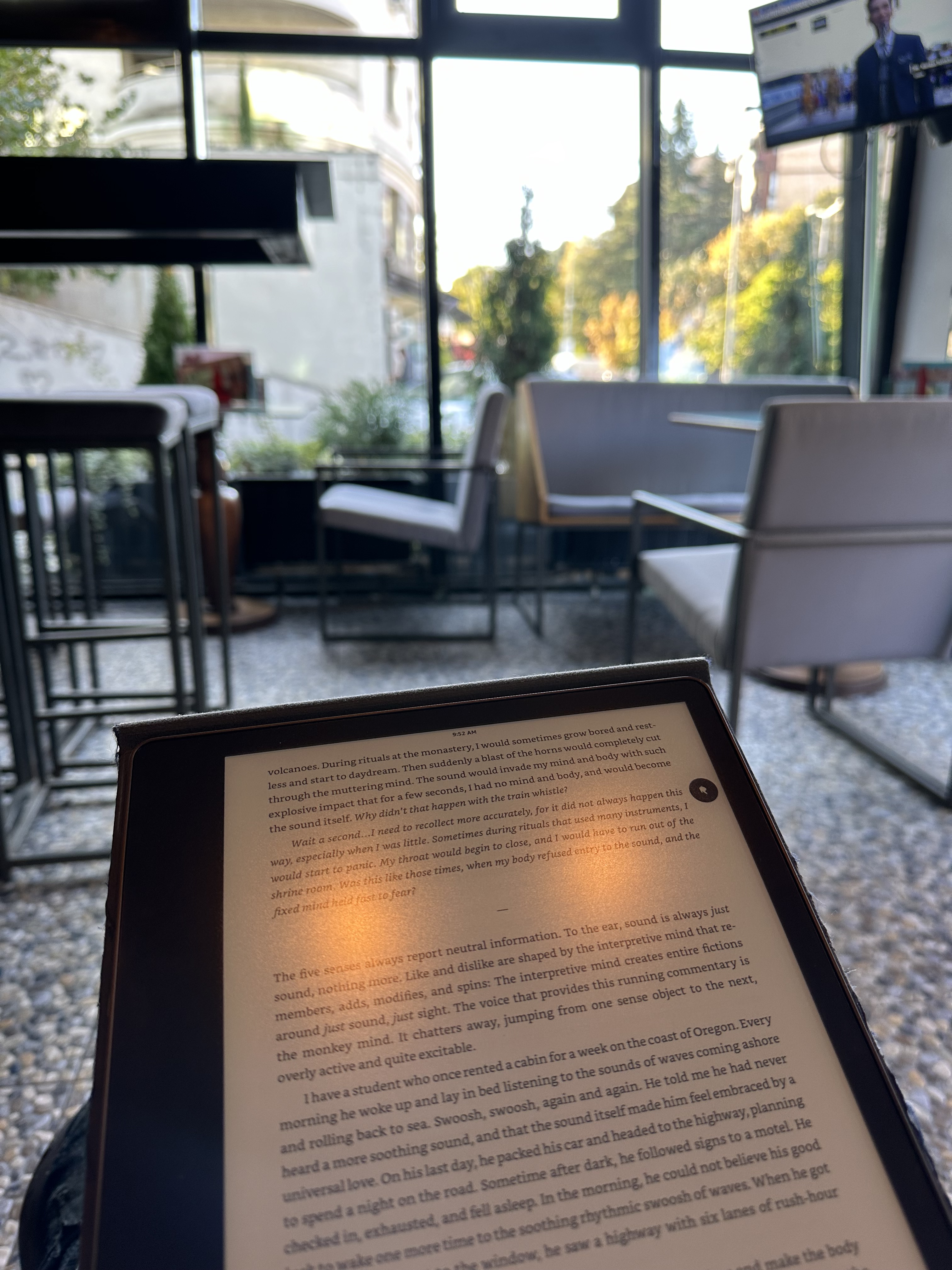

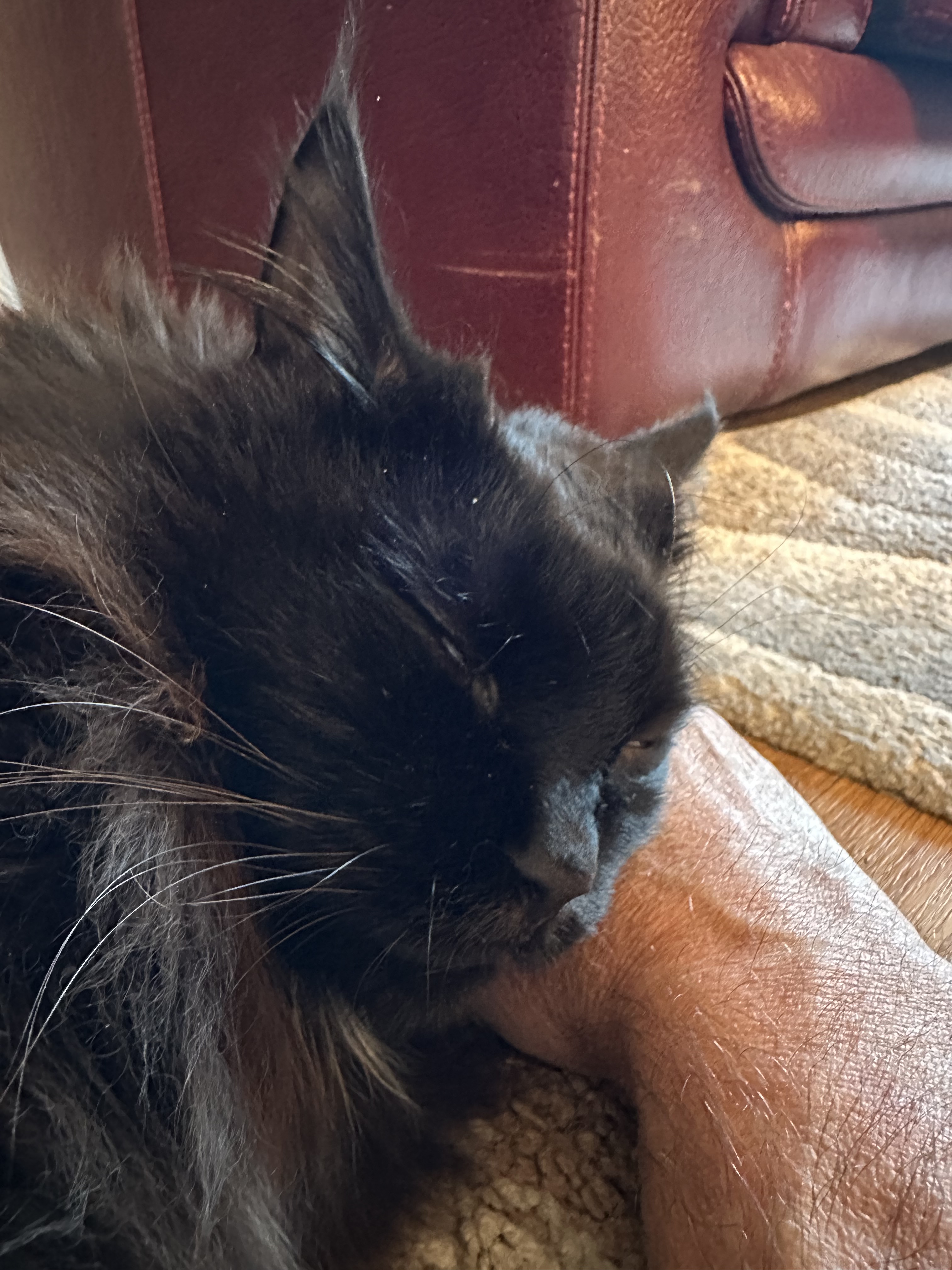
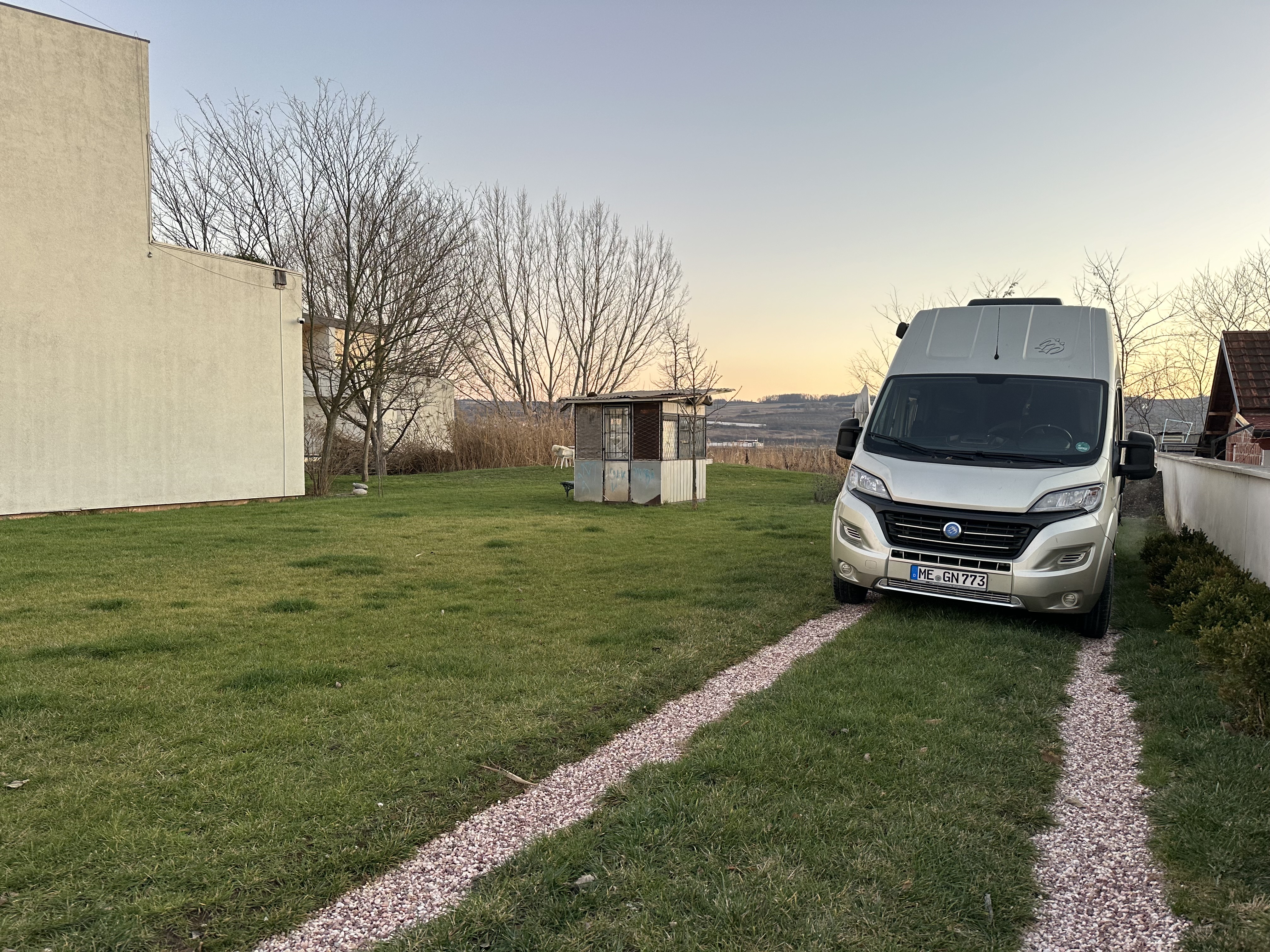
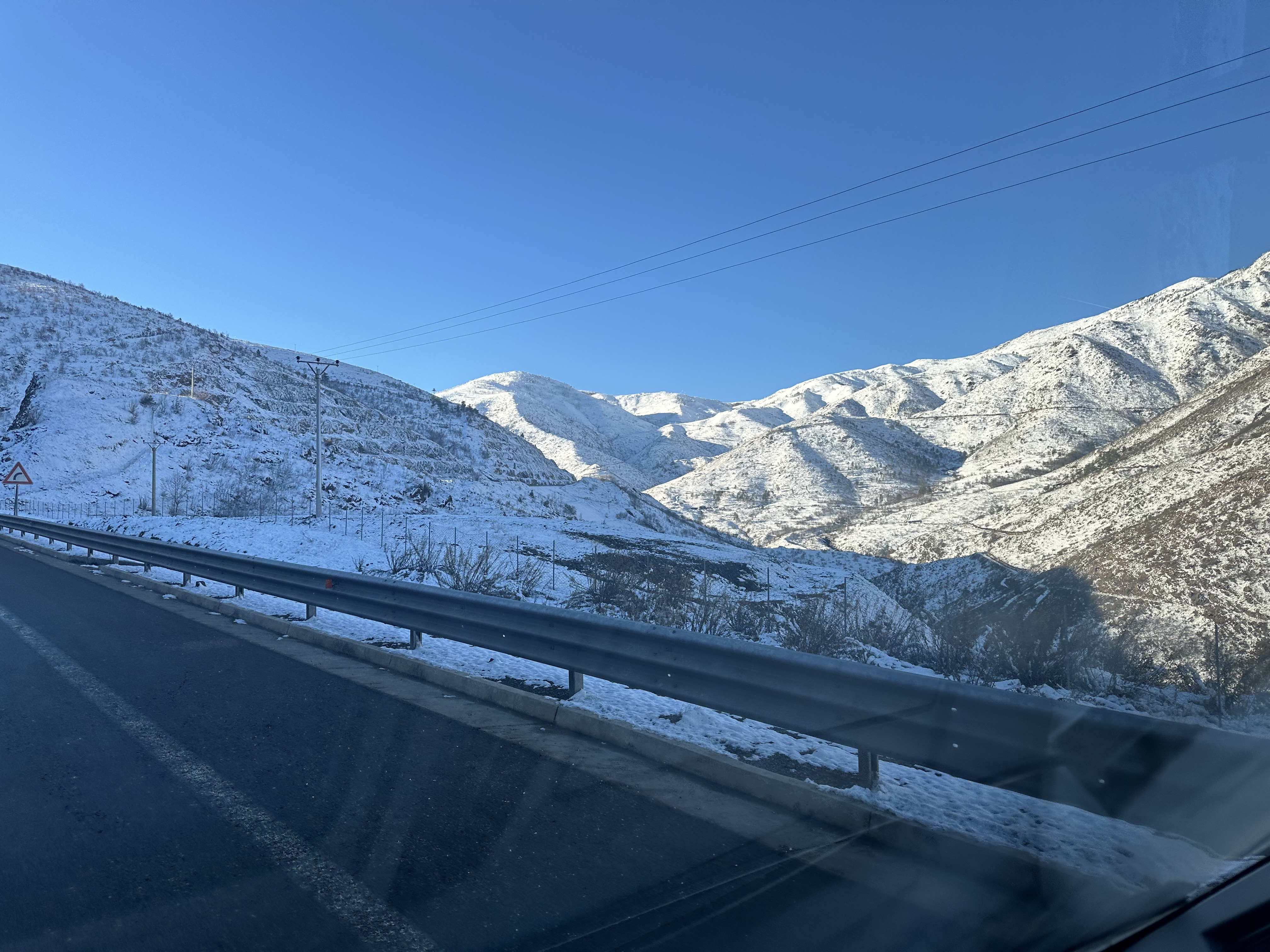
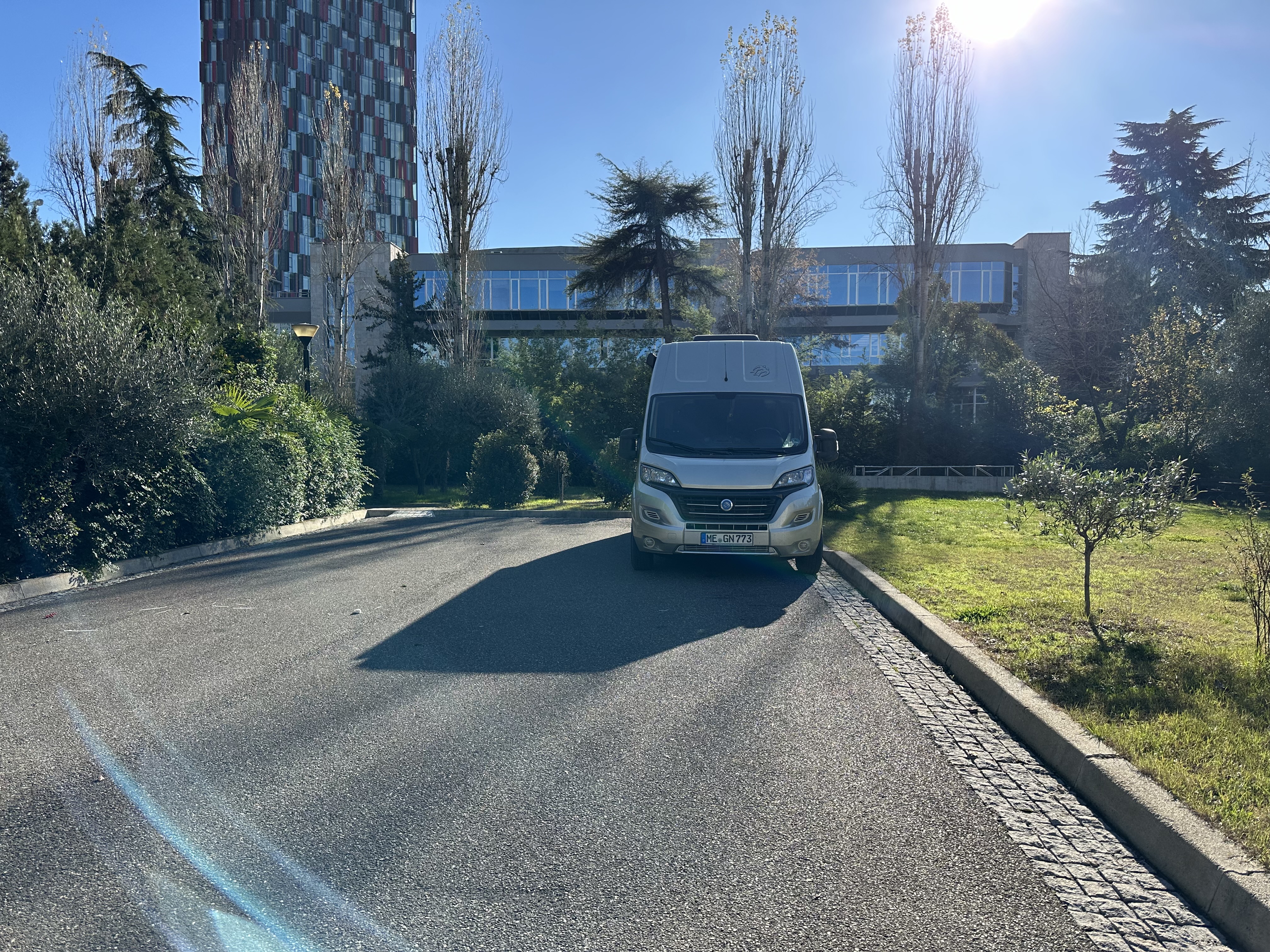
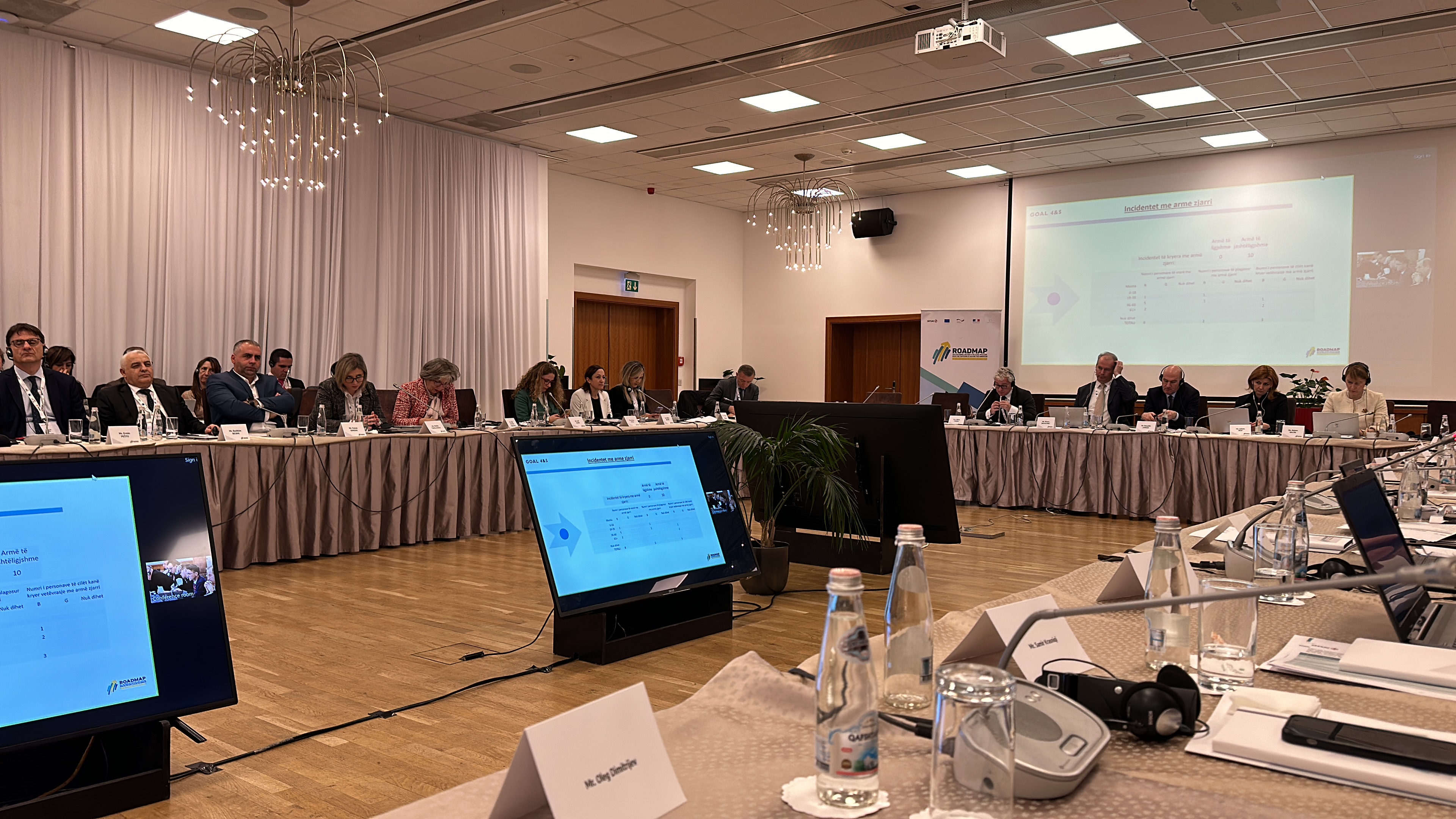
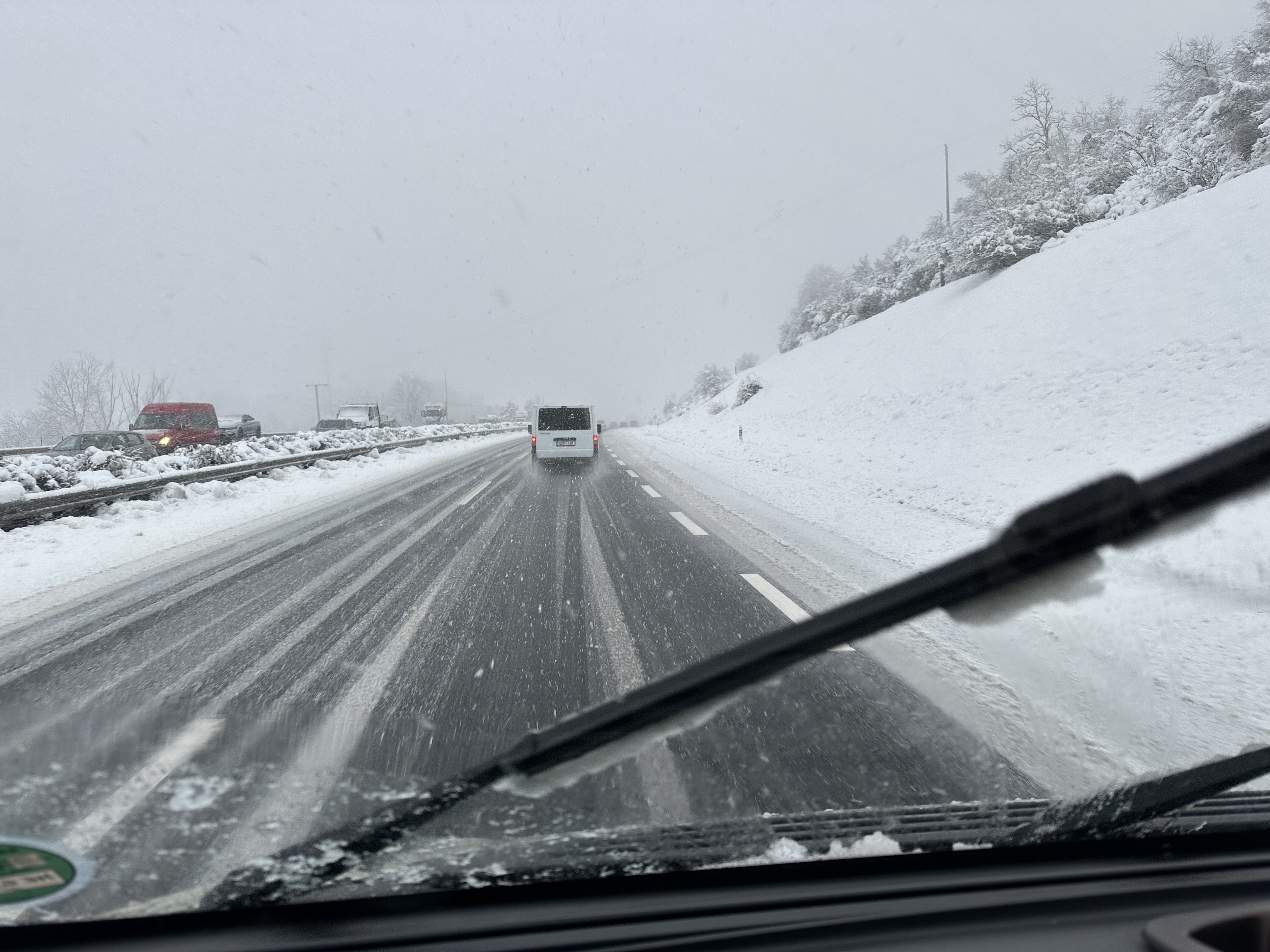
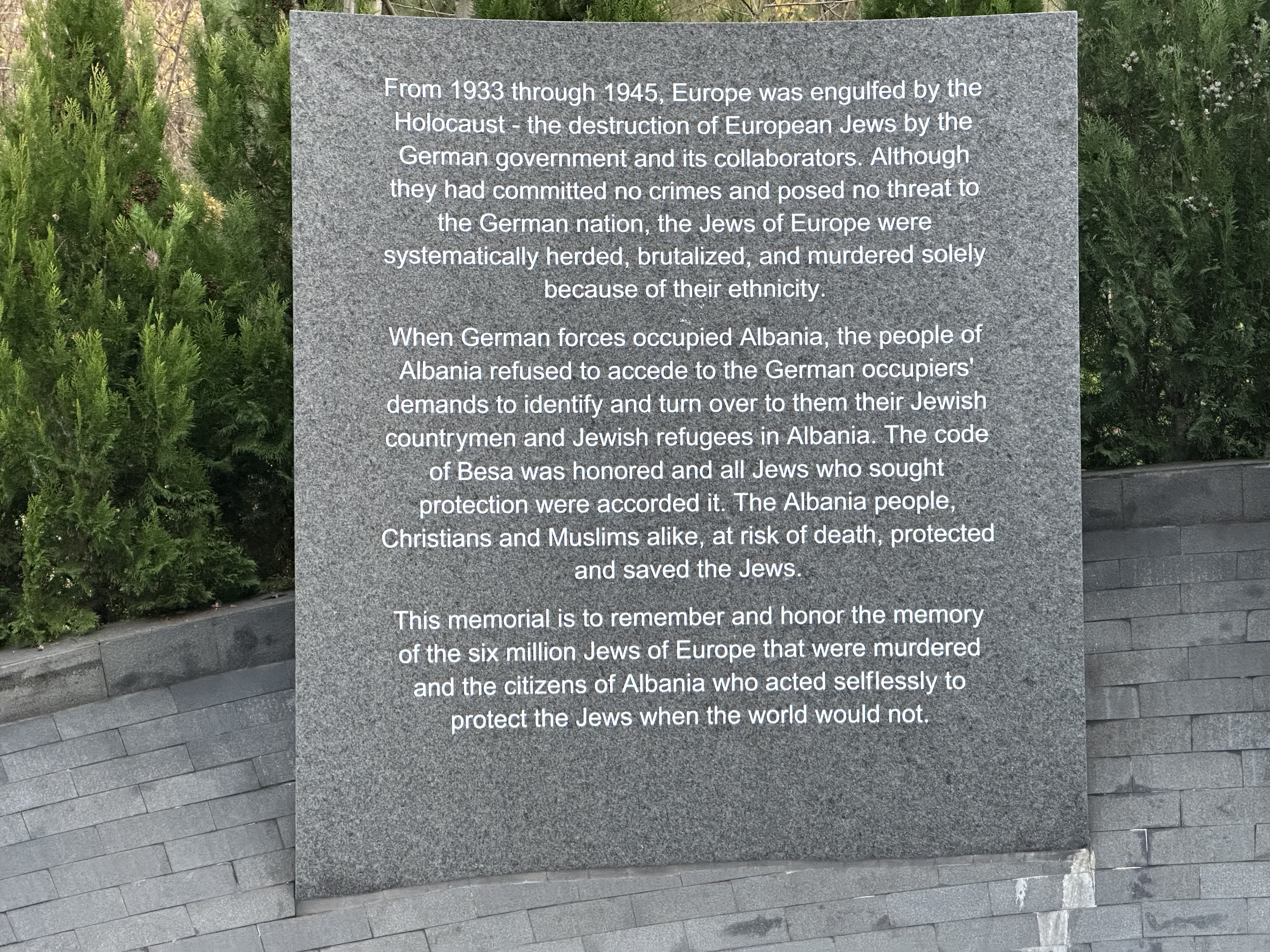
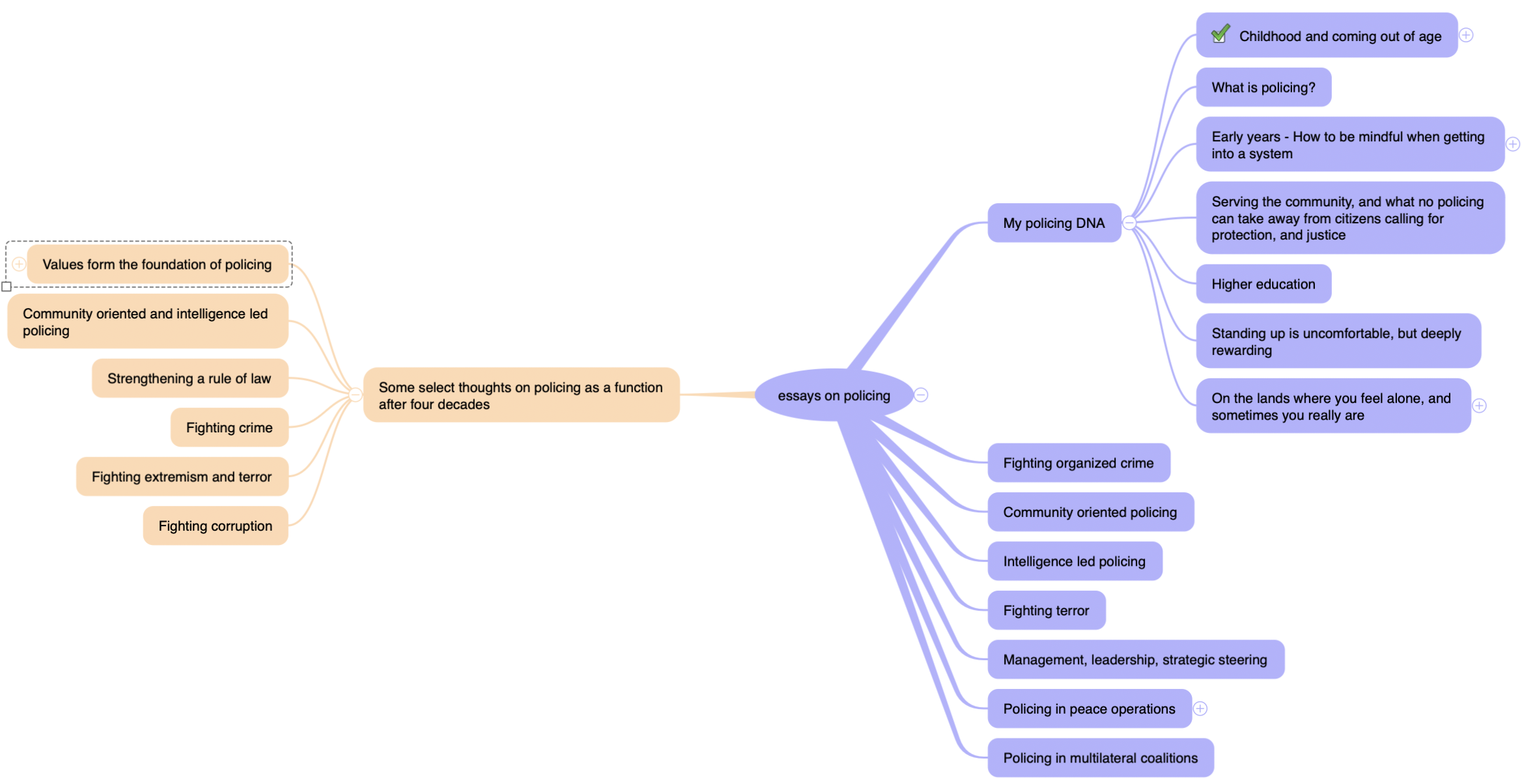
 Stefan Feller