The featured image is an AI-generated picture. I used a new option in the WordPress-Editor, and this picture is the product of the editor analysing the first few paragraphs of this blog entry. Amazing.
This morning I am starting to write in front of the little coffee shop at my campsite in Berlin, enjoying a breakfast, a coffee, a smoke (with some delight and some regret), watching the many people on holiday waking up. It’s a beautiful summer morning, temperatures will soar into the high nineties (Parts of my brain are still used to write as if I would be in the U.S., it will be more than 30 degrees Celsius here in Germany). I am looking forward to swims in the lake, the beach will be crowded and I will like to look at myself as a younger person showing up, opposed to how other people will see me: As the older person I am.
Vanity has a special place in aging. It is a function of a concept of self-identity which is using the growing repository of memories of the past. In the past I was young. I always prided myself to be one of the youngest. My mind is telling me that this must continue, looking for all sorts of confirmation that it really can’t be that I am getting old now.
I haven’t been writing on this blog for a long time. Things have been extremely busy since the beginning of this year. I completely rearranged my private life, got myself a new home in Germany, moved out of Serbia after four years in Belgrade, continue to work in my advisory job on Arms Control, and took a second job as a COO in a non-profit. I furnished my new apartment, decorated the garden. Got myself a new motorbike. Moved back into a job with a real office, not only a home-office. Traveled to Canada, to Moldavia, to Montenegro, several times to Berlin. Worked seven days a week. Took on a bunch of new and very demanding projects. Found myself, after several years of a break from responsibility for staff, back in a leadership position where I have to organize the collaboration of very young people, and retired people who have been in senior command positions during their active careers. I am dealing with challenges which I thought I had left behind, becoming a self-employed consultant. Now I am a manager again, in addition to the consultancy.
I doubled down at the age of sixty-six. Vanity: I can do that. I have my reasons. I’m still useful. Well, it fueled my restlessness. Big time. Whilst I am in an office with real people on a daily basis, opposed to the virtual connections for most part of the last four years, whilst my life got tremendously busy, whilst I could re-connect with my brothers who are now a stone-throw away and not thousands of kilometers, I perceived an increasing feeling of loneliness, as a consequence of feeling restless. My old instincts and reflexes of future-tripping are back, combined with grievances about the past. Staying in the moment is the single-most priority I am working on. And it is really very challenging.
When I argue why I am doing all this, I will say: I can pass on my experiences of a lifetime. I can mentor, I can advise, I can assist other people in their evolving careers. I can extend my passion for all things peace&security into a new phase of my life. I can use all arguments under the sun to place emphasis on that this is a next step in a long career, I can thrive in the recognition of my relevance, for all the wrong reasons hidden under the hood of some self presentation of an image how I would love to be seen: Acknowledged. The extension of an image which I, like everyone else, especially in leadership positions, have honed for all my life.
I am, for all accounts and purposes, on a developmental path which I try to shape as a path of growth, and not a path of fear about future decline, and that is not an easy task. It has myriads of aspects, and often it is an emotional rollercoaster.
My tools of self-awareness have grown over a period of eleven years since I radically changed my life, since I had to change everything, because none of my old ways of controlling my environment was working any longer. It is this self-awareness which has grown enough to allow me to see what happens when I indulge in permanent work, which allows me to see what happened since I doubled the amount of work by taking on two jobs at the same time. It makes me think I am relevant again.
There are experiences with the effects of too much work and stress which are specific to my own path of recovering from life-long trauma, and they are not subject to my writing here.
There are experiences, however, which I believe are common for people who have gone through a long career development always striving for becoming more relevant in the next job compared with the previous ones. I look at myself with some self-awareness that I, like so many others in leadership positions, have created an image of myself which has an appreciation of relevance, of importance, of “being inevitable” at its core. With the development of such a self-concept lasting over many decades of an adult career life, its profound impact on all aspects of life can not be overstated. Like, in so many situations where I am either introduced into a new set of people by making reference to the senior positions which I have held throughout my active career, or doing this thing just myself.
So, moving into a next, blessed state of my life, as I aspire, includes a constant confrontation with the “devils of my past”: The path from sourcing energy from external validation towards sourcing it from an inner peace of mind and heart, it is a bumpy path. This, in itself is inevitable. Just to say: I feel that I am on course. I don’t feel like I am stuck. What I do is to share this experience.
For a reason, as always on this blog.
July 20, 2024, the New York Times is carrying an OpEd by Maureen Dowd: “Lord Almighty, Joe, Let It Go!” It is heart-wrenching, like the video of President Biden failing against Donald Trump in the TV-duel as of June 28, 2024. It was so painful to watch that I could not get through more than a few minutes. What made me furious was that a distinguished person who I got to know myself, who I deeply respect and admire, and who has always been a beakon of civilised democratic culture stumbled. The decline was so mercilessly visible, whilst the other person with massive cognitive decline in the room, the former U.S. President Donald Trump, had it easy, simply because the amount of inconsistency, lies and incoherent mess coming from his mouth was just an extension of what he does for a living. For Trump it was easy to hide behind the fake he is. For Biden the curtains of mercy which had been webbed around him by his campaign managers, they fell. Brutally.
Maureen Dowd brings it to a point when she writes: “The race for the Oval today is between two delusional, selfish, stubborn old guys, and that’s a depressing state of affairs.” In her OpEd, like in so many other pieces I have read, she points to the bitterness of President Biden coming from previous situations during which he had felt let down. She points to a complex analysis, like others, of a person who is not able to get through the web of self-delusion, who is trapped in an inner fight about whether passing on the lead is a defeat, or the right thing to do. A person saying “I am the only one who can fix this.” Joe, I pray for you, you will make the right decision.
I have heard the sentence “I can fix it” too often, and I will say that I used it as a strong motivation for continuing in my own career, systematically. In my career it worked. In my private life it was the delusion which brought me to my knees. “I can fix this” is a human character trait, and crossing from the positive realm where this assumption is useful into the horror realm where it sets one up for delusion, and ultimate failure, this is where uncounted people break.
The point which I want to make, perhaps: There is a plethora of situations, including the big one in Washington, where old people struggle with their delusion of relevance, and their being challenged, their clinging to control. It goes through many societies, and many systems of different forms of governance. The old guard not giving up, depriving the young generations from taking their rightful place.
It would appear to me that this form of delusion is something for which especially those become vulnerable who have built their careers on their ego. The Darwinistic selection which, more often than not, brings those into command positions which have an unhealthy degree of egotism, narcicissm, and even sociopathic traits, who have a blown-up self meandering into delusion, it is intrinsically connected to how we have put external values, symbols of power, youth, sexuality, richness into the core of how we live our lives.
This is becoming a problem when we age. The past is sourcing us with everything which made us creating our identity. The future becomes a shorter perspective. The question “What comes after this?” is leading to uncomfortable answers: “Not much more”. And whilst “Not much more” is true when being used as “Not much more of the same”, it is wrong when it comes to the real path of growth: Aging presents an incredible opportunity:
To let go of ego. To have confidence in change. To understand and to accept that nothing, literally nothing, remains unchanged. And that this does not mean that aging is equaling diminishing, becoming dim, disappearing. It is about recognising that always the new arises from the old. In this, we, the aging people, can play a very important role, by being role models of this growth.
I am reading Pema Choedroen’s beautiful book “How We Live Is How We Die” for the fifth time. Often just one page, then contemplating again.
Pema is quoting Dzigar Kongtrul Rinpoche, one of her spiritual teachers in the line of Tibetan Buddhism:
When the appearances of this life dissolve
May I, with ease and great happiness
Let go of all attachments to this life
As a son or daughter returning home
Throughout the entire book, Pema continuously makes the point that preparing along these lines is by far not only applicable to those of us who believe in re-birth. Read this book. It provides so many examples for how the acceptance of continuous change in our lifes is the only real thing which will allow us to be happy.
Of course I am privileged, I thought when I was enjoying my second cup of coffee outside of my caravan in Berlin, looking back on one month of travel. I racked up roughly 20.000 kilometers, or 12.500 miles, I stayed in Serbia, Canada, Kosovo, Albania, and Germany, I passed through Hungary and Slovakia, I slept over in the Czech Republic. I sat on planes and I traveled for many days with my campervan. Except for the Canada travel by air, my faithful cat friend Tigger accompanied me everywhere.
Christian Christmas celebrations are over, the Orthodox community is still looking forward to it January 06. These are the days in between. New Year’s Eve is quickly advancing. Winter solistice has just passed less than two weeks ago, sun is coming up late in the morning and darkness settles in at a time when I would just go for another afternoon swim during summertime, with six to seven more hours of daylight to go. Right now, forest paths are muddy, nature is in its deepest state of hibernation, leaves on the ground are wet and often greyish. Road surfaces barely dry up. On my way through Hungary, Slovakia and the Czech Republic I passed through heavy blizzards and made myself comfy for the night in a parking lot thickly covered with snow. Passing Prague, the snow all but disappeared. Traveling northbound through Dresden to Berlin just the occasional heavy rain, strong winds, grey nature. One of my self-made worries which I had tried to keep at bay for weeks was related to the consequences of a winter storm which had passed through Berlin early December. Loads of snow had brought the tent down which I have attached to my caravan. There was nothing I could do from thousands of kilometers away, except for a mental exercise not to allow my crazy and often restless mind to plunge into another reason for worrying just about everything. When I arrived in Berlin, removing the puddles of water from the tent’s collapsed roof and putting new pressure on the pylon-system stabilising the tent was all I had to do. Five minutes work, and the tent was up again. Weeks of worry were proven unnecessary. My mind was desperate to find a new thing to worry about, and I tried to keep that at bay.
At the beginning of December I prepared for my travel to Toronto. Going through errands which always were a ton easier than they felt, I followed my usual morning routine of having a breakfast in my favorite street cafe in Belgrade. I listened to my neighbors who started to be occupied by the upcoming Serbian elections. Some of them muttered that they would hope for a change in the political system, voices filled with frustration. One of the waiters in my cafe, conversing with me in English with a thick Russian accent, was asking me how life is in Germany. Expressing hope that somehow, some day, he would also end up in Germany. Less frustration in his voice, more something like the hopes that you express when you have a dream. A life dream, since people like this waiter are very young. They know from which circumstances they are coming from, and the future is better anywhere else.
Sometimes I jokingly say that I am an old fart. Which is true to some extent. Physically I am approaching 66 years of age. Yet, the way of life I have choosen, it keeps me agile. For everything in life there is a bill to be paid, the currency in which I pay my dues is restlessness and the constant thinking about how long I will still be able to do this, and what will happen when I will get really old. Remaining as much as possible in a state of gratitude allows me to see how artificial this constant battle is, my mind telling me what I don’t have. When I manage to see, instead, what is given to me, restlessness and dissatisfaction vanish. At least for a while. When I look around myself, I see many people being affected by the same thing which I cope with: I always compare what I have with what my mind is telling me I should have. I compare my current situation with my past, my mind selectively produces memories of residences, houses, fancy cars with a driver, important jobs with status and acknowledgement, business class flights and five-star hotels. Or I compare what I have with what I would like to enjoy like others. When I allow it, it creates a near-constant state of dissatisfaction. In that state I compare my simple apartment with old furniture with the houses my brothers have, or I used to have. In that state I don’t see the freedom of my vagabond life with a campervan and a caravan, instead I obsess about the next better option, the next better thing to have, another job giving me more financial leverage. When I listen to people who look at my lifestyle with admiration, I see that everything comes from comparison, keeping everyone out of the moment. When I then manage to look back with honesty, I remember how unhappy I was. How much I sedated myself, and how unavailable for really meaningful relationships I was.
It feels like we want to constantly compare our own situation with that of others. And since months now, I am trying to find an answer to the question whether there are psychological limits to the ability of feeling empathy for others: The onslaught of news about people who have not even a tiny fraction of what any of us has, it leads to an increasing number of conversations where I hear “But what about me and my needs?” A question which I hear in multiple variations, sometimes with an expression of helpless shame for uttering such an emotion, and sadness, sometimes with an expression of anger and fury. Is it possible that in a situation of “information overload” related to the suffering of other people, a shut-down mechanism emerges which makes people feel: “I can’t listen to this anymore“? Is it possible that, in order to internally justify such a thought then, people must find an argument like “But look around here! There is so much broken here, in my society, why are politicians not taking care of this“? Bold forms of this argument include the exclamation of desperation by saying “We can not always only help others!“
Is it possible that this presents a platform for right-wing forces to run this meme, and to wreak havoc on the ability to empathise with others, by playing the selfish card, a nationalist card, a card where they fuel negative emotions?
When I have conversations about this with my friends in my network, we quickly identify the gasoline which fuels this fire: Egotism. Because it is also correct to say, for example: Germany is one of the most powerful economies around, and with yet a relatively stable political system. We have a responsibility to help others, and by the way, if we don’t, it also will play out very bad for ourselves if all around us is crumbling.
Since the beginning of my international career 24 years ago, at any given time when I came “home”, to Germany, I felt that complaints about own misery were on a level which I could not understand any longer, comparing it with the effects of conflict and war in those areas I was working and living in, or the poverty-stricken perspectiveless of people in societies in which I contributed to assistance, or the frustration of people in the claws of nomenclaturae sucking the life-blood from any perspective of change, compelling people into compliance with a system of multi-layered corruption.
And, beyond Germany, is this a desease affecting the societies of the Western World?
Gratitude. I had a pinched nerve in my lower back when I started my travel to Toronto. Economy class seat, of course in the middle, not an aisle or window seat, squeezed in between two big persons. I had passed through the luxurious business class section on the way to my seat, thinking about the many times when I had the privilege to enjoy a spacious seat, and good food. Now I saw the faces of bored business class travelers when I passed through, and their annoyance when loads of economy class travelers disturbed their serenity. Sitting tight with a painful back, I sensed the travel stress of all others around me. Moving into some form of gratitude, I suddenly recognised that my two big neighbors felt uneasy about taking up so much space, and that they did what they could to give me space. If I would have aggressively claimed my space, I wouldn’t have noticed that. So, instead of an internal battle in which I would have thought about the misery of economy travel, I thought about the fact that one such travel brought me 8.500 kilometers westbound within hours. I was grateful to have an opportunity to see my children.
Arriving in Toronto, poor me (the economy class traveler with undeserved back pain) moved through immigration in minutes. Then, poor me decided to immediately pick up the new fancy MacBook Air 15 which I had ordered in advance at the Apple Store. Canadian prices for that gadget are so attractive. So I stopped at Toronto Eaton Center, the whole place in full Christmas decoration, North America style. Noticing homeless people in the shadow and hiding in corners, and fancy customers strolling through the high-end shopping mall, a trademark sign of Toronto, I picked up this new fancy gadget, immediately back in a cab then and arriving with almost no delay at the place where my children live. Grateful and happy, after a big hello by two teenagers, I fell asleep, privileged to cross one entire ocean in order to see my children, more or less every two or three months. My ex-wife also being grateful that now it was her turn to disengage from parental duties, for a little while.
I could complain about the combination of severe back-pain and jet lag which I experienced during the following days. I won’t. Instead, I recall the quality time of bonding with teenagers at different stages of their tumultous process of preparing to come out of age. I recall amazing talks about empathy in dark times with one of my children. I recall just being there, with nothing I could do, witnessing the pain of the first heartbreak experienced by the other child. I tried just to empathise, not being the parent giving advise, or meddling with the affairs of a teenager who had not intention to talk about this experience with a parent.
Coming back to the invisibilities in a high-powered society like the one my children live in. Living costs in Toronto are extraordinarily high. So has to be the income then, in order to make a living. Those people live in the neighborhoods like the one of my children. I see them coming out of their houses, getting into their SUV’s. Stopping at the neighborhood cafeteria on their way dropping off the kids at school.
Poor me, meanwhile, was limping through the house one evening, the pinched nerve was really incapacitating me. Poor me sat down and opened the fancy new MacBook Air. Domino Pizza has a near-perfect website. Geo-locating my area code, it directed me to the closest pizzeria. Ordering three pizzas, entering credit card details, tipping in advance in order to have “contactless delivery”, the website told me who the person was who fired up the oven and I could see the progress. Once things were out for delivery, a map would show me the exact position of the car on its way to our house. Ping. The very moment I limped out on the porch, the car arrived, I took control over the delivery. I enjoyed pizza with two children more or less bent over their cell-phones, their eyes glued to the Tic-Toc-streams.
Over the next days, I started to pay attention to this invisible layer of society, the low-wage-jobs which made it possible to enjoy such a luxury of, for example, pizza-delivery. Or ordering stuff on Amazon and to have it on our porch next day. I watched the nannies pushing the strollers with babies. I watched the people silently examining the litter boxes for collectible recycables. I watched the people warming up in the shopping malls, and I saw the legion of food-delivery drivers. I tried to imagine their lifes. To walk in their shoes.
Canada is a society with a lot of social compassion, and a lot of empathy. I’d love to live there. Yes, my lovely children, I just can’t, because I need to work the way I do. Go figure and watch this hidden layer of society in the United States, by contrast. And inasmuch as this new global wave of nationalism and xenophobia might be rooted in disenfranchised lower middle class and lower class portions of societies, I feel that the desease of a lack of empathy and of nationalism and xenophobia might be perfectly sitting smack-in-the middle of well-educated middle class people. It does not feel like a bottom-up uprising of the disenfranchised. It feels like memes are being spread by people who are well-educated, and not poor. I guess I am not the only one who can easily name a few examples for this in our own networks of people we know.
I left Canada eight days later. With a cured back and a new fancy MacBook Air 15. With tremendous sadness about leaving my children behind. On two flights with much better seating arrangements. Well, no sleep, though, which made the five hours layover in Frankfurt a difficult thing. Poor me. Arriving in Belgrade, I settled in my little old apartment and contacted my friends in the “Cat Pension”. Milos and Svetlana love Tigger, and he loves them and the other guest cats. Milos made everything happen to immediately put Tigger into his box and to drive to my place. With Tigger back home, I could witness real gratitude: My cat friend would not stop purring for two days, he would roll over in front of me ever so often, he would literally snuggle up in my arms for the next two nights.
I had five days to go. Five days to cure my jetlag from two times 8.500 kilometers, to finish some work preparation, to clean the van, load up the van, fill up the freshwater tank, activate the heating system. Five days to arrive from a different world, in a different world. My usual constant, my beacon of orientation: My street cafe. And back in European time zone, I could re-establish the pattern of frequent communication with friends, and friends in my recovery network.
One of them lives in South Africa. Another one in Scotland. A third one in Slovenia. Just examples, my friends live all over the world. For us, exercises in gratitude are key for our well-being. So, poor me, in a not so fancy apartment, witnessed the effort of staying grateful in the case of someone who lives on social subsidies, has no job, is coping with life and working hard on developing a positive attitude whilst being in a situation which, compared to mine, is so different. This friend of mine works hard on getting rid of fury, resentment, sadness, feelings of powerlessness. It does not make him or her rich. It will not immediately help in his or her economic troubles. Eventually, it will work. It always does. Like it does “this trick” for me. Well, waking up sometimes still sucks. But I manage to get better on that one too, one day at a time.
Empathy means to be able to listen to another friend of mine who really struggles with a massive depression, and the medication not working, without being brought down myself. Empathy means to just be there, sometimes, and to tell another person that, just today, that persons eyes look lively and good. Even if that person does not feel that way, the information about this is important. Because it will help loosen up the emotional pain. Sometimes, empathy is nothing else than pure love of being there for someone, with no means at your hands other than your sheer presence. Because, if I would would feel such emotional pain, I would want that for me. Just friends being there. And guess what, poor me: I do enjoy that. The very same friend would do everything the same way when it would me my turn to suffer from depression.
Sometimes, empathy means to completely let go, like in the case of one friend of mine.
Yet, poor me went through these five days worrying about each and everything, planning the travel to important work in Tirana, and how to plan the Christmas time, and how to travel. And how to tell another friend that I would not follow her invitation for spending Christmas at her place. Because, on one hand, I needed to take care of my collapsed tent. On the other hand, that travel would have added another 1.200 kilometers between Belgrade and Berlin. And thirdly, poor me wanted to be at a place where poor me would not be a guest, but feel “home”. Which is the caravan where Tigger and I live in Berlin. Not in misery, it is a fancy new caravan. And it is located in one of the most beautiful nature areas around Berlin’s lakes. Poor me.
So, five days later I shut the apartment door. Tigger being happy in the warm van, we traveled from Belgrade to Merdare. Which is in Serbia close to the border with Kosovo, in case you acknowledge Kosovo’s statehood. If you don’t, which Serbia and also a number of other States including some in the European Union do not, then Merdare sits at the Administrative Boundary Line separating Serbia and Kosovo, a former province of Serbia, under international mandate regulated with United Nations Security Council Resolution 1244.
The very same UN Resolution which brought me to Kosovo early 2000.
The border crossing/boundary crossing is run through Integrated Border Management where both Serbian and Kosovan police and customs officers sit in one huge building which was erected and paid by the European Union. I was on my way to Tirana in Albania, and I wanted to do this travel in two days, in order to be easy on me. Having crossed the border, I decided that I would stay in Gracanica for the night. Gracanica is located directly at the fringes of Pristina, Kosovo’s capital. It is a village half-mixed between Kosovo-Albanian and Kosovo-Serb portions, with a core of Gracanica, surrounding a famous orthodox monastry, still constituting somewhat a Kosovo-Serb enclave. I lived in Gracanica for several years in the aftermath of conflict. Much of my work also included preventing violence in these enclaves, and also at times coming from them. It was all about the protection of civilians after conflict and war.
So, my travel from Merdare to Podujevo, from there to Kosovo Polje, and from there through Pristina and into Gracanica, it always fills me with memories. Many of them being awful memories. But also paying attention to what is happening currently, I saw the business of economic progress, mixed with old vehicles, tractors, and carts still pulled either by old machines or even by mules. New since one year or so: Every now and then, at the entry lane of a fuel station, I saw single women, young women, standing there. They always seem to be on the phone. For the passing traveler, it would look like they are waiting to be picked up by a relative or friend. If you look closely, you will notice that they will, for half a second, establish eye contact with you. As soon as you don’t pay further attention, the eye-contact will end. If you would, instead, slow down, you would see them for who they are: Sex-workers. Of the same kind like I can see them in Romania, from Dobreta Turnu Severin towards Craiova, for example.
Why do I mention it? To me, the phenomenon in its visibility was relatively new. It might not be. But this kind of prostitution is the prostitution of the poorest of the poorest. Of course it is managed by pimps, and of course this is part of organised crime. The sex-workers themselves: The poorest of the poorest. And the phenomenon in itself another example for those hidden layers in societies. Layers that we often do not notice. Exept when we want to. Except when we use them. The food-delivery guys, the nannies, or the sex-workers. Just as a matter of precaution, and for the record: Don’t.Do.It!
I do include a “please”. Because I have empathy for them. A lot.
With the sun setting, I arrived at my favorite place, a little hotel, called “Hotel Gracanica”, overlooking wide open fields towards Lipjan. The hotel has nice rooms, a swimming pool, a really nice garden, and space for campervans. It always is a big and friendly hello when I show up there, letting Tigger jump out of the van, happily enjoying another familiar place he loves, sniffing out the vegetable garden.
I was the only guest. The friendly staff firing up the kitchen only for me. So I had a good meal, nice simple conversations, and a night in my van on a secure compound, instead of renting a hotel room. The night was cold outside, my van cozy and warm and lit with warm lights inside. My gratitude included that, and the connection to the WiFi. These people are not rich, nor fancy. They are welcoming. They will speak fluently Albanian and Serbian, and they will use both languages as needed. With me, they will speak English. They are humble. That’s why I always come back. And its only these little details, like the easy-going use of both Albanian and Serbian language, which tell me, an insider, the story of change in Kosovo. Change does not happen overnight. It takes generations. Meanwhile, all who help and assist, they need patience, and they need to be very humble, far off from hypocrisy or impatience. Often enough, our own limitations and impatience sit at the core of why sustainability of peace and reconciliation could not be achieved.
Next day, rested and with a nice little breakfast in my belly, Tigger and I took the travel from Pristina to Tirana. I have little to report about that, because the only thing, really the only thing, to talk about is the marvelous landscape when traveling through the high and snow-clad mountains. Advancing the mountains from Prizren in southern Kosovo already is breathtaking. Passing Morina Border Crossing and traversing through Albania is providing stunning views. Another little detail: Once through, the temperature almost immediately jumped up from sub-zero to mediterranean t-shirt weather.
Poor me arrived in a van at the Rogner Hotel, a five-star hotel in the center of Tirana. Poor me, with the help of colleagues, had secured that I did not have to lodge in a five-star-room, like the more than 80 other participants in the conference marathon to follow, but that a hotel employee jumped into my van and talked me through the small streets towards the garden entrance of the hotel. There was lot of Police around, and a large demonstration adjacent to the Hotel. The employee guiding me explained that this was a protest against the government. Later during conference evenings, I would listen to friends who cursed the mayor of Tirana. Go, walk the town, see the sprawling development of buildings, make your own judgement. Albania is in a critical battle against corruption and on establishing a deeply rooted rule-of-law, on her way towards the European Union. I belong to those who believe Albania will succeed. Because of the Albanian friends I have. I am impressed by their passion and dedication and professionalism.
Tigger and I ended up with my camper van in the stunning backyard garden of a five-star hotel, where my autonomous van would sit for the next four nights. Heaven for Tigger. Convenient for me, because I could just walk into the conferences, receptions, meeting rooms, breakfast rooms, lunches. Of course, in a suit. Of course, well showered (my van has a nice shower). Yet, poor me telling me whether this would be okay.
I decided not to listen to poor me. Here is the thing: If you take your time and listen to employees in Tirana in a five-star-environment, you will also get the story including poverty in that country. On another occasion of an earlier conference in 2023, I had combined my travel with stopping over in most rural places in Albania. The combination of poverty, simplicity, and friendliness was overwhelming.
Just saying, poor me: Be grateful.
I don’t write about my work often, here. It’s complicated. It’s boring for some of you. It’s about long-term strategies, and a real support to local and regional development. It is not exciting for those who look for bad news stories, because it is the opposite. If you really want, really want, dive into it over here. It is a globally recognised example for how roadmap-based initiatives to control small arms and light weapons make a real difference.
I am biased, of course. Because I have dedicated much of my time since the beginning of 2020 to this endeavor. I don’t want to put it into the bag in which you would also find all things which form the cradle of all civilisations. It is, in many ways, an ordinary undertaking with a limited scope. In many other ways, it is not. One of the most-read entries in my blog is called “On Coherence of International Assistance“. It captures my views on why this work is so successful, on a very abstract and strategic level. In the context of this blog, I want to say something different.
For the tenth time since 2018, a conference room in the Western Balkans was filled with more than 100 participants. Six high-capacity delegations from Belgrade, Podgorica, Pristina, Sarajevo, Skopje, and Tirana, comprised of ministerial officials, law-enforcement and custom officials, prosecutors. High-level delegations from Brussels, Paris, Berlin, and other donor representatives. International organisations such as UNDP, UNODC, OSCE, NATO, EUROPOL and EMPACT in the room, or online. Civil society present.
For.The.Tenth.Time. Implementing, and assisting, a strategic roadmap which ties the six juridictions forming the Western Balkans together. Delegations from those six capitals reporting their own progress in implementing efforts curbing the impact of small arms and light weapons, and intently listening to the reports of their fellow partners. There is a reason why we only refer to “jurisdictions” and name them only by the name of their Capitals. That we do not allow any symbol or name or flag denominating an entity in the room. Because it completely allows that all talk with each other, and we do not get into any of this political tension which we otherwise would witness, and which would make our work impossible.
All of these ten conferences have also seen six local conferences in their preparation. The energy and dedication is not capped by the length of this endeavor. Instead, all six jurisdictions meticulously work on the identification of the strategy for the next five years. They permanently try to find entry points into increased regional cooperation, and at the same time both from their side and the side of the European Union the resulting cooperation is bringing the Region and the European Union ever closer together, in the realm of this topic.
If you would scan the Internet news on such stories of success, you would hardly be successful. Because in the onslaught of negative news, good news are either not recognised, or news outlets would not even bother with reporting on it. And funny enough, sometimes we are even happy about it, because it keeps a technical process of astonishing success away from political antagonisation.
That is as far as I wanted to report about these four days in this blog entry. I just wonder how we can find ways to counter the news which make us depressed, helpless, angry, sad, overwelmed. How we can nurture a culture which also sees the good news, and not only the funny cat stories on YouTube, or the Tic Toc shorts which are meant to keep you in the advertising ecosystem.
This entire initiative is, from a specific viewpoint, a prime example of how, for example, Germany is taking part, and also leading, a support initiative which is meant to help others. And though there is also quite some financial support in it, it is much much more, and it is an example for what others, as I also pointed out earlier, put into question. May be the answer is simple. Helping others is a guarantor for own stability.
Let me come back to “poor me”, once more, and in my final travel report.
Poor me had contracted a serious cold in Tirana (Covid-test is negative). Yet, poor me decided to travel back to Belgrade in one go. Ten hours. Exhausted but happy, I arrived in Belgrade.
Poor me wanted to rest, but also could not get rid of restlessness. So it was only too short after arriving in Belgrade that poor me loaded up the van again. That is how my travel report began in the first paragraphs. That is how I moved through Hungary, Slovakia, and the Czech Republic.
Which constitutes my final comments:
Unlike last time, when arriving at the Serbian border with Hungary, there were no colons of migrants walking up and down the highway stretch. Also there were no military vehicles pointing their guns towards Serbia, on the Serbian side. No helicopters any more. But still, meticulous controlling of every car for illegal migrants on the side of Hungary. The intense cross-border efforts to fight organised crime trafficking migrants had an effect. Well, as always in fighting crime, the effect is to push crime away from one area. It will show up elsewhere. With the same victims. Repressive forms of fighting crime are not able to address root causes. They only can support zero-tolerance, and deterrence. But they do not operate at the root level.
Like last time, exiting Hungary and entering Slovakia was not possible without being flagged down and with polite police officers doing a visual inspection whether my van would carry illegal migrants. The same would happen, like last time, when leaving Slovakia and entering the Czech Republic. This time, approaching Usti Nad Ladem and the German border, I was not flagged down by a police vehicle with blue lights, inspecting my van for illegal migrants. But after the German border, a semi-permanent Police checkpoint forced every vehicle to slow down to walking speed. This time, I was waved through. “A Merry Festive Season” I exclaimed, they smiled, thanked me, and wished me the same.
Ending one day after I began this blog writing, and way too many coffees later, I can report that I am almost alone on my campsite. Most other permanent campers seem to enjoy the Season from the warmth of their homes. I don’t miss the two guys who I overheard in October, when these temporary migration-control measures were established, including Germany announcing to do this at the Polish and the Swiss border. These two guys said: “Now there won’t be any Muslim passing through Poland to Germany any longer”. For the sake of my inner peace, I did not vomit. I just left, because some things one can not control.
At the end, and against this background, special greetings go to my nephew and his Egyptian wife. My nephew converted to Islam. He was very easy on this. And his only reason was that he was so seriously trying to respect the cultural context of the family of his wonderful wife. If you ever come to know Egyptian culture, you will have a glimpse of appreciation what that meant for her parents.
If you, instead, harbor resentments, or would like to make derogatory comments, let me mention that my pregnant mother, a Protestant, was forced to accept at the time of marrying my Catholic father, in 1957, that I and any future children would be baptised Catholic. Otherwise the catholic priest would not have married my parents.
Think about that.
Be grateful. Be compassionate. Cultivate empathy. Before you die. Start now. You don’t know how much time is left to you to become a happy person. Hope you had a good Christmas. I did not put up XMas decorations, I could not get myself into it, with so many children dying in war, whether in the Ukraine, or in Israel/Palestine or Palestine/Israel, in Africa, or elsewhere. And have a peaceful New Year’s celebration. 2024 will not get better. In addition to all the unbearable suffering for which we need empathy, we will need to put every energy into resilience. 2024 the United States democracy will be put to a stress test that has the potential to rip it apart. Donald Trump, President Nr 45, the undisputed contender in the field of Republican candidates for the 47th President of the United States, has already made clear what we can expect.
Migrants are poisoning the blood of our country, he said.
With that, after 20.000 kilometers of migration, being a guest at most places, I end here.
Happy Holidays.
On this picture: I took this in a park in Tirana, December 2023
It’s been a while since my last writing over here. Unlike blogs which require to be kept alive because of a business model of any sorts, by keeping the readership (or in case of vlogs, the viewership) being supplied with a constant stream of interesting pieces, this blog is for when I feel I have something I want to say. Whether it is interesting for the reader, well, you decide that. I also felt I had written a lot in a short period of time, recently.
If you have had the patience to wait some 13 seconds until the blip finally becomes audible, you had the patience to witness a cosmic event, with gravitational waves from the merger of two Black Holes, recorded by some of the most amazing technology on Earth, LIGO, and transformed into a sound wave. Two monsters of the universe. At the center of them physics as we know it is breaking down, so we can’t explain the innermost workings. They were circling around each other, in ever closer orbit, until they merged. That blip, representing gravitational waves which have traveled for billions of years before reaching our finest detectors, it is testimony to some of the most massive energy bursts we know about in the observable universe. Many say correctly that it also gives testimony to the precision of modern day applied physics. True. But read about Black Holes, or Neutron Stars, or else, and the size of what is out there may perhaps rightsize the perception of our big achievements.
Am I becoming a physicist now?
Well, as on uncounted occasions before, these days I am trying to wrap my mind around the cutting-edge findings in quantum mechanics and general relativity. Moving forward and backward through what we explore on smallest and on largest scales of the universe as we believe to understand its “workings”.
Each time I do this, I end up somewhat exhausted, blown away, baffled about the complexity of mathematics which I don’t understand, but also feeling a fundamental sense of appreciation on a, perhaps, more intuitive level. I still am the child who, five or six decades ago, looked at the sky, wondered what was there, and walking into the public library after Sunday’s mass and coming home with a selection of science books, and science fiction books. Ever since I have been wondering what this is all about, limited in my understanding, and equipped with never ending curiosity asking known questions again and again, and discovering new questions which drive me further. Sometimes mad and crazy, but mostly further.
The extent to which everything we learn about the fundamental forces and conditions of nature is governing literally everything in our daily life is extraordinary, and mostly not understood by many people. Whether we believe in a flat earth or in real science; Whether we manipulate truth or seek to find it; Whether we adhere to universal values of humanity or not; Whether we live a life in entire denial of global warming, or are concerned about the future of our children, nature on Earth, or the planet at large: We all live with and use technology which fundamentally exists only because of an understanding of physics which is almost incomprehensible for most of us. Just look at your smartphone. You will be able to explain most things related to how you are using it. Explaining how it works may be a much bigger challenge, often enough an impossibility.
Some may say “Why bother about what these eggheads say? I care only about what is useful for me.” Some say “Let them work away, writing up these crazy formulae, but God forbid if they are in my way.”
For the universe at large, the relevance of this denial and selfishness is smaller than minuscule. If we blow it up, the blip of that event will transverse the universe at the speed of light, and some distant future observer on Kepler-B 1423a will write a scientific paper in some language and logic unbeknownst to us, attempting to conclude what caused the blip. That alien scientist will note that the energy transferred through “that blip” indicates the explosion of a little planet, very unlike the billion times stronger energy released through a Black Hole merging event.
Another piece of extraordinary technology has made it into the main news stream: Like the Hubble Telescope before, the James Webb Space Telescope JWST is making the headlines. On the eve of the first public release of JWST’s first images, U.S. President Joe Biden was presented with one of them:
If you take a grain of rice and hold it up between two fingers, extending your arm towards the sky, the area which will be covered by this little grain of rice contains all the information similar to the picture above. Meaning, if you cover your entire perspective of the sky with such grains of rice at arms length, and you would be able to look through the Earth and do the same for the entire three-dimensional sphere that is the sky, the number of pictures like this one would equal the number of rice corns you have to use for this exercise. And with the exception of a few foreground stars, what you see in pictures like these are galaxies. Each of them containing billions of stars. According to our now ever firmer knowledge about the prevalence of planet forming around suns, there will be more planets circling around suns than there are suns in galaxies. And we talk about hundreds of billions of galaxies in the observable universe, at least.
I grew up with the hubris thinking that we may be alone in the universe. I can’t even emphasize how ridiculous such a thought is, in my view. But the period during which our observable universe has presented conditions which allow life to form as we know it, this may be the case since a few billion years. On a scale of the universe, civilisations like ours are a speck of dust, and I believe there are many of them.
If we blow ours up, oh well, will the universe notice?
Well, I am leaving the field of science here, and I will say the universe will cry because of our failure to do what we are supposed to do. Contributing to the beauty of this universe, rather than to our own selfishness.
Three – How Groups establish Common Frameworks of Perception
Too close for comfort? No, I’ll let you have a little peek view into my neighbourhood, when I’m in Belgrade:
At my favourite neighbourhood cafe, with a view towards my local grocery store, picture taken by the author, 05.05.2022
I am trying to get the finishing touches on Part 3 done from a campsite close to Bucharest in Romania. My vanlife has given me the opportunity to meet so many people from different walks of life. I just offered a coffee to a young German man who is traveling in a small van, with his partner, her daughter, and a dog. Have you ever listened to somebody who feels alienated, ostracized, craving for acknowledgement, and trying to make sense of his or her personal life story? The intensity with which they argue, the words they choose for making their cases? His story about a little group of travelers trying to keep life together, seeking a place to live in Romania, dropping out of regular life also as a consequence of the pandemic and personal circumstances, it offered a practical example for how perceptions develop, and how they lead to reinforcement processes. This person, whilst clearly not there yet, is on his path sympathising with “Reichsbuerger” identity, living at the fringes, and I don’t know whether much more has to happen to him before there is a path towards delusionial viewpoints, and radicalisation. All the time I was listening to him, I was thinking how I can interact with his attempt of making sense of the world, instead of myself just apologising, stopping communication, and staying in my worldview. Because this is what happens: A negative self-fulfilling prophecy about all the things which make this world un-just to oneself is leading to less communication outside of the group one feels to belong to. The more extreme the divide in fundamental assumptions, the more likely is that any communication with somebody who does not share a similar narrative of the world will not happen. We feel uncomfortable facing such extreme differences, at least. We may feel being upset, angry. We may react with hypocrisy, cynicism, open verbal confrontation. Or we may just walk away, and then it is about that the perceptions of two people engaging in a conversation were so fundamentally different that they did not fit into the reference framework they each feel comfortable in.
We see this all over more recently. Radicalisation of views is related to narratives that diverge extremely. Either a fringe view is colliding with mainstream views. Or several radically different mainstream views exist: The great divide between Democrats and Republicans which grows ever deeper, or the smaller fringes that we try to address in order to not see them growing into mainstream divergence, it’s all the same. All people on all sides believing in their version of perception, judging, or even condemning those who hold different views.
Wherever my international work and life has taken me, I always made it a habit to live in a local neighbourhood. Not those fancy Expat-areas, rather I feel most comfortable when I am a guest, and a neighbour, in a typical local hood. Sipping a coffee with very local people hosting me as a guest in their country, I learned so much, in Pristina, in Gracanica, in Brussels, Sarajevo, Brooklyn, Naples/Maine, Berlin, Belgrade, or so many other places. Since I started part-time Vanlife, on my campsites in Germany, or roaming the countries in the Western Balkans and around, or anywhere where I stop near the road for the night, I enjoy the same experience.
Not only that my cat friend Tigger is making new acquaintances all over Europe, it happens to me too. So, in that picture above you also see my local grocery store in Belgrade. There is a man inside, very friendly, selling fruits and vegetables, often talking about his love for German soccer clubs. More recently, he looked at me with a scared face and spoke, in broken English and German, about the war in the Ukraine.
When I recently cleaned my van, a very old and fragile neighbour, certainly in his late eighties, stopped by. Turned out to be a very nice and open minded person with a lot of curiosity. After a few comments about my mobile home he asked me about my opinion about what’s going on in the Ukraine. He asked me whether this would have been caused by NATO.
When I walked Tigger on 01 May, neighbours invited me to their open barbecue. Guess what came up? Fear about the war in the Ukraine. “Don’t go there”, one of them told me. “Well”, I replied, “You never know.”
When I’m in Germany, conversations will immediately turn to the developments in the Ukraine, too. As one might imagine, there the question will not be about NATO’s role starting it, but about NATO’s response to actions for which the Russian President will be damned. At least within those circles I relate to. But on campsites I will also meet other people. Like 2020, when a conspiracy theorist took me by surprise. Or as it just happened this morning.
When I’m in Romania, I will hear the local context, which, again, is entirely different from Serbia, and Germany. When I am in Bosnia&Herzegovina, I will get three different versions of the context in which the Ukraine war is being perceived. If I would listen in Albania, Bulgaria, or Hungary, or Poland, everywhere I would get a local and different perception on the same war, and the fears which are related to it. The common denominator is profound fear. The context will be explained differently, with nuances, or starkly. And all people truly live and believe their perceptions, no ordinary person on the streets will tell a fake story truly for manipulative reasons. Those people who do this on intent, they are very different, I feel their malice, and some, if not more than a few, are leaders.
The huge diversity of opinions based on culture and history and belonging, that’s Europe. Literally. It always is so hard to understand for people outside Europe, like those who say “Does the European Union have a telephone number”, those who may call for a strong unified European Union voice. In a true democracy view, the diversity of opinions on this continent is, of course, very hard to capture and to transform into more than the least common denominator. The alternative is autocratic attitude, and we have some of those, too. But believe me, no autocratic Europe would be more homogenous, compared to the Europe holding on to democracy. Rather, autocratic attitude is a recipe for intolerance, violence, and war. Just look back into Europe’s history of the last millennium, and especially the last century, and you will see that coercion into one identity only works temporarily. After Tito’s death we witnessed it again, more recently. The answer can only be tolerance for others and enthusiasm for diversity.
But, back to perception:
Those who I sometimes label “pied pipers”, they can be seen on a global level, and they seem to gain influence. They are those who scare me, because they operate on the opposite to tolerance and diversity. They are responsible for unfathomable suffering of many. And they could not do this without the considerable number of others who willingly buy in into distributing distorted versions of reality, or fake constructs of reality, for many different reasons, all of these reasons being motivated by selfishness.
From there, manipulation of reality permeates into the minds of who I would call, with all respect and compassion, “ordinary people” who try to explain themselves in relation to what life is throwing at them. Everywhere there are these wonderful local neighbours who struggle to make sense of what they see, fear, and are being told.
I am not wishy-washy, I have a very pronounced opinion, including on the war in Ukraine and the larger threats, and my core is torn into pieces because I believe that we need to do what, for example, Germany is participating in. All the way long, cold-blooded, decisive, but with great compassion and with healthy fear about escalation getting out of control. Doing whatever we can to avoid that the cauldron is exploding, but being very clear and very tough in saying “No way that we are going to allow this blatant attack on all values we have fought for since the end of the last World War.” But it is about how these values are being established, and what that then means to the competition of value frameworks.
I can not write this without a heartfelt word to my Ukrainian friends: I am sorry for your suffering beyond words, and you have all rights to be upset with the world, since you need, and deserve, the most decisive and best help possible. I just hope that we keep the balance in finding ways to ease, and to end, your suffering, without creating even more suffering. But your perception of what is going on, it needs to be, and is, at the core of everything we consider. We need to bow in front of you.
I am very privileged by having the opportunity to experience so many different neighbourhoods, cultures, nations, beliefs, countries. That is why I put this at the core of Part 3 of this writing. Because I am allowed to see this diversity in perceptions. People who live an entirely local life, they probably are more challenged by the need to be aware of, and tolerant to, other worldviews. I see very friendly people with great hospitality all over. Whether in Europe, or any of those conflict-ridden countries in Africa I have been spending time in, or Afghanistan, Pakistan, or Haiti, to name but a few. I don’t meet them in that proverbial mediterranean beach resort I was mentioning in Part 2. Not in holiday-mood, not with booze. But just very real, in day-to-day life.
“Sapiens, A Brief History of Humankind” by Yuval Noah Harari makes for absolutely fascinating reading. As do his other books. I directly quote from Wikipedia when saying that Harari is dividing “Sapiens” into four main chapters:
Much of my rambling is influenced by Harari’s explanation about communication between groups, tribes, communities, and especially when large meta-groups comprised of smaller communities come into play. His book is a fascinating journey connecting the evolutionary development including the brain of Homo Sapiens and its ability to form concepts that have no representation in the real world, and to communicate these concepts through language. The book seriously enlarged my appreciation for how we are able to form societal cohesion on a scale above relatively small groups of individuals.
At the beginning, in Part 1, I focused on how a representation of the environment is being put together from sensoric input. That’s the neurophysiological view. But already there perception is the result of an interpretation based on previous experiences through memory, and hugely influenced through emotions that accompany the sensoric input, or have influenced previous situations.
In Part 2 I have referred to neurophysiologist David Eagleman and his statement that brains need other brains for communication. Once communication comes into play, the result of perception becomes different because individual members of a group of living beings who communicate establish a joint, a common, perception. Communication allows for team-work. Orcas hunting as a group, they communicate what their individual group members see, perceive, and do. The same is true for wolf packs, or many other examples of collaboration. One way or the other, collaboration requires communication, and an ability to communicate what I see. Walk with me under a tree with ravens or crows on it, telling all other animals about the presence of my cat friend, and you will agree.
Reading Harari was a revelation for me in my understanding aspects of what he calls the Cognitive Revolution, 70 millenia back in time. I can only be selective in explaining here, but he maps out in detail what we know in relation to the cognitive difference which set us, Homo Sapiens, apart from ancestors, such as the Neanderthals. It is related to brain development, allowing for much more complex perception, and understanding, and more complex language. But the single most defining difference appears to be our ability to imagine things which have not one single reference in the physical world around us, which we see. We can come up with virtual realities since 70.000 years, and not just since Mark Zuckerberg hopped on the metaverse-ideology.
Amongst all living beings on this planet, our communication has evolved into language and other forms of formal representation of concepts (such as mathematics) allowing for highest levels of sophistication in representing the world, describing the world, communicating what we see in the world, doing this in oral and written form, and to establish concepts that have no representation in the physical world. Harari’s example of legal personae within the field of law is brilliantly told. And the same is true for religion, concepts of governance such as democracy, ideas like human rights, the rule of law, so much more. They are extremely relevant and some of them belong to my core values, but the important thing is to understand that we, Sapiens, are able to establish concepts which have no physical representation in the world. Harari is so convincing in explaining that this is the single defining difference which allowed mankind to form means of communication and cohesion that allow to operate on levels far beyond small groups, bands, or tribes. It is this evolutionary step which enabled mankind to form cohesion, and control, on societal level, it allowed for modern States, it allows for identities, like those of faith, which keep billions of people in one framework. Religions serve as means for societal cohesion, including through control. That’s why they also can, despite their mystical core, develop into instruments of brutal suppression, creating suffering. Whether it is about terror from Sunni extremism against Shia, or whether it is about overturning abortion rights by the U.S Supreme Court, in all this there is the ugly face of control, for reasons of enforcing one framework of belief and impressing it on others. With structural force, or physical violence, the motivation is the same.
Thus, these non-physical manifestations of concepts compete, and often don’t go well with each other, they sit behind the clashes of groups, nations, religions.
But when I sit in neighbourhoods and I listen to people, respecting their different frameworks of identity, I see wonderful individuals, all of them with inner beauty.
So what’s my final point?
The diversity of frameworks which ultimately, and inevitably, form the basis for how I perceive the world, it is a fact of our reality. There is no ultimate solution, and sure as hell happiness of people is not a direct function of democracy. Individual life can be fulfilled and happy in East and West, South and North. And whenever I reach a point in my reflections where I try to identify at least a few common denominators that allow all of us to thrive, and not to kill this world, not many core values are needed. Human rights belong to it.
But here is what I feel relevant in the current context: The invasion of the Ukraine has been identified as a fundamental violation of the Charta of the United Nations. This needs to be acknowledged. Then, only, we can also have a discussion about whether others have done the same before. That introspection won’t be easy, because a decade ago we believed that we had found a principle called the “Responsibility to Protect”, overriding under certain conditions the sovereignty of States. It literally hurts to see the Russian President establishing a fake reality of oppression of peoples in the Ukraine to justify and cover up his unprecedented aggression.
If we loose the achievement of the Charta of the United Nations, we are in really big trouble.
Two – Reminding of the Role of Emotions, and Memories, within the Process of Perceiving
Let’s have a second look on the first picture which I was using in Part 1:
An abandoned and decaying building – Belgrade, Košutnjak Area, picture taken by the author, May 2022
If you and I would describe this picture, we would quickly agree on objects and elements, we would probably conclude about the beauty of spring, we would likely exchange views on the charm of decaying buildings, or the wonderful colors of blossoming bushes and trees. But I would also want to describe the emotions attached to this picture, in order to have you appreciating how I perceive the scene:
I am walking the paths in Košutnjak almost every day when I am in Belgrade, especially during spring, summer, and fall. And so I did for the first time in April 2020, and for many days to follow during that spring and summer. My emotional memories which always come back even today are those from the first traumatic phase of the Covid-19-pandemic. I found myself, like all other people in Belgrade, in a strict lockdown. Roads and public space were empty. Almost no car was moving. No restaurant and cafeteria was allowed to open. A curfew forced me to be back in my apartment 5pm at the latest, otherwise I would have risked a fine. From Friday evening to Monday morning not even any walk in nature was allowed. Grocery stores were open under limited conditions, shopping malls and everything else closed. No discussion about vaccinations during these days, people were hospitalised in Emergency Departments, so many were dying. Strict border controls re-occurred in the European Union, flight connections were shut down, for months I had no idea how to get from Belgrade anywhere else. Don’t need to write more, you get it, and once I am telling you about my emotions related to this only refuge from feeling imprisoned, you will respond with your emotions and memories and where you were at that time. But it does not mean that, looking at this picture, you and I will share the same perception, once we discuss aspects beyond the physical representation of objects in this picture. Depending on how vulnerable I am when we talk about this picture, my re-processing the Covid-19-trauma may also trigger thought-loops and emotional patterns which always come up when I am re-living my multiple trauma. If we try hard enough, communication will establish some sorts of synchronisation in how we perceive things. But that is for the communication part which will follow a little later.
Let me use another example, by showing you the following picture:
Overlooking parts of Sarajevo from the road leading towards Trebević, picture taken by the author, June 2021
I have so many pictures from this area, especially because I lived and worked in Sarajevo for four years.
My perceptions: They are related to so many times when I was climbing the roads and forest paths up to beautiful spots surrounding East Sarajevo with my mountain bike. Many memories relate to how we as a family took our children up there for walks and hikes, explaining to toddlers why they needed to hold Mom’s and Dad’s hands in certain areas still harboring unexploded ordnance from the war.
Mom’s perceptions: Amongst many other issues also the memory of her time in post-war Sarajevo, between 1996 and 1999.
Our nanny’ perceptions: One day in 2009 or 2010 I suggested a walk with the kids and I was asking our Nanny to come with us. We were close to our nannies, so I immediately felt her unease. Being in her early twenties at that time, and being a Bosniak in a country home to a Bosniak nation, a Croat nation, a Serb nation, and minorities, she had first hand knowledge of the time when Sarajewo was shelled and snipered from positions of the Serb Army, including exactly the spot where this picture is taken. She felt physically unwell, but she wanted to undergo this experience, so we went for this walk with our children. When she looked at Sarajevo from this spot, her perception was entirely different from mine, though she was seeing the same scenery.
It goes without saying that any of my Croatian and my Serbian friends in Bosnia&Herzegovina had similar traumatic memories, and they all tell me personal stories which would both include their fear and feelings of powerlessness, but their narrative would partly be astonishingly different in how they would explain why all this happened which they now remember.
At this point of my writing I want to use these examples in order to demonstrate that the cognitive perception of, for example, visual input, always goes beyond the interpretation of physical features. Rather, and especially when we look at something which we have seen already before, perception includes creating, and touching, of memories. I do personally not know of any memory I have with no emotions connected to that memory. I may not be aware of it. Yet, when we show pictures to friends, we will also explain the emotional context. Take out your most recent holiday pictures, or just look at the emotional touch with which we lace selfies on FaceBook or Instagram, you get the story. Emotions are inseparable from memories, and thus they also are inseparable from how we perceive things.
I do go a step further: I wrote about perception often being a process on auto-pilot, allowing the constant inner dialogue to chat away, plan away, worry away, mourn away. What I perceive, and what reaches my conscious awareness, it is embedded in a constant inner dialogue which I have, 24/7. In most cases, daily perception of, for example, visual input runs on auto-pilot and I walk half-blind to what is happening around me. Except when I practice meditation, for example through mindful breathing and mindful walking. It is amazing how much more visual or acoustic input I become aware of, it is almost a miracle to then feel physical sensations on my skin, or becoming aware of the smell around me. As long as I do not pay mindful attention, the perception which is constructed from what I see, hear, taste, smell, feel, it is very limited. I can drive a car without even paying conscious attention to what I do.
And if I drive a car together with other people, the memory, and the narrative, of this joint ride will look entirely different for each passenger in the car. A joint narative can only be established to the extent all passengers would agree on some basics which they all remember. But far away from objective perception. I think there is no objective perception, at least not in the strictest of all senses.
Which is what I needed to say before coming to the role of communication. Which is the big chunk. For now, just keep in mind that I deliberately choose the examples above in order to create a gentle conduit into how different the perception of entire constructs of our reality can be, just depending on which history an individual has, and to which groups and communities and society this individual belongs. The differences in perception, and then subsequently how to navigate in the world, and how that individual identifies in her or his belonging to groups, communities, and societies, they can be huge, and they often stay entirely “under the hood”. If those individuals meet in a mediterranean beach resort, you won’t probably see too many differences, as long as there is some sort of joint communication, some sun, music, and some booze perhaps. But the trouble begins when people get to know each other on deeper levels, and when they just assume that their joint framework of reference for how they perceive things is similar enough, being surprised when it turns out it isn’t.
One – Getting Myths and Misconceptions Out of the Way – The Basics of Perception
I believe in science when I try to navigate in the world. Not only, I am also deeply spiritual. But I believe in the proven fact that science is a crucial tool when I am seeking facts, and truth, and guidance on how I should relate, in the world.
This writing came together as a result of my mind being all over the place. Like, I wanted to write down my own thoughts how I understand contemporary science on cosmological and on quantum scale. Hoping to improve my understanding like a student, summarising what I have learned, in taking notes and writing down what I understand. I have mentioned it earlier that one of my most long-standing interests also relates to cosmology and quantum mechanics. Which is not subject to writing in this blog directly.
I am also tinkering with an insanely powerful piece of software called “Unreal Engine 5” aka UE5, which is a 3-D graphical engine behind many modern computer games with which these impressive virtual worlds are being created that people get addicted to in gaming. It is my nerd nature and my interest in computer technology which is making me do this, and my attempting to accompany my youngest son, who spends countless hours per day in these virtual worlds and is also designing some of them. Then, again, my tinkering with UE5 brought me direct insight into how we perceive the world.
But when I embarked on this writing exercise I quickly saw that there is much more to my futile hobbyist effort understanding science. Beginning to write down my knowledge of vision, the history of optics, and today’s mindblowing science, I quickly saw that I also needed to put it into a larger context, generally thinking about how we perceive the world. From there, it was a small step only to see the linkages between perception, emotion, communication, and interaction, and the crucial role of memory, and the relevance of this topic for discussions in the field of work that this blog is relating to: Within a snap I was on a mental discourse heading towards thoughts relevant within the framework of this blog about Peace&Security, Justice&Reconciliation.
It goes as follows:
From my earliest memories on until today, 64 years later, when I am opening my eyes, I am seeing something like this…Or this, when I move closer. Or myriads of other visual impressions, where ever I am.
Instruments of perception
What I see is not the real world. Not even a true image of it. Visual perception is the result of an interpretation: The interpretation of the projection of light rays on the retina of my eyes. I interpret signals that come in from the nerves connecting my eyes with my brain. It is not just a stream of pictures coming in like from a “camera obscura”, an upside down image of the light from the outer world being projected on the retina inside my eyes. Of course, physically speaking this is what happens in my eyes. But the process in my brain is much more complicated: My brain is creating a mental image of sorts, somehow in my conscience, from those signals which are being transmitted from my eyes to the brain, and it does so in a very complicated way. Incoming signals are being subject to categorization and interpretation involving various separate sub-systems at different locations of my brain, and somehow the results of these processes end up as a composite representation in my consciousness. There are so many conditions for how I interpret the signals from my eyes, they include even subconscious assessments about whether incoming signals would indicate a threat, which is even happening before the conscious parts of my brain have a chance to say: This is what the eyes see.
Or: Dive into the many baffling examples of optical illusions just as one piece of evidence for this statement: That which I see is an interpreted image of some kind of the optical input reaching my eyes, forwarded from there as electrical impulses to my brain. What I perceive as the “final result” is the construct of a number of highly complicated and not yet fully understood processes in my brain, responsible for various components of vision, and input from other senses, and then comprehension. Nothing I see will be transformed into perception without an inner judgement aboutwhat I see. The statement related to an optical input such as “These are trees “ in the picture above, it is an academic reduction within a logical and communicative framework. Daily reality works differently.
The point I want to make is that “seeing” is so much more than only establishing a mental picture from the input of my eyes, and “perception” is even larger than “seeing”. It is about various ways of interpretation of a “picture”, and much of that happens without me having any control over it. Seeing is way more than a linear transformation of an optical process. This is what we know today, because neuroscience has advanced so much.
The same goes for what I hear, what I smell, what I feel, what I taste. I put this all together into an explanation which helps me navigating in my everyday world: I can touch something that I see, and I can get a sensory input about temperature, surface structure, the smell of the object which I see and touch. I lick what looks like a white rock, is feeling like a crystal, and it’s tasting like salt, so my conclusion that this likely is a lump of salt allows me to interact with the world of which I am a part. If that lump of matter looks different, feels soft, smells foul, I’ll probably not lick it. There is this joke about Daddy and the whole family driving on the highway. Daddy bragging to the kids: “See that card box ahead of us on the road? Now Daddy shows you how it sounds if you smash it with the car.” Thing being: If Daddy would have known that the card box wasn’t empty, but that this washing machine which fell off the truck was still inside, the story would have ended with less damage.
Perception is the result of a conclusion about what sensoric input I get. I’ll come to the role of emotions and memory in this a little later, but if Daddy’s memory is fine after his release from the hospital, he will hopefully see the danger next time he attempts to ride over a large object on the road. Fear will help him on that learning curve. But I’m too far ahead, though I will say: Perception can also be inhibited through faulty memory, or traumatic emotions. If the kids have suffered from serious trauma on occasion of this event, the impact of these events on future perception of cardboxes, and Daddies, will get drastically more difficult. Hang on, I need to systematically develop my point first.
I still highly recommend David Eagleman’s book “The Brain” and it’s visualisation within the equally named series of videos on PBS, inter alia available on Apple TV. David Eagleman is a neuroscientist, and his popular science teaching on what we know about the brain has blown my mind a few years ago. Perception has a purpose, perhaps only this purpose: To allow me to navigate in my environment. The purpose is not to reflect my environment in the most precise objective way possible, but to allow me navigating in it the most suitable way possible. Or, as David Eagleman puts it: Brains constantly need other brains to communicate, and they establish a shared interpretation of reality through this.
All living beings (virii probably being at the border between living and non-living entities) have a process which I name “perception” going on, and the perception of the environment is meant to establish a common interpretation of it, through forms of communication. Bacteria are able to avoid hostile environments, we can demonstrate this in experiments: They don’t only die on poisonous surfaces laced with antibiotics, and thrive on nutrients. There is a choice involved after some time, and from what I know, there may be some form of communication involved. Plants do communicate environmental threats, and the mystery of mycelium, of which we mostly only see the mushroom parts popping up in the forest, it includes a lot of communication within this underground network often stretching out hundreds of meters, or more, and likely also communication between a mycelium and, say, trees. Animals of all levels of development communicate results of an interpretation of their environment. And the higher the cognitive processes, the more also the ability to understand effects where seeing and touching may not lead to a congruent expected answer. What does, for example, my cat conclude if he sees his picture in the bathroom mirror? Head over to YouTube or Instagram, go see. The coherence of sensual input is contextual. If I see a face and can smell and touch it, it’s likely a being. If I see a face which I can’t smell and I bump into a surface when I want to touch it or I get my paws wet in the water, my human friend calls this a reflection.
Interim conclusion: I started with the sense of vision here, but in order to make the case that optical representation in the eye is not the same as its interpretation in my brain, the combination with other senses needs to be mentioned: In my everyday life, conclusions about what I perceive are rarely made on grounds of only vision, or only smell, or taste. Usually it’s a combination, and usually it is a sort of an automatic process running in the background. Like I mostly don’t have to pay attention to how I manage to walk, or how I drive a car, the same is true for most of my sensory input. Only when some event or perception requires a cognitive analysis, this analysis is -hopefully- triggered in my frontal lobe. If I’m sloppy, I’ll rely on autopilot. Which creates huge risks, not only on highways littered with washing machines, but on a social level also for communities and societies.
The senses with which I am equipped, they are an evolutionary result of what is useful for my species in order to successfully interact with my environment. My interpretation of how the world looks like, feels like, smells like, it is based on the capacity and calibration of my senses. By no means I can conclude that the world is as I “see” it’s representation in my brain, and by no means I can conclude that the way this process of representing the “outer world” is unique and the same for everyone, and every species: Some birds, or many, are able to gauge the magnetic field of the earth; many animals can hear sounds which we human beings can not hear, in the low and in the high spectrum; bees see the world on a spectrum including ultra-violet light; some fish, like sharks, sense the electromagnetic field of other animals in their neighborhood. Some animals can even send out such a field, for probing their environment, and to paralyse prey. Bats are using ultrasound like an acoustic radar.
I will focus on vision and how we, over millennia, tried to understand the process of optics, but not without concluding that our senses allow us to interpret our environment, as far as our senses reach, and the interpretation always allows us to interact. Run away. Fight. Eat this. Don’t eat that. The more complex the brain of a living species connected to a set of sensors, the more sophisticated are the interactions with the world.
But for any living being it is true that our specific senses allow an interpretation of our environment, they allow a representation of our environment in our brains and they do not give us a full image, they only allow to see what is within the capacity range of the sensors, and what our brain makes from this sensory input. We do not see the world. We see an extremely limited interpretation of the world.
We do not even know in principle if two persons have the same representation of, say, a color, when they name a color. How do I know that the representation of the color “blue” is the same for my neighbor? Color-blind people find different ways to conclude something may have an attribute that others name “blue”. There are rare instances of cases where people connect a sound to a color. It’s called “chromestesia“.
For any living being without a higher cognitive process running in the frontal lobe of the brain, such academic or philosophical questions are less relevant. As long as they successfully interact with their environment, the question of how their eyes work, and how light behaves following the mathematics of optics is less relevant for them.
If there would not be not the role of communication within a perception of the world which is established between groups of beings.
Part Two of this writing will focus on how groups establish common frameworks of perception. For the moment I stop, this blog entry has become very long already. Let me, and you, take a break.
Elements of successful strategic assistance measures
This outline of considerations is based on personal experiences and lessons learned in a specific professional context, and it is based on many years of work in various international capacities. I have recently put this into a specific context and the following is the de-sensitized version which I hope is useful for a more general reflection on international assistance efforts.
Any form of international assistance to domestic, national or regional development of governance happens in different societal and cultural contexts, has to be framed within a specific and complex historical and political environment often including various and very complex stages of post-conflict states of affairs, and depends on political and strategic motivations of (a) States receiving assistance, (b) involved regional and international organizations and (c) donors. There are only limited blueprints available, and no copy/paste strategy works.
Situational ambitions and motivations by all involved actors are driven by the momentary situation and need to be used for, and reconciled with, the requirements forming the basis of long-term strategic and sustainable development based on a vision, a strategic framework, its operationalization, its measurability, and constant evaluation. There is no successful strategic development if it fails to deliver immediate operational impact, nor will quick-impact-projects without an evolving framework of flexible strategic commitment, robust enough to sustain itself in rapidly evolving political and security contexts, be more than piecemeal.
“Local/domestic ownership” and “assistance” are crucial terms. However, they are vulnerable to becoming lip service. Thus, the DNA of any strategic assistance must hard-wire the commitment of all who assist to put beneficiaries into the driver seat and to demonstrate this in all actions. Since growth of confidence, capacity and capabilities of domestic governance are inherently a fundamental objective of such assistance, constant dialogue on all levels needs to mitigate the different motivations of all involved actors, putting the beneficiaries front and center. This requires a high-level agreement of beneficiaries, implementers and donors prior to any development of a concrete assistance strategy. The agreement needs to reflect motivation, commitments, and limiting conditions of all parties involved, and it should be subject to regular proactive evaluation on a high level, bringing all partners in this joint exercise together. In order to get there, operational kick-starter activities need to demonstrate visible commitment to partnership and transparency.
Strategic assistance, if successful, attracts many who are interested to participate. Coherence of efforts must be robustly built in from the outset on, an accountability framework must bring all actors together. It works better if the capacity for growth is built in early. It is particularly relevant to include beneficiaries as partners: If unguided, donors and implementors can develop a mindset based on exclusive talking. This can be very subtle, allowing for claiming that domestic ownership is fully implemented, and the differences only been seen by insiders, but especially being felt by beneficiaries. Donors need constant reminding of what “assistance” means, and implementors will benefit from a larger accountability mechanism which helps them to mitigate their genuine motivation to assist (thus, to work at taking themselves ultimately out of the equation) with their business models (they need to generate projects because it is part of their raison d’être and they have payrolls to serve).
Recommendations
Identify Champions
Beneficiaries with a strong interest in identifying needs on a strategic level and a commitment to implementing governance processes and institutions committed to international principles and standards and resilient against undue political interference and corruption;
International/Regional Organizations with an ability to reflect and integrate regional political and security aspects and a willingness to establish, or significantly contribute to, and politically support, a technical steering process for all aspects of assistance to beneficiaries;
Donors with a willingness to be trailblazers in a partnership approach within a long-term political commitment, bolstered by the ability to significantly contribute to financial funding, political support, and being ready to deploy long-term advisers into the regional context.
Map a path into structured dialogue, based on principles of strong partnership
Champions on the side of international organizations and donors to generate a technical dialogue leading into high-level ministerial support, visibly owned by political stakeholders of beneficiaries.
Use kickstarting assistance in order to establish visibility and demonstrated immediate commitment
On basis of a preliminary needs assessment, from the outset on empowering representatives of beneficiaries, to identify quick-impact projects.
Tie kickstarting assistance into a political dialogue encouraging to express long-term intent and readiness to establish a roadmap
It allows for regional cooperation amongst those who are ready for it, and design a draft roadmap with vision, objectives, first-level operationalization, and benchmarking.
Identify the coordination mechanism which involves stakeholders from all sides allowing for what is needed most: Growing technical dialogue on basis of an understanding of equal partnership. This then is the basis for political operationalization, using these examples as successful templates for stating: “Cooperation works”.
December 5, 2021, the New York Times published a story “He Never Touched the Murder Weapon. Alabama Sentenced Him to Die.” It is a heartbreaking story with an introductory video pointing to a longer documentation which is available elsewhere on the Internet. The short video documents last minute phone calls made in an effort to stop a planned excecution, which is scheduled in 35 minutes. It involves the sister of the murder victim agreeing to help preventing an execution of a person she thinks is innocent in the murder of her brother.
Nathaniel Woods had been convicted 15 years earlier in connection with the shooting deaths of three police officers. The circumstances of his arrest for a misdemeanor involve his being in a drug house at the time of the police officer’s operation to arrest him. Yet, the story is about that Nathaniel Woods “never killed anyone”. To quote the article: “Alabama — one of 26 states where an accomplice can be sentenced to death, according to the American Civil Liberties Union — argued that Mr. Woods had intentionally lured the officers to their deaths. It did not have to prove that he actually killed anyone in seeking his conviction for capital murder.“
The article is very detailed and complex, shedding light on a story of a person’s troubled upbringing and controversial life. You will read accounts of all sorts which will allow to take, emotionally, one or the other side of arguments whether, and why, Nathaniel Woods became victim of injustice. The New York Times finds a balanced approach detailing the personae of the real cop killer, the person who actually shot and killed three police officers in cold blood, even admitting this in interviews, exculpating Nathaniel Woods as a drug dealer who happened to be subject of police action executing an arrest warrant against him, but not being armed, not engaging in violence, just fleeing in horror as he witnessed the other drug dealer opening fire and going on a killing spree. Everything in this story can create arguments in favor or in opposition to his being sentenced to death.
To me, the story also demonstrates the enormous role of different interpretations of what one would consider “capital murder”. Not under any circumstances German criminal law would provide that Nathaniel Woods behavior would establish him perpetrating an act of capital murder. And German constitutional law does not allow capital punishment.
So, what makes me using this article for a piece in my blog under a headline “Indifference”?
To quote the article itself, and Bryan Stevenson therein: “The tragedy is that people like Nathaniel Woods become victims of our indifference to injustice,” said Bryan Stevenson, the executive director of the Equal Justice Initiative, a human rights organization based in Alabama. He added, “Being in the wrong place at the wrong time doesn’t make you someone who is evil.”
This sentence struck a cord. I often talk or write about the need to passionately promote values. Stressing compassion, and making an argument for standing up for justice, for truth, for rights, for democracy. Here is the other side to it, expressed in one sentence: The passion for upholding a value is confronted with the indifference to the opposite of that value. The very same thing happened when the 45th President of the United States, just shortly after his inauguration, sat for a TV interview in January 2017, stating into the cameras: “Torture works”. He didn’t say he condoned torture. But everyone felt (either encouraged or being disgusted and horrified) an unspoken belief that he did. People rarely noticed, perhaps because he just started to go on an ever escalating news cycle, using this modus operandi on countless occasions. But to me, it established the ultimate red line to cross.
The erosion of values does not happen because of the absence of those who promote them. The landslide is caused by a combination of those who actively undermine them, combined with those many who act in indifference. It is not about the silence of the sheep. It is about the selfishness which is inherent in indifference. – “Why bother? ” “Who cares?““Is it really that bad?” –
Yes, it is.
By the way: After the inauguration of the new German Federal Government two days ago, the German news reported Viktor Orbán, the Prime Minister of Hungary, expressing his fear about a new German policy coming up, including being “pro-immigration”, and “gender-friendly”. Of course, he did not say that with a note of welcome, but as a statement of criticism. He also stated this in the State-controlled Hungarian media, read it here in the Hungarian Times. Of course we can have controversial discussions about immigration policies. But “gender-friendliness” as a topic of criticism inside the European Union?
Another red line. For me. It is about indifference which is allowing to get people away with demolition of values.
The New York Times editorial board recently wrote about the latest report published by the collective of American intelligence agencies: “Global Trends 2040”. Since a while, such a report is being issued every four years, at the beginning of the term of a new U.S. administration. It aims to assess and to anticipate where the world will be headed over the next two decades. Released April 15, 2021 by the National Intelligence Council, quoting from the OpEd, the report “finds that the pandemic has proved to be “the most significant, singular global disruption since World War II,” with medical, political and security implications that will reverberate for years. That’s not sturm und drang. It’s the prologue to a far darker picture of what lies ahead.”
The report can be downloaded here, and it is a very interesting read. As the authors themselves make clear, “scenarios are not intended to be predictions but to widen the aperture as to the possibilities, exploring various combinations of how the structural forces, emerging dynamics, and key uncertainties could play out“. Noone can foretell, at least until now, the future by analysing the key dynamics of the past and the current situation. But even without the five scenarios which the report is drawing up, already the five general themes identified by the report are a valuable narrative and assessment themselves, not least because the report synthesizes intelligence methodology and information with a wide range of global consultations outside the intelligence community, inter alia including societal stakeholders and civil society.
148 pages can not be summarized correctly here. Neither I want to do this. Rather, I would like to create interest in reading it oneself, by reflecting a little bit, including through own thoughts, on the themes of the report.
Five themes are identified: (1) Global Challenges, (2) Fragmentation, (3) Disequilibrium, (4) Contestation, and (5) Adaption.
Global challenges include climate change, disease, financial crises, and technology disruptions. The report states that they are likely to manifest more frequently and intensely in almost every region and country. Their impact on states and societies will create stress, or even catastrophic shock. The report assesses the current pandemic as “the most significant, singular global disruption since World War II, with health, economic, political, and security implications that will ripple for years to come.“
This assessment resonates a lot with what some, or increasingly many, of us begin to realize: The pandemic was not a temporary event which would cripple us for a few months until summer 2020. It is ongoing, and I belong to those who feel that it will not be gone for a longer period of time, despite all containment efforts, including lockdowns, and vaccinations. Moreover, I feel we might be in a transitory phase where “defiance meets acceptance”, where things have become a norm which we would not have believed to witness a few years ago. Last weekend, I walked over an empty promenade along the shores of the river Rhine. Provisional signs regulated that, between Friday 1 pm and Sunday 7 pm, as well as between 10am and 7pm on public holidays, this strip could only be used wearing a facemask. Boy, those who got self-righteous when seeing people without facemasks, how many of them would have raised their eyebrows when seeing Asian tourists wearing facemasks on airports, just a few years ago?
This example of weird and perhaps over-regulating buerocracy just being used as a picture for my feeling that we transition into a new normal, where the fabric of societies is becoming altered beyond a temporary timeline. The depth of any analysis needs to go deeper, but some of those changes which appear to be there to stay, they become slowly visible.
It is also true that over the past year or so, the pandemic discussion with all its horrific extremes, including through simply denying it, playing it down, glossing it over, inciting polarisation and anger, it all deflected from the big threat underneath: The threat through climate change. Nothing made this less urgent, we just stopped paying attention.
Fragmentation flows from these global challenges almost logically. Whilst each of these challenges is transnational, even global, the report also pays attention to a new “smallness”, as I would coin it. Psychologically even understandable: Overwhelming threats will lead to a reflex raising the shield, or “turtling up”. In my view, such a defensive reflex will also be increasingly accompanied by selfishness. Every self-protection is a selfish but necessary act, simply because it is about protecting myself. However, with many things perceived as being at threat, including medical and economic well-being, this may lead to an unwillingness to share, outside a limited and accepted circle. But we may also see that such a fragmentation, somehow, works, because it may not affect global trade or global communication. The Internet grew during the pandemic, and so did the transportation of goods. There are winners in the economy, Amazon being just one of those, and most visible for us when we pick up our jeans, underwear, or groceries on our own doorsteps.
Disequilibrium is the third theme of the report, flowing again from the previous, fragmentation. It may be less visible for many, especially during selfish times, but it carries enormous destructive potential. The report focusses on its effects in a widening gap between what societies, communities, and individuals expect from governance and services, and what they can deliver. Thus, the report addresses the credibility challenges which became apparent already before the crisis. Legitimacy of democratic governance, and credibility of elected officials in such a system, this is not something new since the beginning of last year. Neither is the profound inability of systems of international order providing peace, security, and other important issues enshrined in the sixteen Sustainable Development Goals of the United Nations. The pandemic may just have been the rocket fuel which incensed the already existing slow-burning wildfire. Like I said in my previous blog entry: Feels like a perfect storm.
Contestation is the fourth theme. We see it already. Wealthy societies pump their reserves into handling the crisis, and into the race of getting out on the other side in the best position for competing, on economical and power levels. But the report also identifies disruptive potential of contestation inside societies. In my view, these will just increase the intent of societies and states to stay competitive. In this regard then, wealthy societies will stand a much better chance. Poor societies will be left to their own devices of internal contestation. Conflict, violence, exodus, displacement, migration will have an effect on those more developed societies which, given all the above, might even lock themselves down even more. Lockdowns keeping others out. For me an interesting question: How will tourism develop? The more we can pay, the more likely we will spend our holidays in protected resorts? May be in wealthy societies we will see the “One Percenters” enjoy themselves in even more luxurious seclusion, those who always have been local and rural might not feel a difference at all, and the forces tearing things apart will be felt by the many in between?
Adaption being the final theme, I have the most diffiulties to identify with the anticipation, because it is so difficult to see where adaption will lead us to, locally, regionally, and globally. Of course, we will adapt. We already have begun. However:
My blog is about peace, security, trauma, and reconciliation. Somehow, all my entries here revolve around this set of topics. So, whilst I encourage to also read the scenarios in depth which form large parts of the main body of the report, I wanted to offer some thoughts just related to this introductory part of the report itself. Thoughts related to my focus.
The challenges for values, such as human and individual rights, democracy, the rule of law, they have only been growing over the past many years. The Covid-19-pandemic is pouring gasoline on this fire, and some of the developments become more visible for more people. The influencing factors which may lead to even more erosion during a time of new adaption, they are captured well in the five themes raised in the report. Not necessarily expressis verbis, but one can see it. Much will also receive more detail in the main body of the report, but in these introductory sections, these challenges are incorporated in a larger context, but are not made standing out for those who may only read executive summaries.
But taken together, global challenges, fragmentation, disequilibrium and contestation do pose significant risks to how we help an international system in its adaption and, at the same time, transfer as much of these values into it, these values which have meant so much for many of us for many decades. In a competitive world driven by economic and power contest on the one hand and more fragmentation on the other hand, maintaining these values is one of the big challenges. We can only maintain values “at home” if we also contribute to their promotion abroad. With a different phrase, Kemal Atatuerk said the same, or the European Union in their strategy documents from 2003. It stays true, however, and even more so today. Otherwise, gaps will be filled by others, and ultimately the usefulness of these values will also be questioned in any disequilibrium at home. Selfishness will lead to greed if others are more successful, with or without values like the above. Ultimately, forces which contest these values will grow.
So, in preparing for a new world order, it continues to be absolutely vital for us “at home”, wherever that is, and whatever it means, if we continue to share.
That is where we need visionary leaders, willing to take risks by maintaining that we need to share, even if the storm of anger from those who feel disenfranchised blows straight into their faces. We will see much more erosion, we have not reached rock-bottom yet.
My boss is very clear. There is no diplomatic coating if Heiko Maas, the German Foreign Minister, is calling out Donald Trump’s urging his supporters to vote twice as disturbing and unscrupulous behavior. Which it is.
I am glad we speak the truth, we do it with diplomatic language whereever we can, do not play into the antagonization game whereever possible, use moderate language instead of yelling, call on upholding human values including decency and truthfulness. I am also glad to see that we can be clear, crystal clear, saying “enough is enough”. Which it is.
Never ever the Doomsday Clock was closer to twelve. Do not underestimate His Neediness and his minions.
Peace, democracy, safety and security, human rights, humanity, none of these come for free.
We have a responsibility to hold to the power of love that we know to be true, and to not allow the world around us to deaden that in ourselves.LUCAS JOHNSON
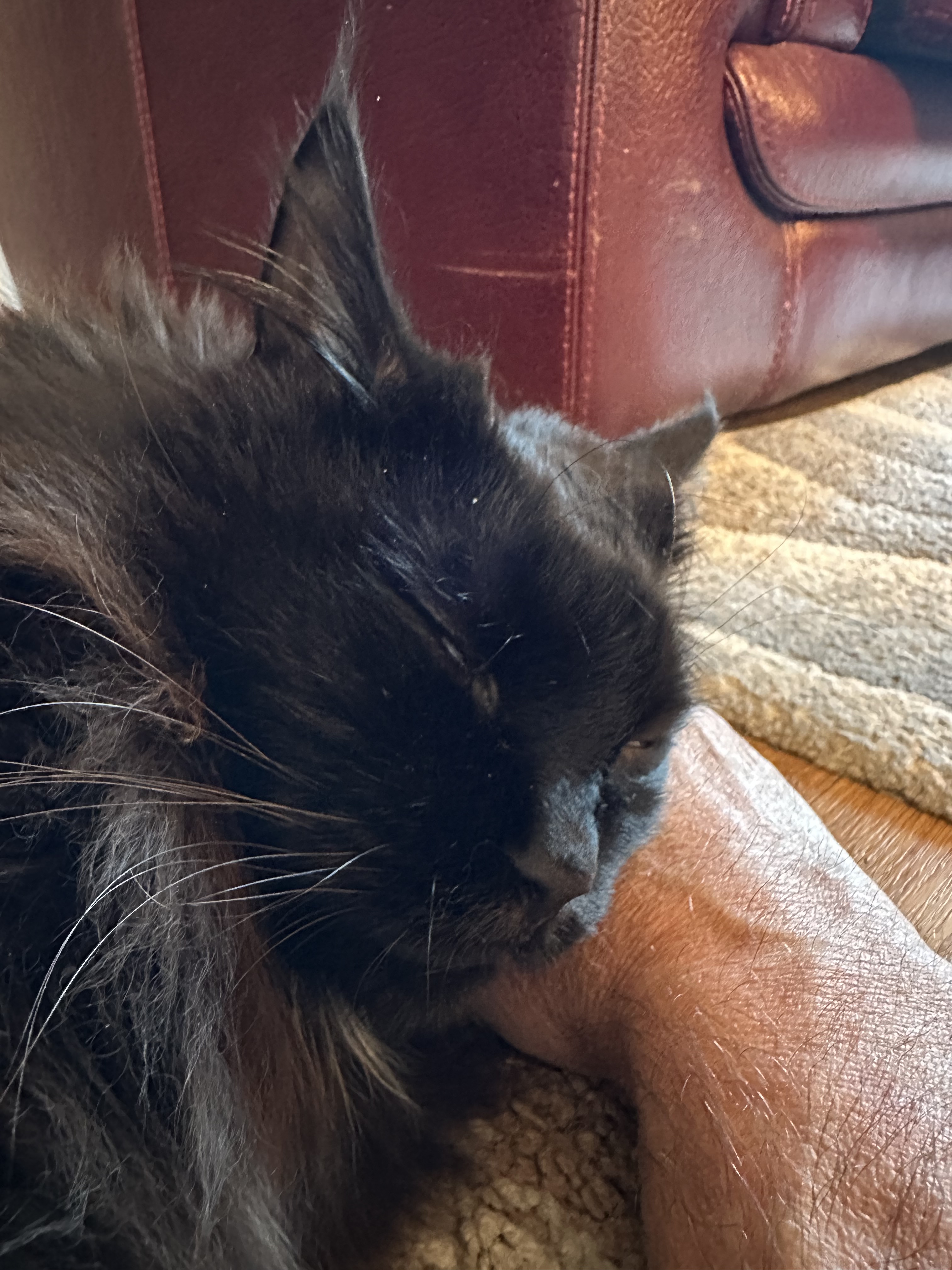
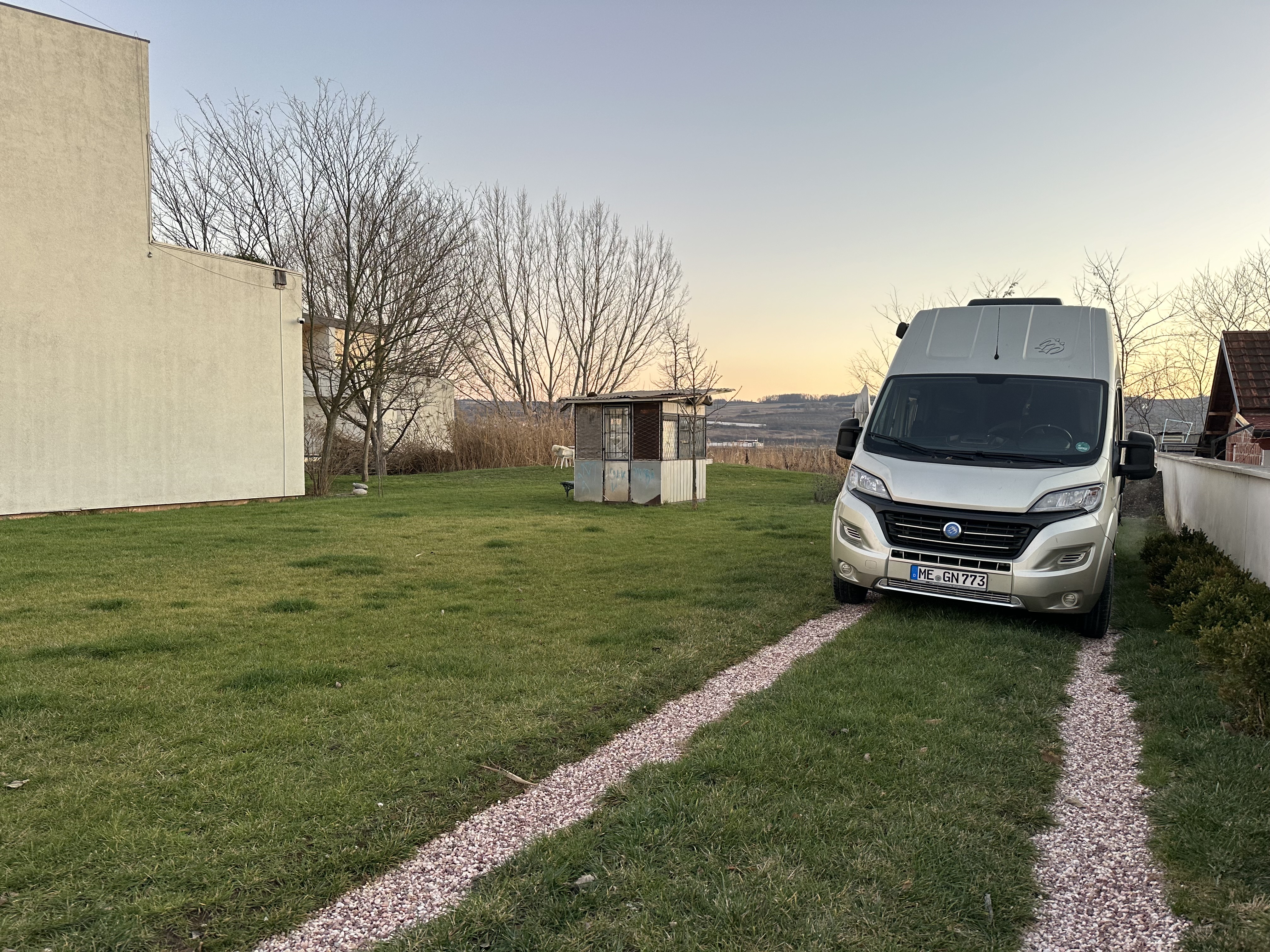
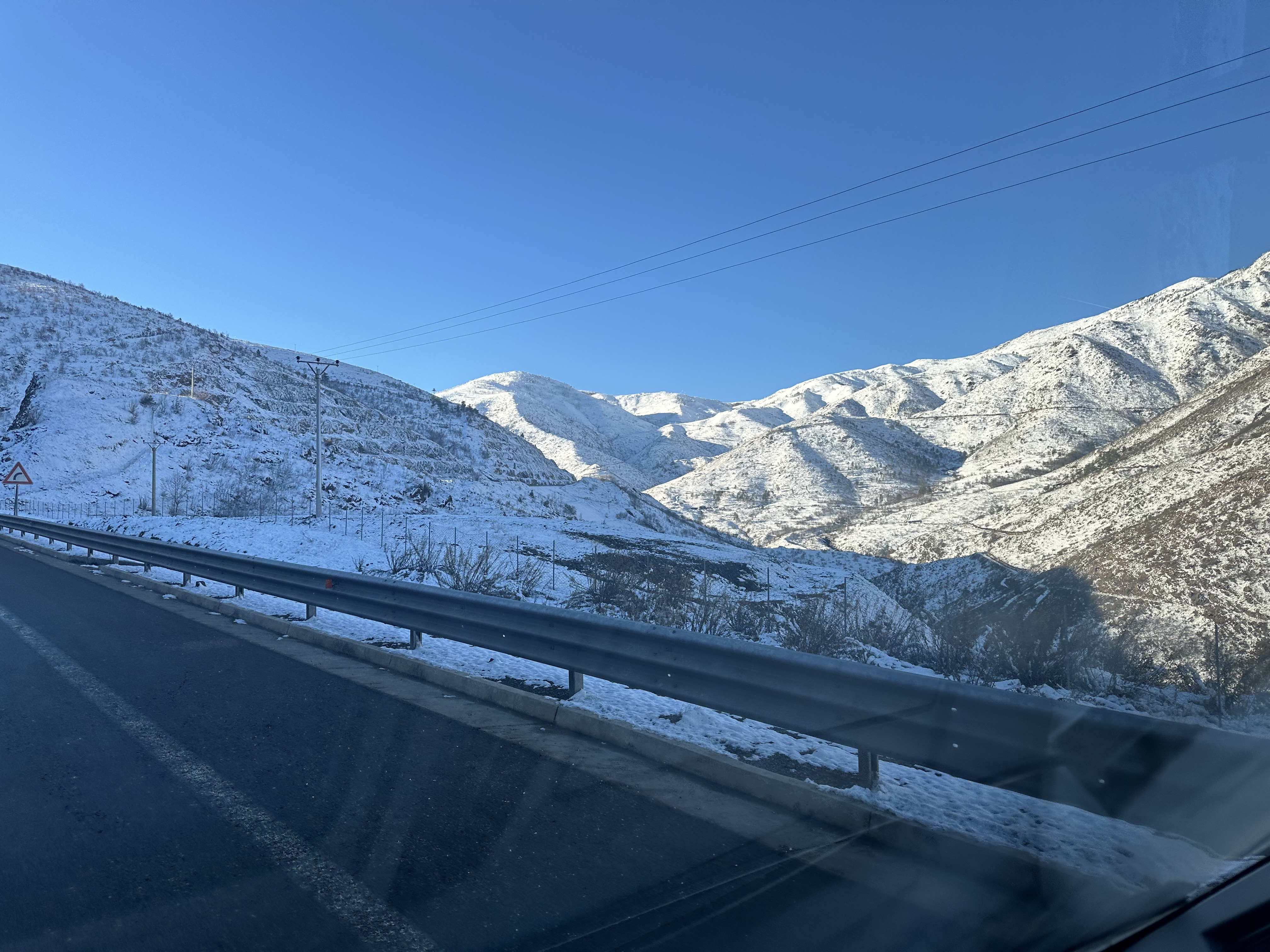
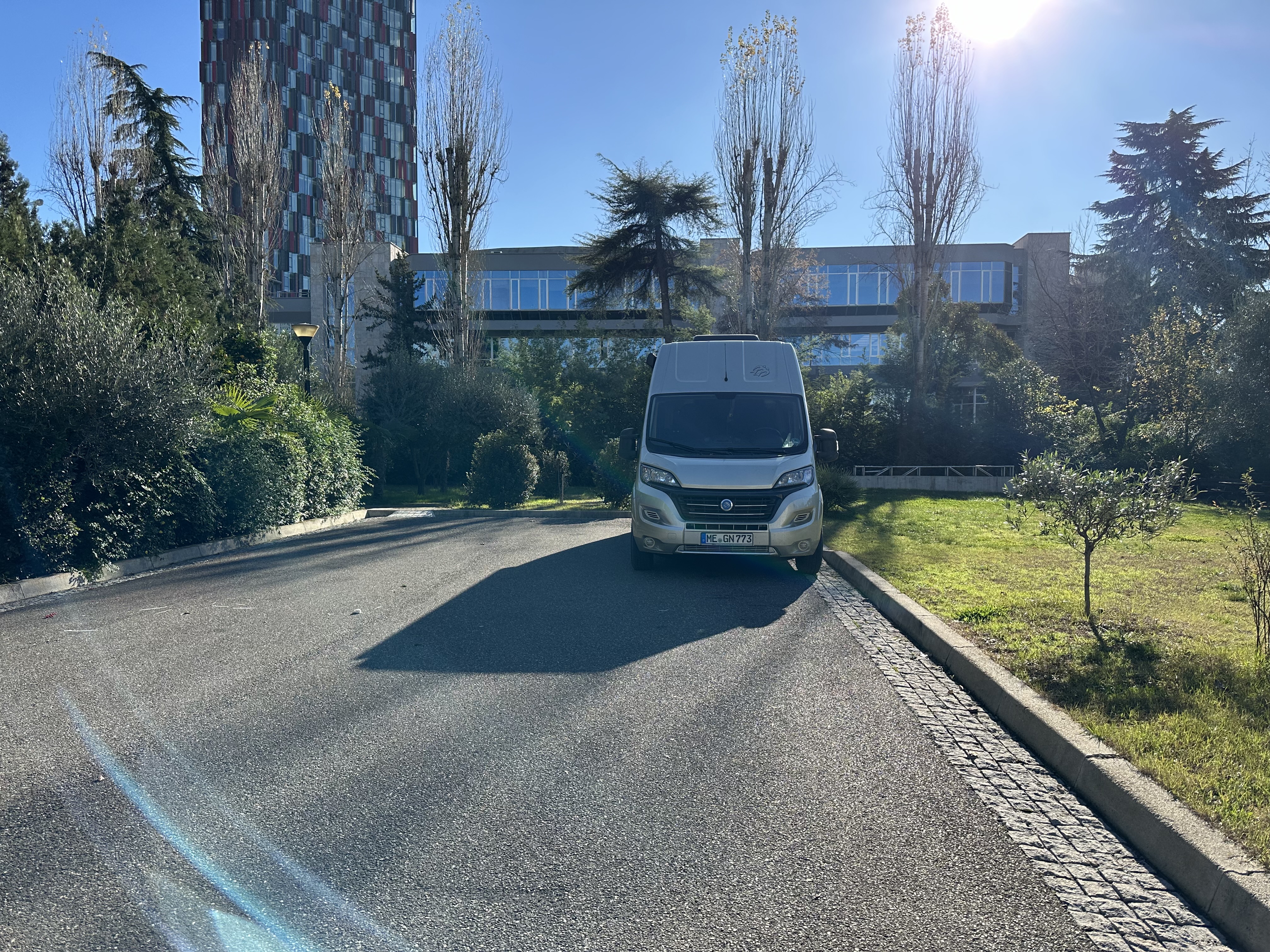
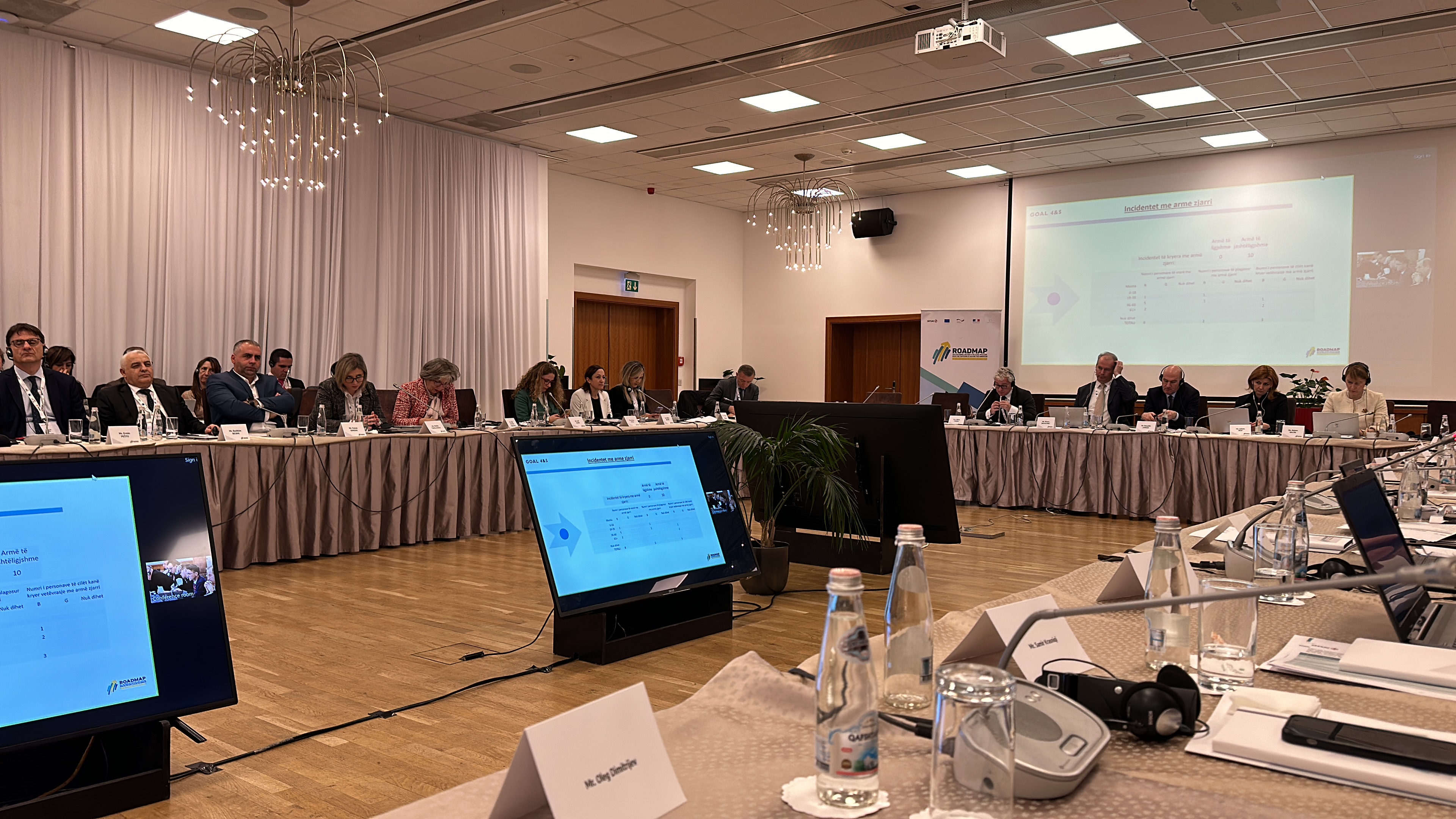
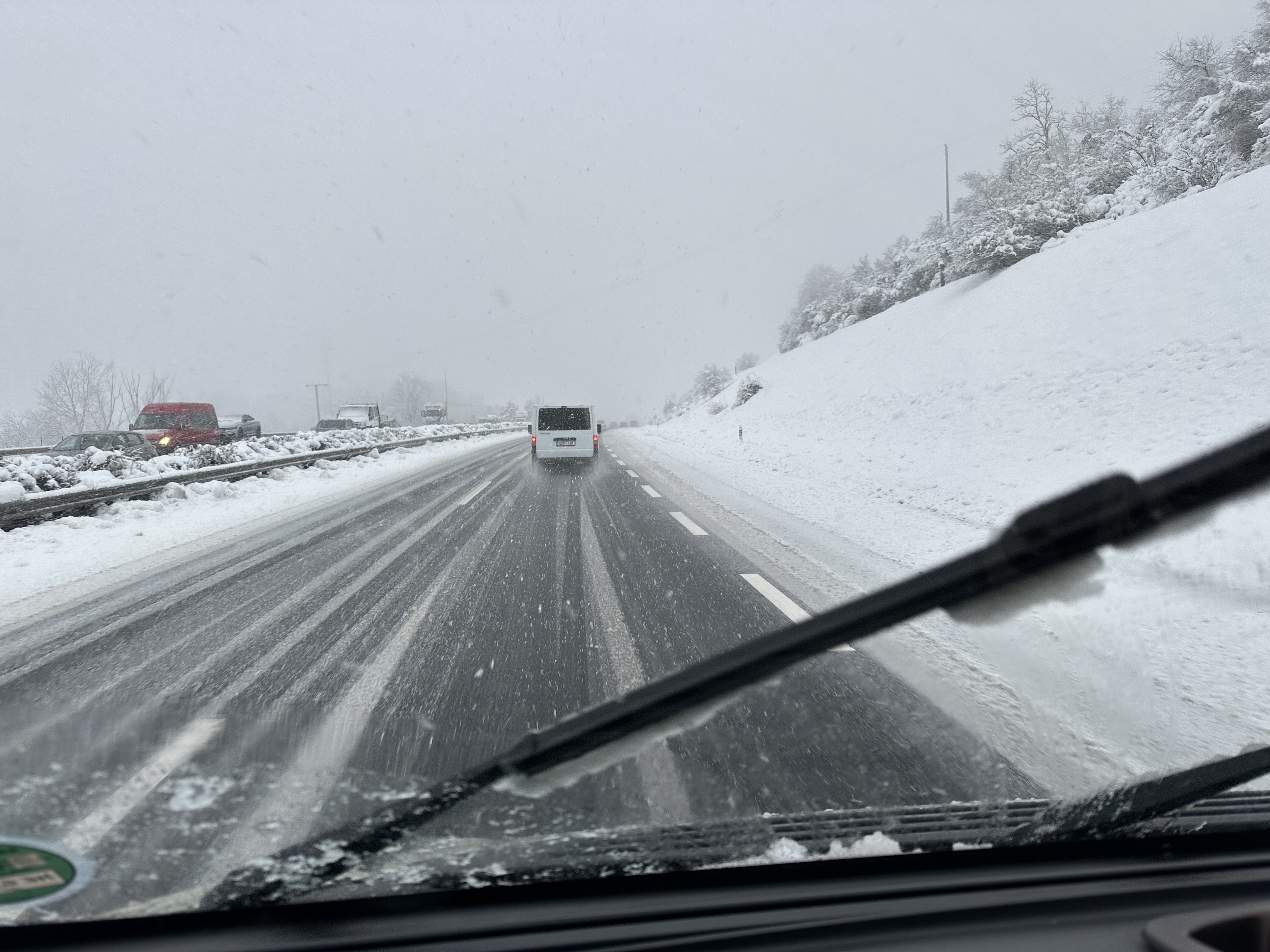
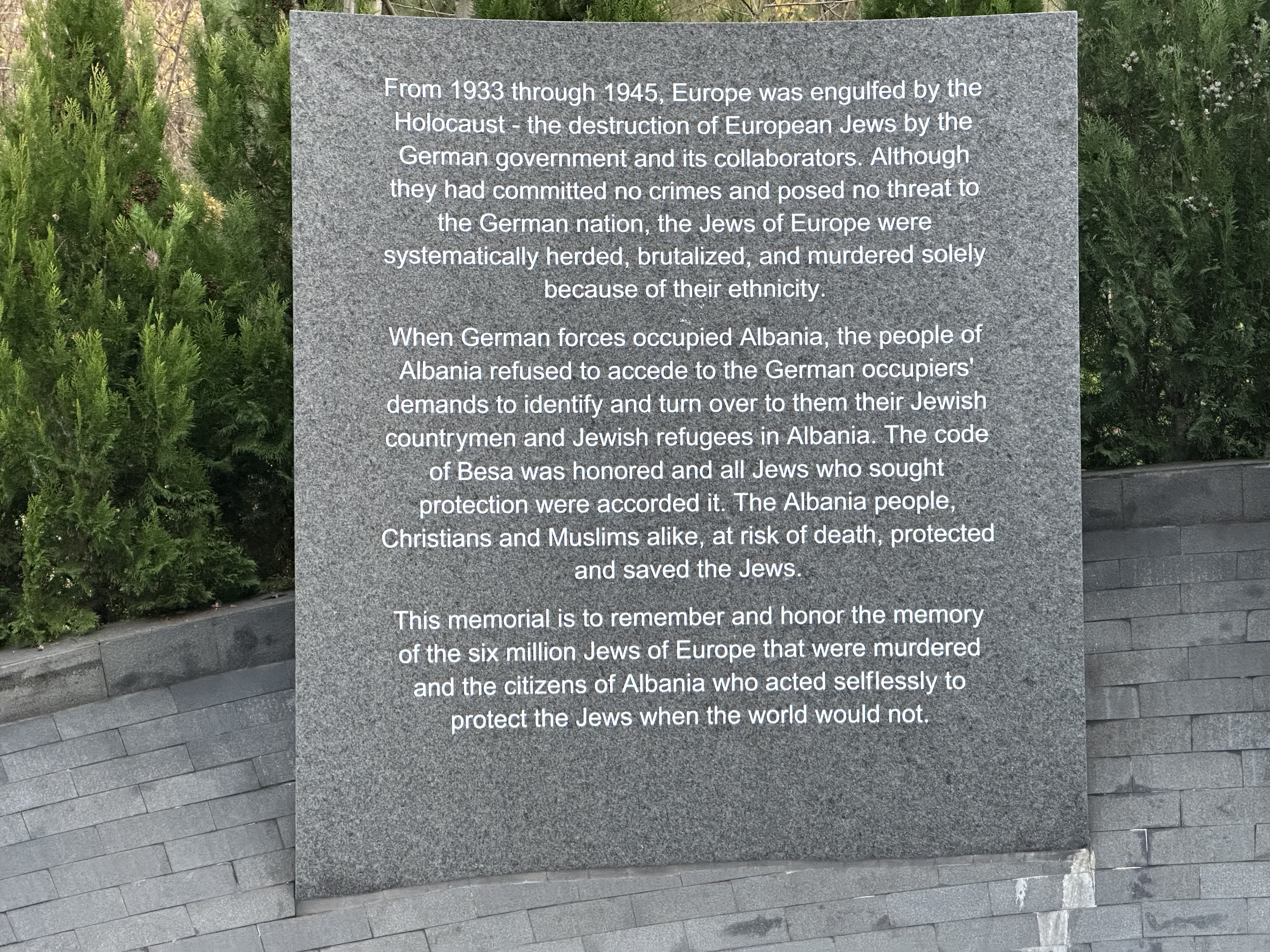
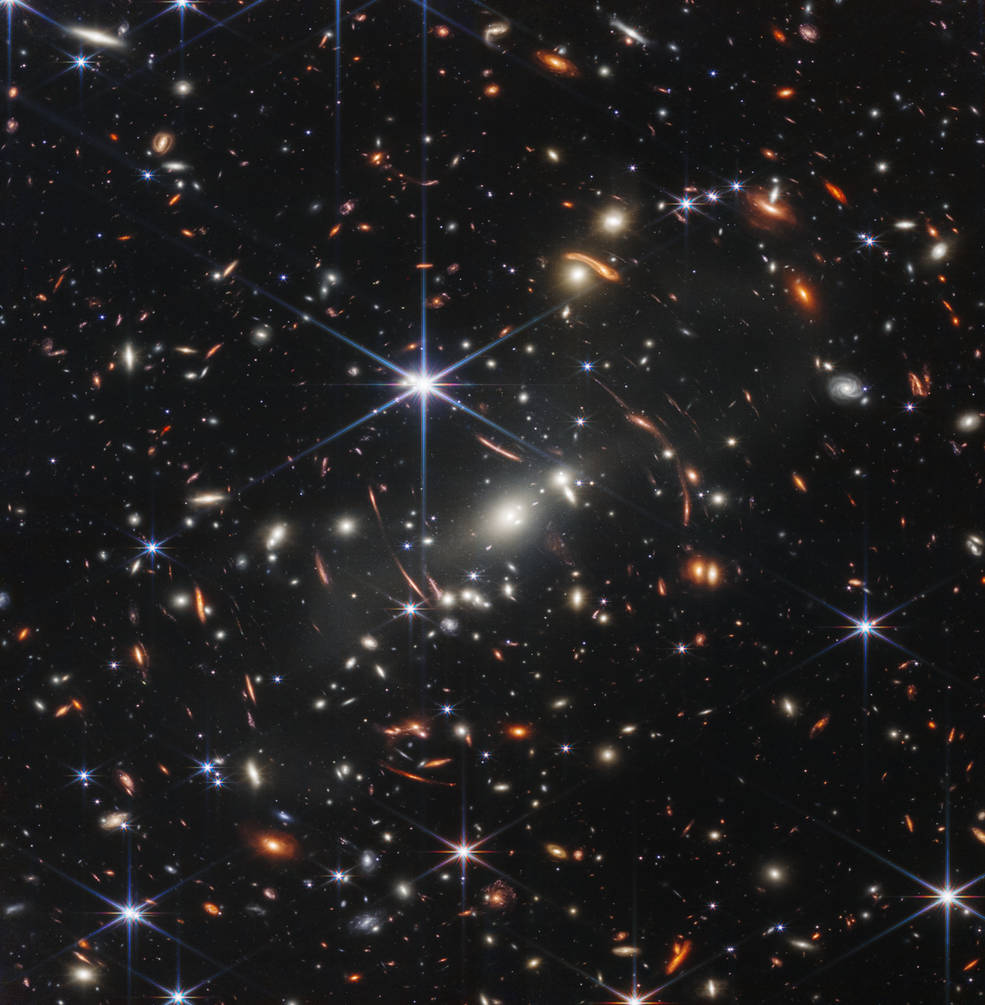


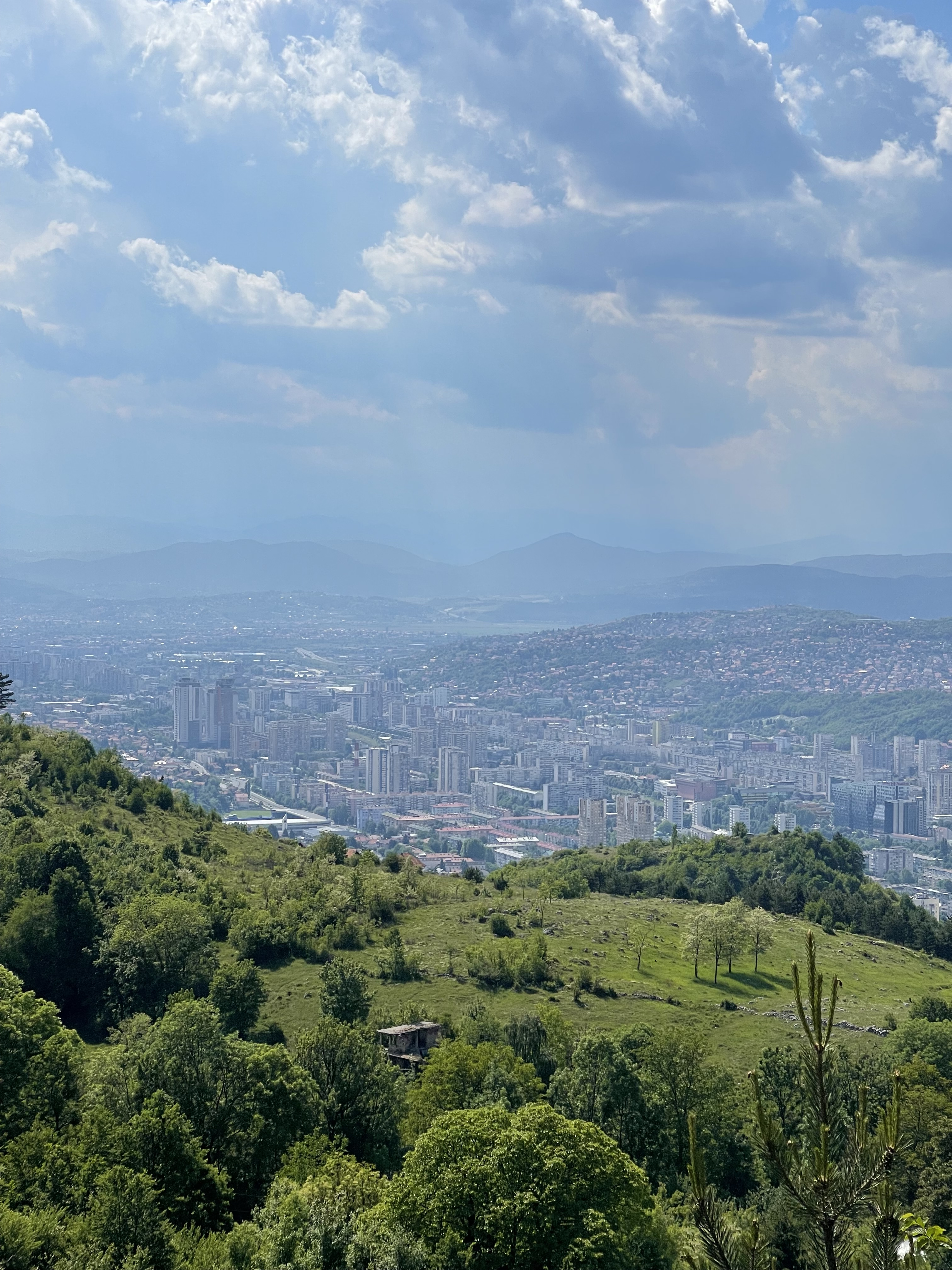
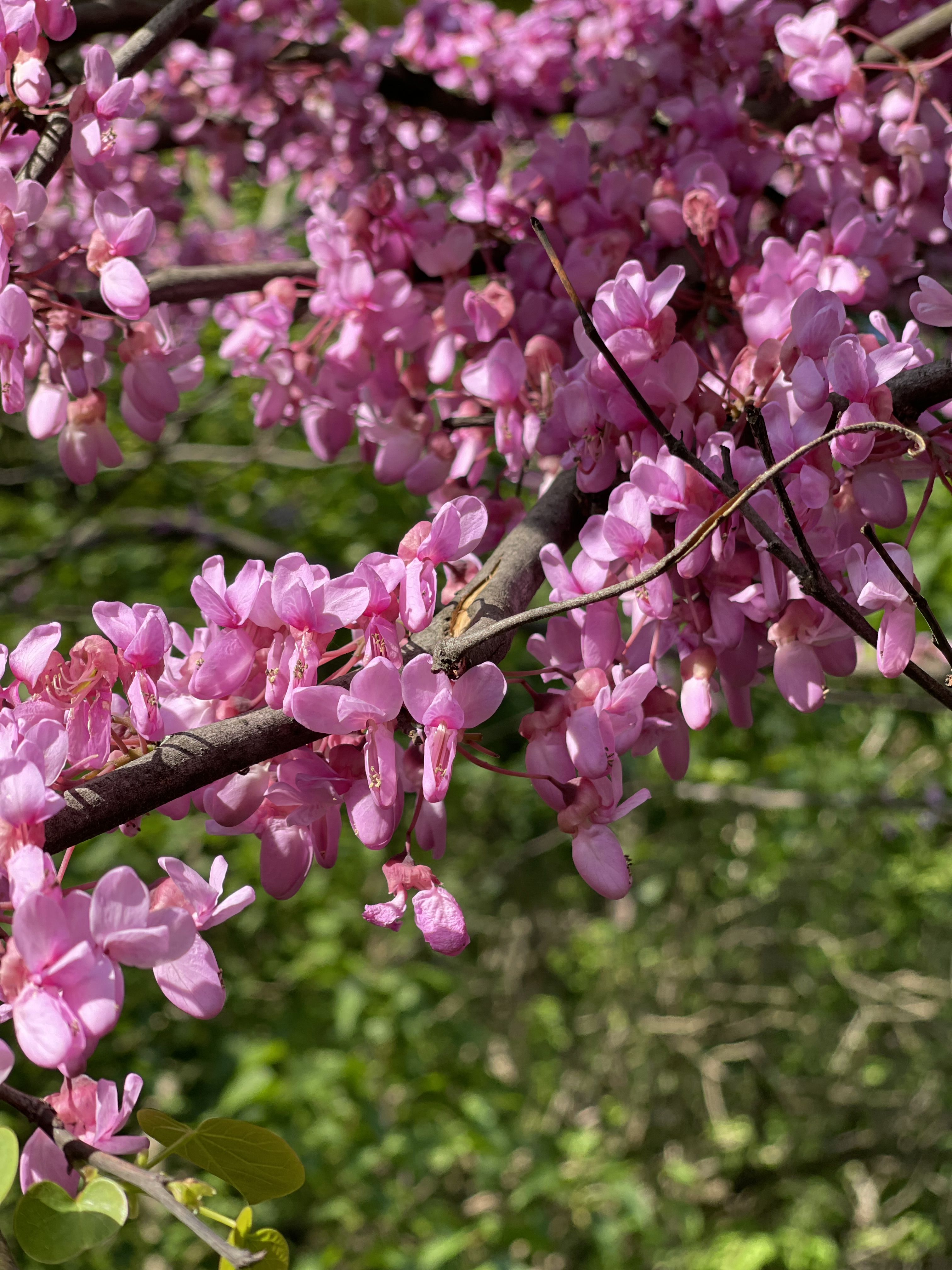
 Stefan Feller