20.000 Kilometers of Travel – Observations on Gratitude – A Story About Christmas and the New Year

On the featured picture: Tigger

Of course I am privileged, I thought when I was enjoying my second cup of coffee outside of my caravan in Berlin, looking back on one month of travel. I racked up roughly 20.000 kilometers, or 12.500 miles, I stayed in Serbia, Canada, Kosovo, Albania, and Germany, I passed through Hungary and Slovakia, I slept over in the Czech Republic. I sat on planes and I traveled for many days with my campervan. Except for the Canada travel by air, my faithful cat friend Tigger accompanied me everywhere.

Christian Christmas celebrations are over, the Orthodox community is still looking forward to it January 06. These are the days in between. New Year’s Eve is quickly advancing. Winter solistice has just passed less than two weeks ago, sun is coming up late in the morning and darkness settles in at a time when I would just go for another afternoon swim during summertime, with six to seven more hours of daylight to go. Right now, forest paths are muddy, nature is in its deepest state of hibernation, leaves on the ground are wet and often greyish. Road surfaces barely dry up. On my way through Hungary, Slovakia and the Czech Republic I passed through heavy blizzards and made myself comfy for the night in a parking lot thickly covered with snow. Passing Prague, the snow all but disappeared. Traveling northbound through Dresden to Berlin just the occasional heavy rain, strong winds, grey nature. One of my self-made worries which I had tried to keep at bay for weeks was related to the consequences of a winter storm which had passed through Berlin early December. Loads of snow had brought the tent down which I have attached to my caravan. There was nothing I could do from thousands of kilometers away, except for a mental exercise not to allow my crazy and often restless mind to plunge into another reason for worrying just about everything. When I arrived in Berlin, removing the puddles of water from the tent’s collapsed roof and putting new pressure on the pylon-system stabilising the tent was all I had to do. Five minutes work, and the tent was up again. Weeks of worry were proven unnecessary. My mind was desperate to find a new thing to worry about, and I tried to keep that at bay.
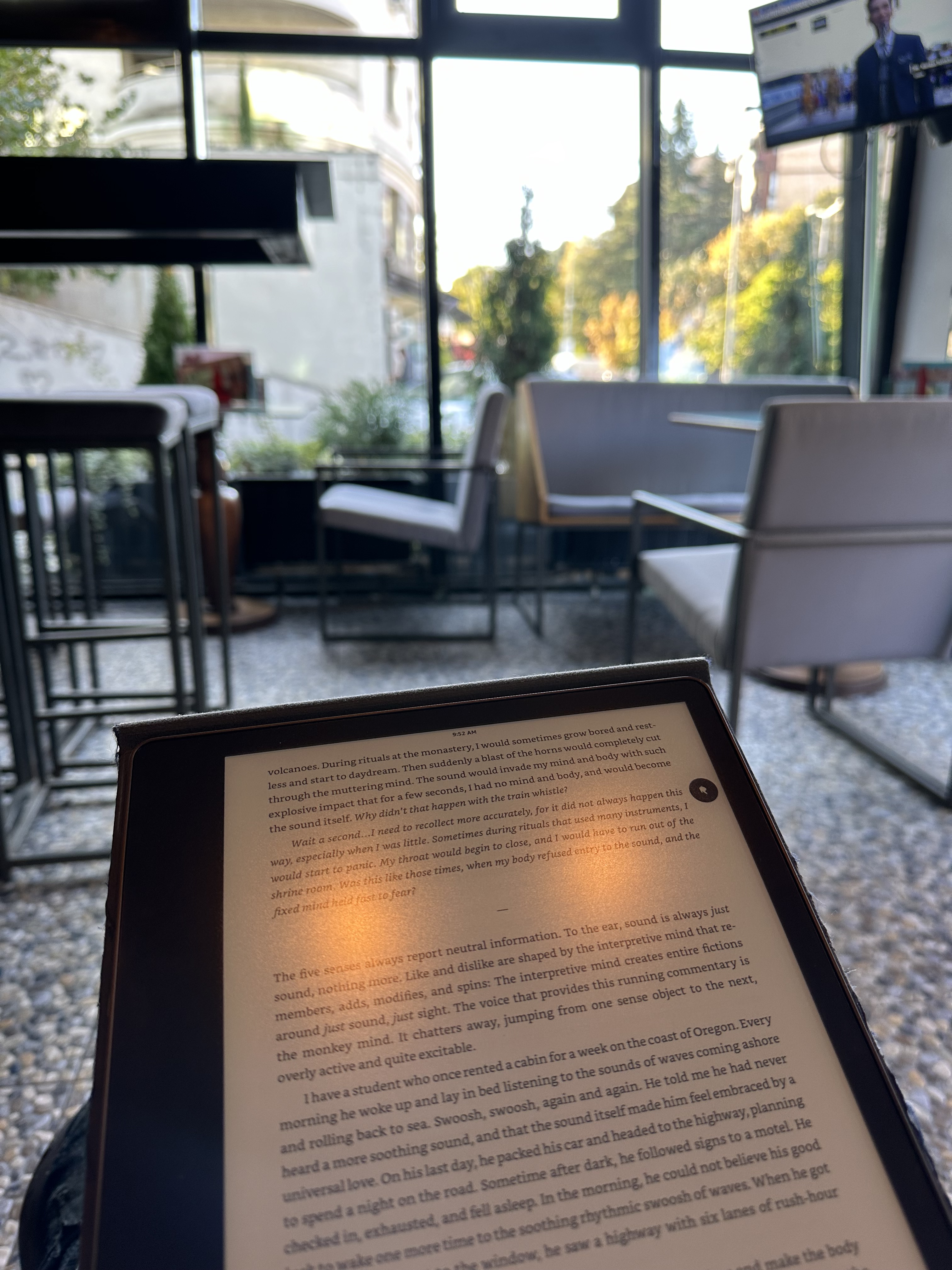

At the beginning of December I prepared for my travel to Toronto. Going through errands which always were a ton easier than they felt, I followed my usual morning routine of having a breakfast in my favorite street cafe in Belgrade. I listened to my neighbors who started to be occupied by the upcoming Serbian elections. Some of them muttered that they would hope for a change in the political system, voices filled with frustration. One of the waiters in my cafe, conversing with me in English with a thick Russian accent, was asking me how life is in Germany. Expressing hope that somehow, some day, he would also end up in Germany. Less frustration in his voice, more something like the hopes that you express when you have a dream. A life dream, since people like this waiter are very young. They know from which circumstances they are coming from, and the future is better anywhere else.


Sometimes I jokingly say that I am an old fart. Which is true to some extent. Physically I am approaching 66 years of age. Yet, the way of life I have choosen, it keeps me agile. For everything in life there is a bill to be paid, the currency in which I pay my dues is restlessness and the constant thinking about how long I will still be able to do this, and what will happen when I will get really old. Remaining as much as possible in a state of gratitude allows me to see how artificial this constant battle is, my mind telling me what I don’t have. When I manage to see, instead, what is given to me, restlessness and dissatisfaction vanish. At least for a while. When I look around myself, I see many people being affected by the same thing which I cope with: I always compare what I have with what my mind is telling me I should have. I compare my current situation with my past, my mind selectively produces memories of residences, houses, fancy cars with a driver, important jobs with status and acknowledgement, business class flights and five-star hotels. Or I compare what I have with what I would like to enjoy like others. When I allow it, it creates a near-constant state of dissatisfaction. In that state I compare my simple apartment with old furniture with the houses my brothers have, or I used to have. In that state I don’t see the freedom of my vagabond life with a campervan and a caravan, instead I obsess about the next better option, the next better thing to have, another job giving me more financial leverage. When I listen to people who look at my lifestyle with admiration, I see that everything comes from comparison, keeping everyone out of the moment. When I then manage to look back with honesty, I remember how unhappy I was. How much I sedated myself, and how unavailable for really meaningful relationships I was.


It feels like we want to constantly compare our own situation with that of others. And since months now, I am trying to find an answer to the question whether there are psychological limits to the ability of feeling empathy for others: The onslaught of news about people who have not even a tiny fraction of what any of us has, it leads to an increasing number of conversations where I hear “But what about me and my needs?” A question which I hear in multiple variations, sometimes with an expression of helpless shame for uttering such an emotion, and sadness, sometimes with an expression of anger and fury. Is it possible that in a situation of “information overload” related to the suffering of other people, a shut-down mechanism emerges which makes people feel: “I can’t listen to this anymore“? Is it possible that, in order to internally justify such a thought then, people must find an argument like “But look around here! There is so much broken here, in my society, why are politicians not taking care of this“? Bold forms of this argument include the exclamation of desperation by saying “We can not always only help others!

Is it possible that this presents a platform for right-wing forces to run this meme, and to wreak havoc on the ability to empathise with others, by playing the selfish card, a nationalist card, a card where they fuel negative emotions?

When I have conversations about this with my friends in my network, we quickly identify the gasoline which fuels this fire: Egotism. Because it is also correct to say, for example: Germany is one of the most powerful economies around, and with yet a relatively stable political system. We have a responsibility to help others, and by the way, if we don’t, it also will play out very bad for ourselves if all around us is crumbling.

Since the beginning of my international career 24 years ago, at any given time when I came “home”, to Germany, I felt that complaints about own misery were on a level which I could not understand any longer, comparing it with the effects of conflict and war in those areas I was working and living in, or the poverty-stricken perspectiveless of people in societies in which I contributed to assistance, or the frustration of people in the claws of nomenclaturae sucking the life-blood from any perspective of change, compelling people into compliance with a system of multi-layered corruption.

And, beyond Germany, is this a desease affecting the societies of the Western World?

Gratitude. I had a pinched nerve in my lower back when I started my travel to Toronto. Economy class seat, of course in the middle, not an aisle or window seat, squeezed in between two big persons. I had passed through the luxurious business class section on the way to my seat, thinking about the many times when I had the privilege to enjoy a spacious seat, and good food. Now I saw the faces of bored business class travelers when I passed through, and their annoyance when loads of economy class travelers disturbed their serenity. Sitting tight with a painful back, I sensed the travel stress of all others around me. Moving into some form of gratitude, I suddenly recognised that my two big neighbors felt uneasy about taking up so much space, and that they did what they could to give me space. If I would have aggressively claimed my space, I wouldn’t have noticed that. So, instead of an internal battle in which I would have thought about the misery of economy travel, I thought about the fact that one such travel brought me 8.500 kilometers westbound within hours. I was grateful to have an opportunity to see my children.

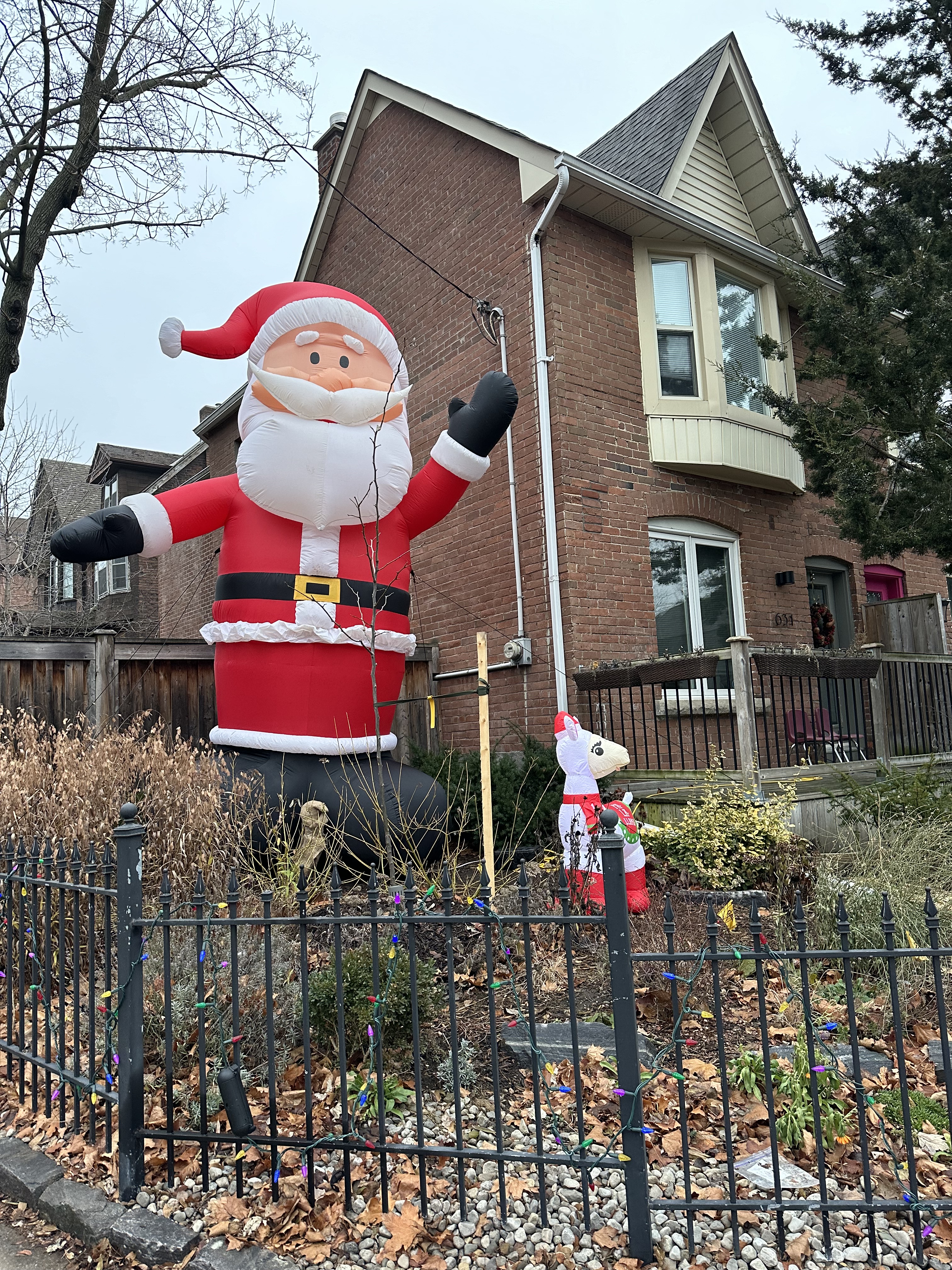
Arriving in Toronto, poor me (the economy class traveler with undeserved back pain) moved through immigration in minutes. Then, poor me decided to immediately pick up the new fancy MacBook Air 15 which I had ordered in advance at the Apple Store. Canadian prices for that gadget are so attractive. So I stopped at Toronto Eaton Center, the whole place in full Christmas decoration, North America style. Noticing homeless people in the shadow and hiding in corners, and fancy customers strolling through the high-end shopping mall, a trademark sign of Toronto, I picked up this new fancy gadget, immediately back in a cab then and arriving with almost no delay at the place where my children live. Grateful and happy, after a big hello by two teenagers, I fell asleep, privileged to cross one entire ocean in order to see my children, more or less every two or three months. My ex-wife also being grateful that now it was her turn to disengage from parental duties, for a little while.

I could complain about the combination of severe back-pain and jet lag which I experienced during the following days. I won’t. Instead, I recall the quality time of bonding with teenagers at different stages of their tumultous process of preparing to come out of age. I recall amazing talks about empathy in dark times with one of my children. I recall just being there, with nothing I could do, witnessing the pain of the first heartbreak experienced by the other child. I tried just to empathise, not being the parent giving advise, or meddling with the affairs of a teenager who had not intention to talk about this experience with a parent.

Coming back to the invisibilities in a high-powered society like the one my children live in. Living costs in Toronto are extraordinarily high. So has to be the income then, in order to make a living. Those people live in the neighborhoods like the one of my children. I see them coming out of their houses, getting into their SUV’s. Stopping at the neighborhood cafeteria on their way dropping off the kids at school.

Poor me, meanwhile, was limping through the house one evening, the pinched nerve was really incapacitating me. Poor me sat down and opened the fancy new MacBook Air. Domino Pizza has a near-perfect website. Geo-locating my area code, it directed me to the closest pizzeria. Ordering three pizzas, entering credit card details, tipping in advance in order to have “contactless delivery”, the website told me who the person was who fired up the oven and I could see the progress. Once things were out for delivery, a map would show me the exact position of the car on its way to our house. Ping. The very moment I limped out on the porch, the car arrived, I took control over the delivery. I enjoyed pizza with two children more or less bent over their cell-phones, their eyes glued to the Tic-Toc-streams.

Over the next days, I started to pay attention to this invisible layer of society, the low-wage-jobs which made it possible to enjoy such a luxury of, for example, pizza-delivery. Or ordering stuff on Amazon and to have it on our porch next day. I watched the nannies pushing the strollers with babies. I watched the people silently examining the litter boxes for collectible recycables. I watched the people warming up in the shopping malls, and I saw the legion of food-delivery drivers. I tried to imagine their lifes. To walk in their shoes.

Canada is a society with a lot of social compassion, and a lot of empathy. I’d love to live there. Yes, my lovely children, I just can’t, because I need to work the way I do. Go figure and watch this hidden layer of society in the United States, by contrast. And inasmuch as this new global wave of nationalism and xenophobia might be rooted in disenfranchised lower middle class and lower class portions of societies, I feel that the desease of a lack of empathy and of nationalism and xenophobia might be perfectly sitting smack-in-the middle of well-educated middle class people. It does not feel like a bottom-up uprising of the disenfranchised. It feels like memes are being spread by people who are well-educated, and not poor. I guess I am not the only one who can easily name a few examples for this in our own networks of people we know.
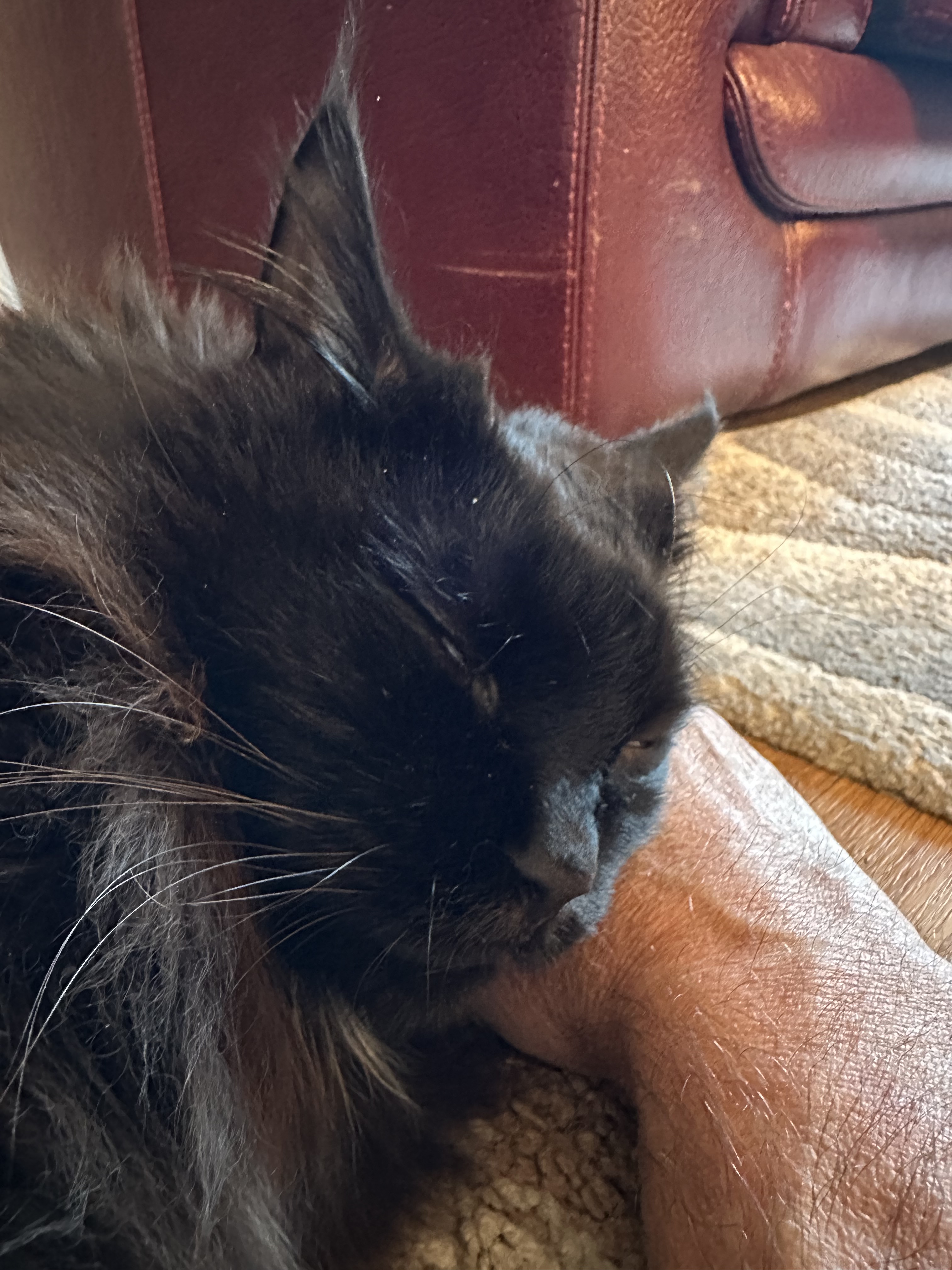

I left Canada eight days later. With a cured back and a new fancy MacBook Air 15. With tremendous sadness about leaving my children behind. On two flights with much better seating arrangements. Well, no sleep, though, which made the five hours layover in Frankfurt a difficult thing. Poor me. Arriving in Belgrade, I settled in my little old apartment and contacted my friends in the “Cat Pension”. Milos and Svetlana love Tigger, and he loves them and the other guest cats. Milos made everything happen to immediately put Tigger into his box and to drive to my place. With Tigger back home, I could witness real gratitude: My cat friend would not stop purring for two days, he would roll over in front of me ever so often, he would literally snuggle up in my arms for the next two nights.

I had five days to go. Five days to cure my jetlag from two times 8.500 kilometers, to finish some work preparation, to clean the van, load up the van, fill up the freshwater tank, activate the heating system. Five days to arrive from a different world, in a different world. My usual constant, my beacon of orientation: My street cafe. And back in European time zone, I could re-establish the pattern of frequent communication with friends, and friends in my recovery network.

One of them lives in South Africa. Another one in Scotland. A third one in Slovenia. Just examples, my friends live all over the world. For us, exercises in gratitude are key for our well-being. So, poor me, in a not so fancy apartment, witnessed the effort of staying grateful in the case of someone who lives on social subsidies, has no job, is coping with life and working hard on developing a positive attitude whilst being in a situation which, compared to mine, is so different. This friend of mine works hard on getting rid of fury, resentment, sadness, feelings of powerlessness. It does not make him or her rich. It will not immediately help in his or her economic troubles. Eventually, it will work. It always does. Like it does “this trick” for me. Well, waking up sometimes still sucks. But I manage to get better on that one too, one day at a time.

Empathy means to be able to listen to another friend of mine who really struggles with a massive depression, and the medication not working, without being brought down myself. Empathy means to just be there, sometimes, and to tell another person that, just today, that persons eyes look lively and good. Even if that person does not feel that way, the information about this is important. Because it will help loosen up the emotional pain. Sometimes, empathy is nothing else than pure love of being there for someone, with no means at your hands other than your sheer presence. Because, if I would would feel such emotional pain, I would want that for me. Just friends being there. And guess what, poor me: I do enjoy that. The very same friend would do everything the same way when it would me my turn to suffer from depression.

Sometimes, empathy means to completely let go, like in the case of one friend of mine.

Yet, poor me went through these five days worrying about each and everything, planning the travel to important work in Tirana, and how to plan the Christmas time, and how to travel. And how to tell another friend that I would not follow her invitation for spending Christmas at her place. Because, on one hand, I needed to take care of my collapsed tent. On the other hand, that travel would have added another 1.200 kilometers between Belgrade and Berlin. And thirdly, poor me wanted to be at a place where poor me would not be a guest, but feel “home”. Which is the caravan where Tigger and I live in Berlin. Not in misery, it is a fancy new caravan. And it is located in one of the most beautiful nature areas around Berlin’s lakes. Poor me.


So, five days later I shut the apartment door. Tigger being happy in the warm van, we traveled from Belgrade to Merdare. Which is in Serbia close to the border with Kosovo, in case you acknowledge Kosovo’s statehood. If you don’t, which Serbia and also a number of other States including some in the European Union do not, then Merdare sits at the Administrative Boundary Line separating Serbia and Kosovo, a former province of Serbia, under international mandate regulated with United Nations Security Council Resolution 1244.

The very same UN Resolution which brought me to Kosovo early 2000.

The border crossing/boundary crossing is run through Integrated Border Management where both Serbian and Kosovan police and customs officers sit in one huge building which was erected and paid by the European Union. I was on my way to Tirana in Albania, and I wanted to do this travel in two days, in order to be easy on me. Having crossed the border, I decided that I would stay in Gracanica for the night. Gracanica is located directly at the fringes of Pristina, Kosovo’s capital. It is a village half-mixed between Kosovo-Albanian and Kosovo-Serb portions, with a core of Gracanica, surrounding a famous orthodox monastry, still constituting somewhat a Kosovo-Serb enclave. I lived in Gracanica for several years in the aftermath of conflict. Much of my work also included preventing violence in these enclaves, and also at times coming from them. It was all about the protection of civilians after conflict and war.

So, my travel from Merdare to Podujevo, from there to Kosovo Polje, and from there through Pristina and into Gracanica, it always fills me with memories. Many of them being awful memories. But also paying attention to what is happening currently, I saw the business of economic progress, mixed with old vehicles, tractors, and carts still pulled either by old machines or even by mules. New since one year or so: Every now and then, at the entry lane of a fuel station, I saw single women, young women, standing there. They always seem to be on the phone. For the passing traveler, it would look like they are waiting to be picked up by a relative or friend. If you look closely, you will notice that they will, for half a second, establish eye contact with you. As soon as you don’t pay further attention, the eye-contact will end. If you would, instead, slow down, you would see them for who they are: Sex-workers. Of the same kind like I can see them in Romania, from Dobreta Turnu Severin towards Craiova, for example.

Why do I mention it? To me, the phenomenon in its visibility was relatively new. It might not be. But this kind of prostitution is the prostitution of the poorest of the poorest. Of course it is managed by pimps, and of course this is part of organised crime. The sex-workers themselves: The poorest of the poorest. And the phenomenon in itself another example for those hidden layers in societies. Layers that we often do not notice. Exept when we want to. Except when we use them. The food-delivery guys, the nannies, or the sex-workers. Just as a matter of precaution, and for the record: Don’t.Do.It!

I do include a “please”. Because I have empathy for them. A lot.
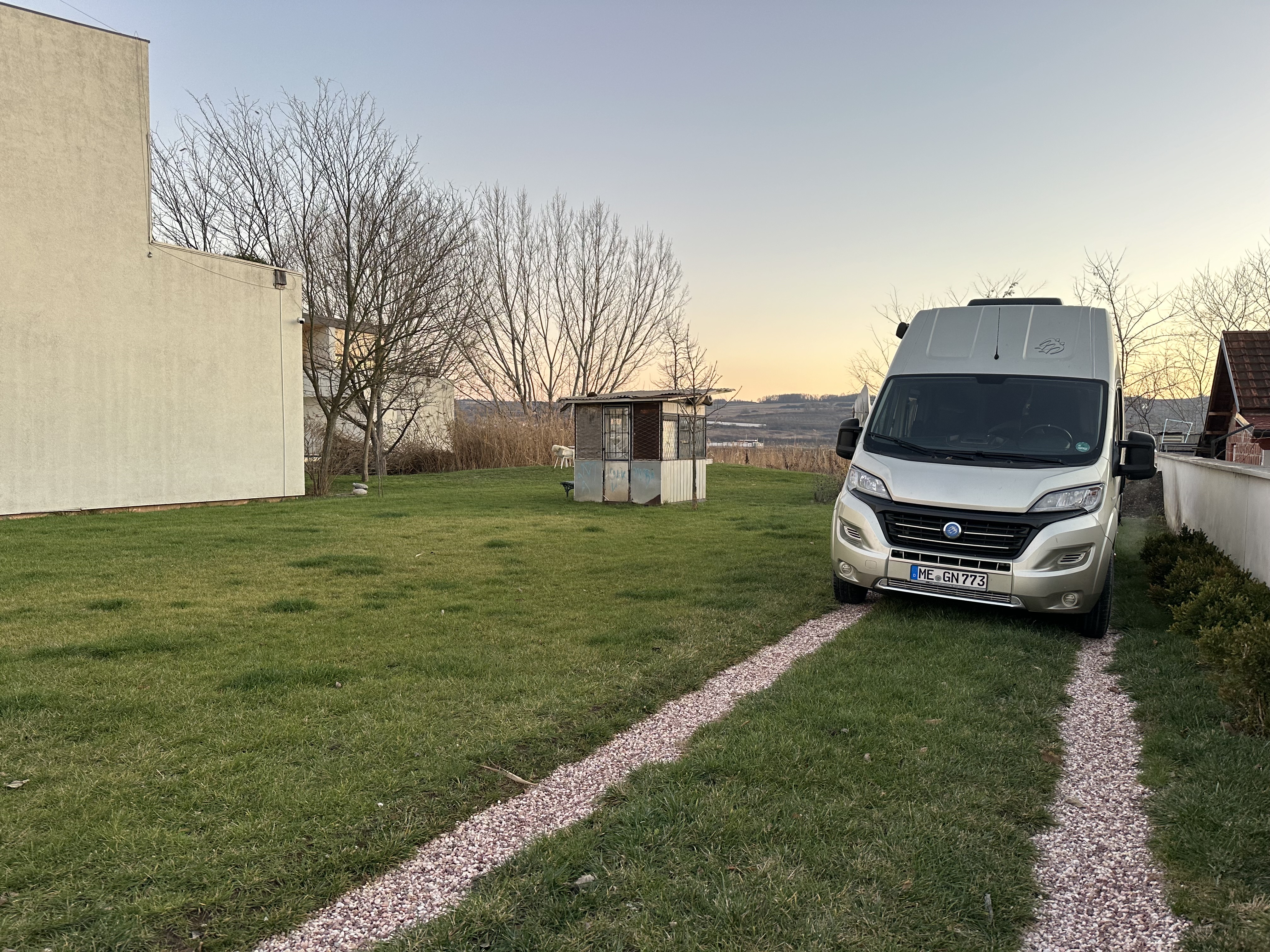
With the sun setting, I arrived at my favorite place, a little hotel, called “Hotel Gracanica”, overlooking wide open fields towards Lipjan. The hotel has nice rooms, a swimming pool, a really nice garden, and space for campervans. It always is a big and friendly hello when I show up there, letting Tigger jump out of the van, happily enjoying another familiar place he loves, sniffing out the vegetable garden.

I was the only guest. The friendly staff firing up the kitchen only for me. So I had a good meal, nice simple conversations, and a night in my van on a secure compound, instead of renting a hotel room. The night was cold outside, my van cozy and warm and lit with warm lights inside. My gratitude included that, and the connection to the WiFi. These people are not rich, nor fancy. They are welcoming. They will speak fluently Albanian and Serbian, and they will use both languages as needed. With me, they will speak English. They are humble. That’s why I always come back. And its only these little details, like the easy-going use of both Albanian and Serbian language, which tell me, an insider, the story of change in Kosovo. Change does not happen overnight. It takes generations. Meanwhile, all who help and assist, they need patience, and they need to be very humble, far off from hypocrisy or impatience. Often enough, our own limitations and impatience sit at the core of why sustainability of peace and reconciliation could not be achieved.
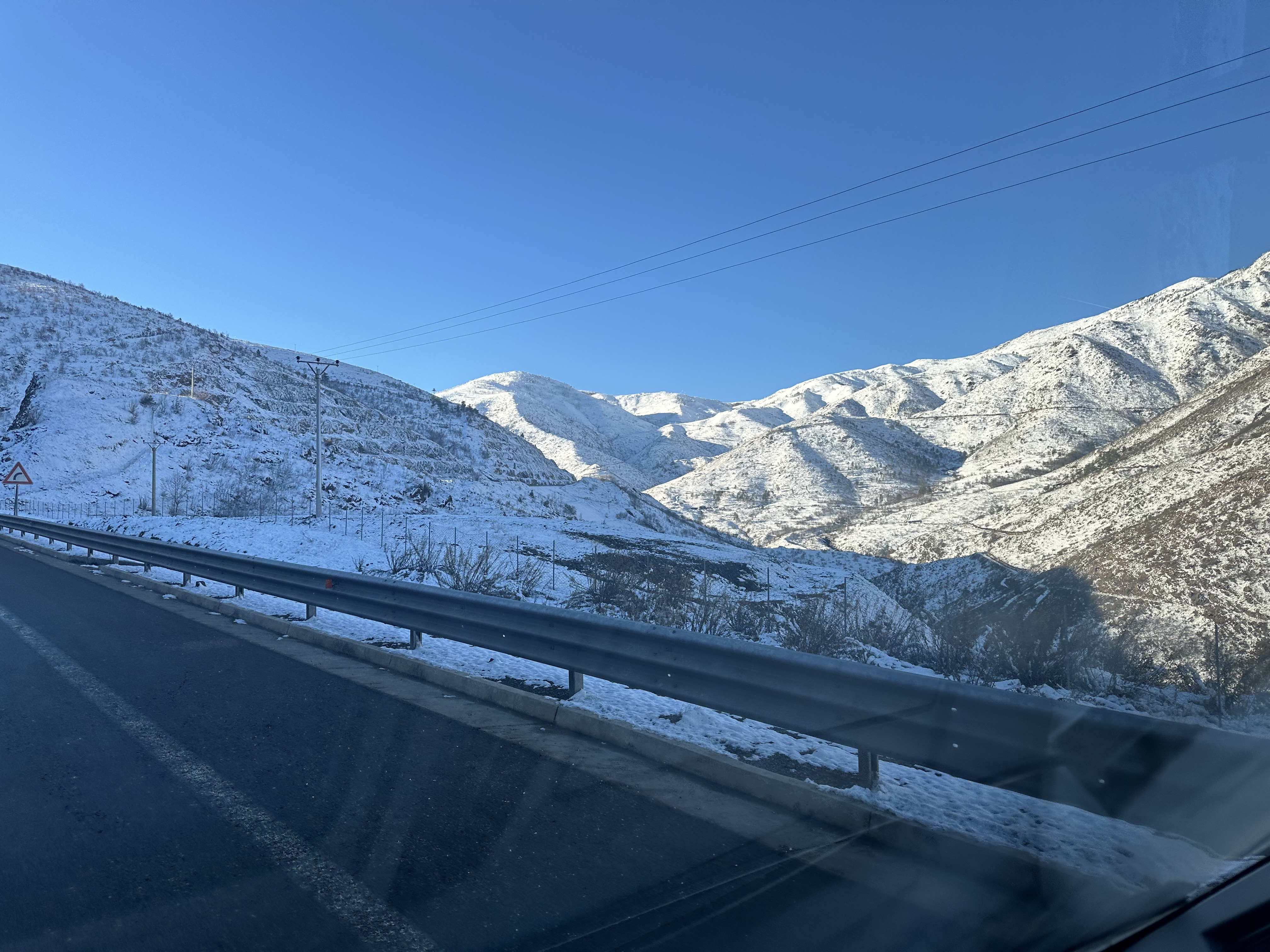

Next day, rested and with a nice little breakfast in my belly, Tigger and I took the travel from Pristina to Tirana. I have little to report about that, because the only thing, really the only thing, to talk about is the marvelous landscape when traveling through the high and snow-clad mountains. Advancing the mountains from Prizren in southern Kosovo already is breathtaking. Passing Morina Border Crossing and traversing through Albania is providing stunning views. Another little detail: Once through, the temperature almost immediately jumped up from sub-zero to mediterranean t-shirt weather.

Poor me arrived in a van at the Rogner Hotel, a five-star hotel in the center of Tirana. Poor me, with the help of colleagues, had secured that I did not have to lodge in a five-star-room, like the more than 80 other participants in the conference marathon to follow, but that a hotel employee jumped into my van and talked me through the small streets towards the garden entrance of the hotel. There was lot of Police around, and a large demonstration adjacent to the Hotel. The employee guiding me explained that this was a protest against the government. Later during conference evenings, I would listen to friends who cursed the mayor of Tirana. Go, walk the town, see the sprawling development of buildings, make your own judgement. Albania is in a critical battle against corruption and on establishing a deeply rooted rule-of-law, on her way towards the European Union. I belong to those who believe Albania will succeed. Because of the Albanian friends I have. I am impressed by their passion and dedication and professionalism.
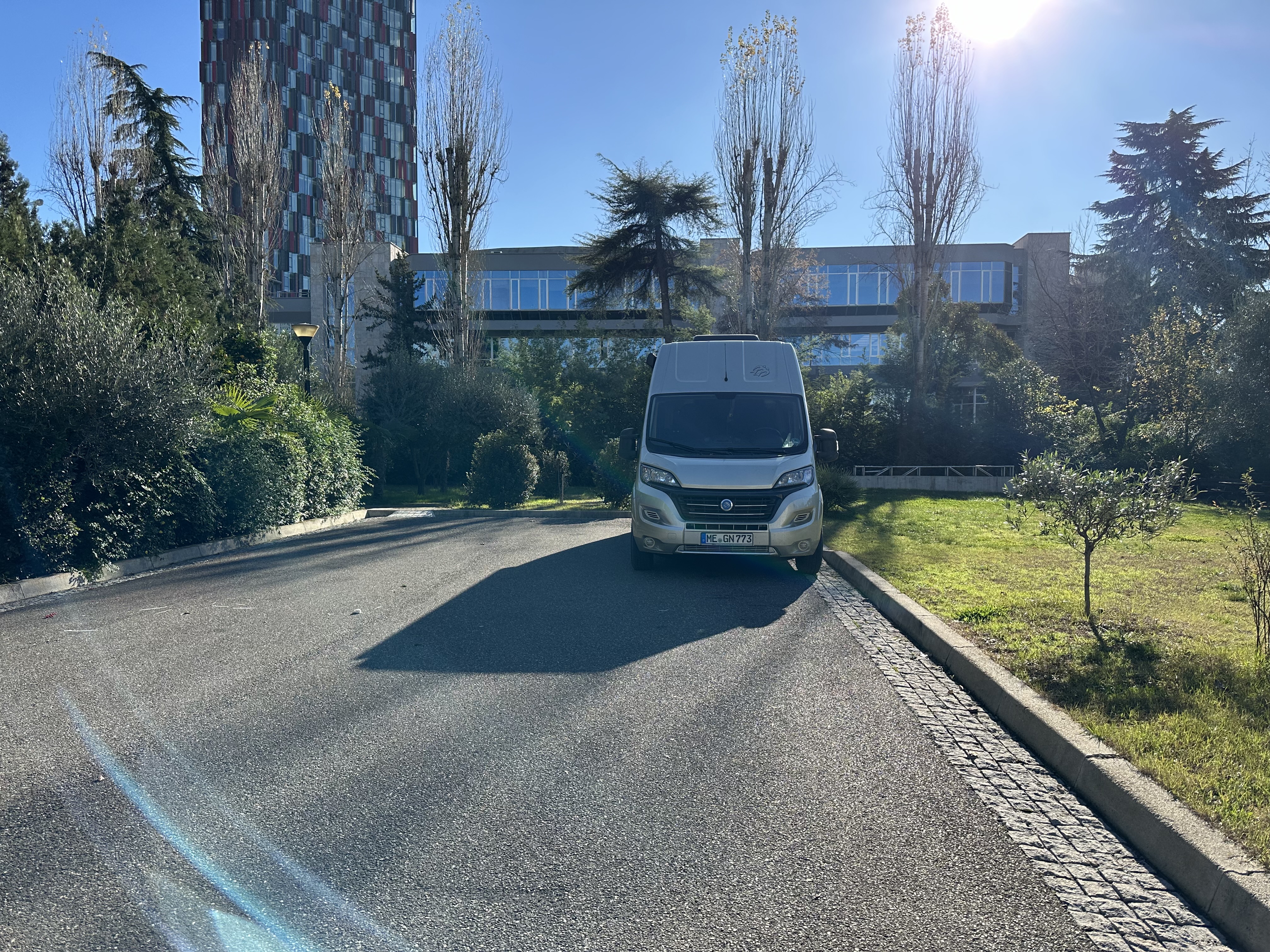
Tigger and I ended up with my camper van in the stunning backyard garden of a five-star hotel, where my autonomous van would sit for the next four nights. Heaven for Tigger. Convenient for me, because I could just walk into the conferences, receptions, meeting rooms, breakfast rooms, lunches. Of course, in a suit. Of course, well showered (my van has a nice shower). Yet, poor me telling me whether this would be okay.

I decided not to listen to poor me. Here is the thing: If you take your time and listen to employees in Tirana in a five-star-environment, you will also get the story including poverty in that country. On another occasion of an earlier conference in 2023, I had combined my travel with stopping over in most rural places in Albania. The combination of poverty, simplicity, and friendliness was overwhelming.

Just saying, poor me: Be grateful.
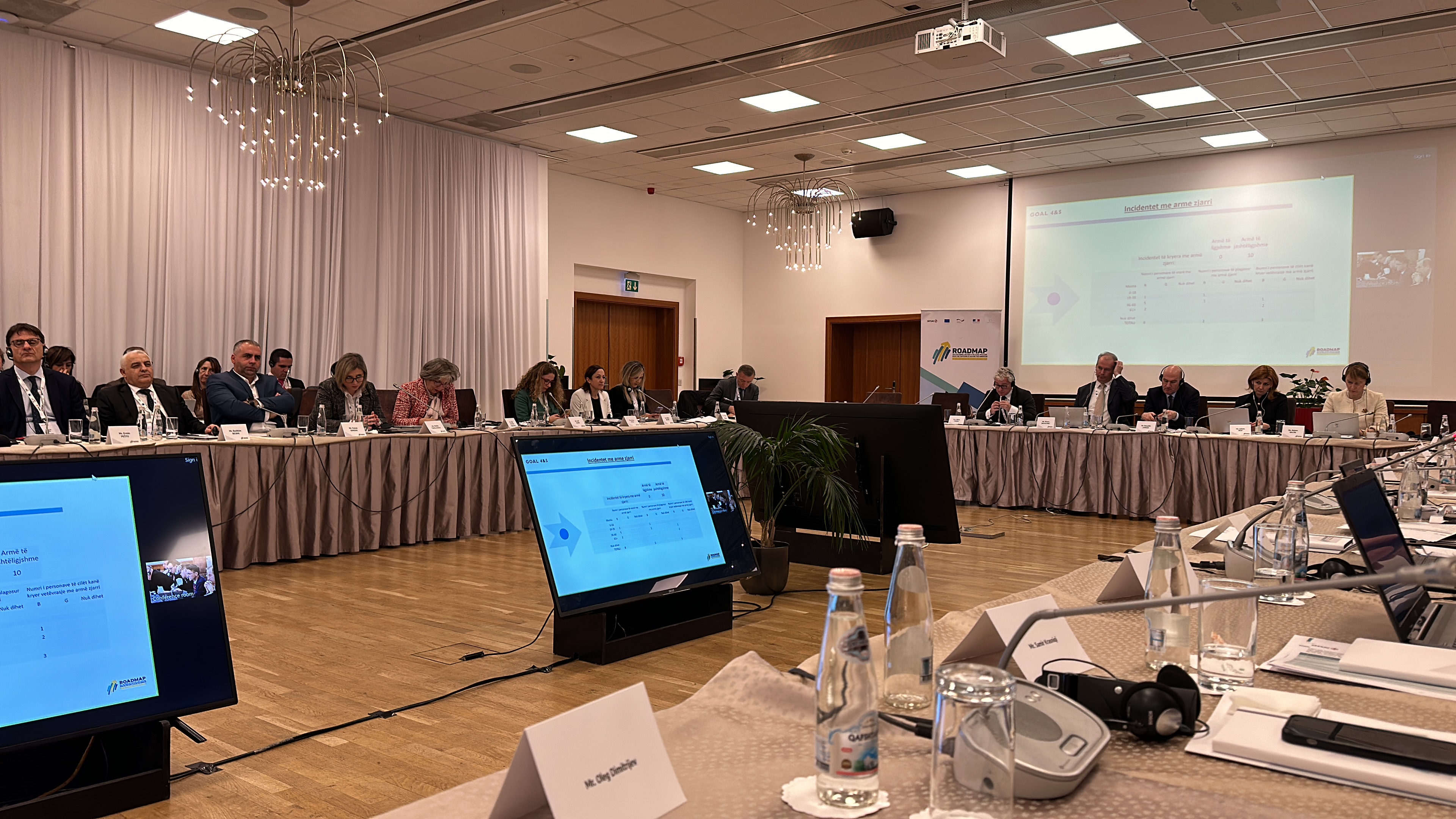

I don’t write about my work often, here. It’s complicated. It’s boring for some of you. It’s about long-term strategies, and a real support to local and regional development. It is not exciting for those who look for bad news stories, because it is the opposite. If you really want, really want, dive into it over here. It is a globally recognised example for how roadmap-based initiatives to control small arms and light weapons make a real difference.

I am biased, of course. Because I have dedicated much of my time since the beginning of 2020 to this endeavor. I don’t want to put it into the bag in which you would also find all things which form the cradle of all civilisations. It is, in many ways, an ordinary undertaking with a limited scope. In many other ways, it is not. One of the most-read entries in my blog is called “On Coherence of International Assistance“. It captures my views on why this work is so successful, on a very abstract and strategic level. In the context of this blog, I want to say something different.

For the tenth time since 2018, a conference room in the Western Balkans was filled with more than 100 participants. Six high-capacity delegations from Belgrade, Podgorica, Pristina, Sarajevo, Skopje, and Tirana, comprised of ministerial officials, law-enforcement and custom officials, prosecutors. High-level delegations from Brussels, Paris, Berlin, and other donor representatives. International organisations such as UNDP, UNODC, OSCE, NATO, EUROPOL and EMPACT in the room, or online. Civil society present.

For.The.Tenth.Time. Implementing, and assisting, a strategic roadmap which ties the six juridictions forming the Western Balkans together. Delegations from those six capitals reporting their own progress in implementing efforts curbing the impact of small arms and light weapons, and intently listening to the reports of their fellow partners. There is a reason why we only refer to “jurisdictions” and name them only by the name of their Capitals. That we do not allow any symbol or name or flag denominating an entity in the room. Because it completely allows that all talk with each other, and we do not get into any of this political tension which we otherwise would witness, and which would make our work impossible.

All of these ten conferences have also seen six local conferences in their preparation. The energy and dedication is not capped by the length of this endeavor. Instead, all six jurisdictions meticulously work on the identification of the strategy for the next five years. They permanently try to find entry points into increased regional cooperation, and at the same time both from their side and the side of the European Union the resulting cooperation is bringing the Region and the European Union ever closer together, in the realm of this topic.

If you would scan the Internet news on such stories of success, you would hardly be successful. Because in the onslaught of negative news, good news are either not recognised, or news outlets would not even bother with reporting on it. And funny enough, sometimes we are even happy about it, because it keeps a technical process of astonishing success away from political antagonisation.

That is as far as I wanted to report about these four days in this blog entry. I just wonder how we can find ways to counter the news which make us depressed, helpless, angry, sad, overwelmed. How we can nurture a culture which also sees the good news, and not only the funny cat stories on YouTube, or the Tic Toc shorts which are meant to keep you in the advertising ecosystem.

This entire initiative is, from a specific viewpoint, a prime example of how, for example, Germany is taking part, and also leading, a support initiative which is meant to help others. And though there is also quite some financial support in it, it is much much more, and it is an example for what others, as I also pointed out earlier, put into question. May be the answer is simple. Helping others is a guarantor for own stability.


Let me come back to “poor me”, once more, and in my final travel report.

Poor me had contracted a serious cold in Tirana (Covid-test is negative). Yet, poor me decided to travel back to Belgrade in one go. Ten hours. Exhausted but happy, I arrived in Belgrade.

Poor me wanted to rest, but also could not get rid of restlessness. So it was only too short after arriving in Belgrade that poor me loaded up the van again. That is how my travel report began in the first paragraphs. That is how I moved through Hungary, Slovakia, and the Czech Republic.
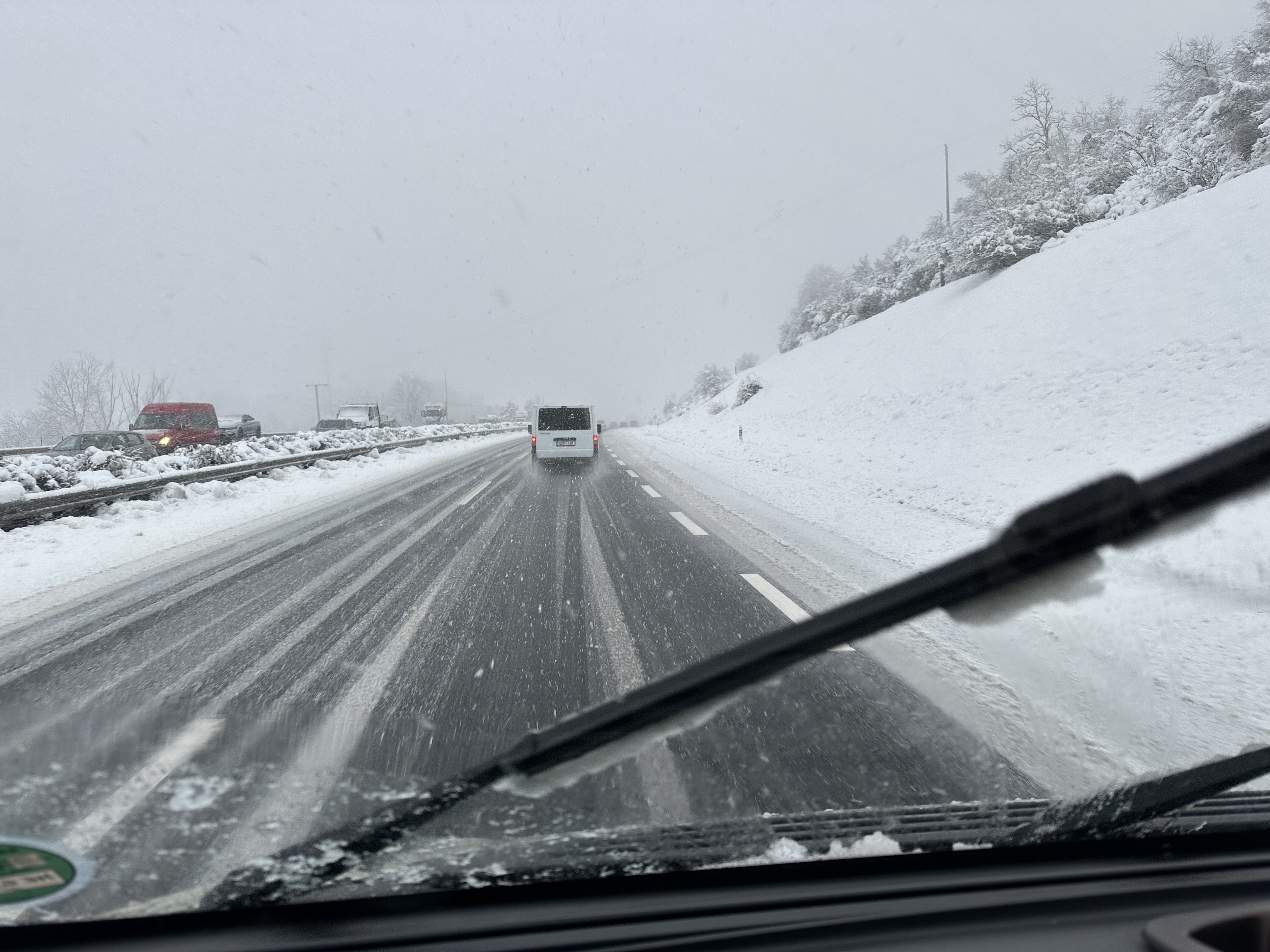
Which constitutes my final comments:

Unlike last time, when arriving at the Serbian border with Hungary, there were no colons of migrants walking up and down the highway stretch. Also there were no military vehicles pointing their guns towards Serbia, on the Serbian side. No helicopters any more. But still, meticulous controlling of every car for illegal migrants on the side of Hungary. The intense cross-border efforts to fight organised crime trafficking migrants had an effect. Well, as always in fighting crime, the effect is to push crime away from one area. It will show up elsewhere. With the same victims. Repressive forms of fighting crime are not able to address root causes. They only can support zero-tolerance, and deterrence. But they do not operate at the root level.

Like last time, exiting Hungary and entering Slovakia was not possible without being flagged down and with polite police officers doing a visual inspection whether my van would carry illegal migrants. The same would happen, like last time, when leaving Slovakia and entering the Czech Republic. This time, approaching Usti Nad Ladem and the German border, I was not flagged down by a police vehicle with blue lights, inspecting my van for illegal migrants. But after the German border, a semi-permanent Police checkpoint forced every vehicle to slow down to walking speed. This time, I was waved through. “A Merry Festive Season” I exclaimed, they smiled, thanked me, and wished me the same.

Ending one day after I began this blog writing, and way too many coffees later, I can report that I am almost alone on my campsite. Most other permanent campers seem to enjoy the Season from the warmth of their homes. I don’t miss the two guys who I overheard in October, when these temporary migration-control measures were established, including Germany announcing to do this at the Polish and the Swiss border. These two guys said: “Now there won’t be any Muslim passing through Poland to Germany any longer”. For the sake of my inner peace, I did not vomit. I just left, because some things one can not control.

At the end, and against this background, special greetings go to my nephew and his Egyptian wife. My nephew converted to Islam. He was very easy on this. And his only reason was that he was so seriously trying to respect the cultural context of the family of his wonderful wife. If you ever come to know Egyptian culture, you will have a glimpse of appreciation what that meant for her parents.

If you, instead, harbor resentments, or would like to make derogatory comments, let me mention that my pregnant mother, a Protestant, was forced to accept at the time of marrying my Catholic father, in 1957, that I and any future children would be baptised Catholic. Otherwise the catholic priest would not have married my parents.

Think about that.

Be grateful. Be compassionate. Cultivate empathy. Before you die. Start now. You don’t know how much time is left to you to become a happy person. Hope you had a good Christmas. I did not put up XMas decorations, I could not get myself into it, with so many children dying in war, whether in the Ukraine, or in Israel/Palestine or Palestine/Israel, in Africa, or elsewhere. And have a peaceful New Year’s celebration. 2024 will not get better. In addition to all the unbearable suffering for which we need empathy, we will need to put every energy into resilience. 2024 the United States democracy will be put to a stress test that has the potential to rip it apart. Donald Trump, President Nr 45, the undisputed contender in the field of Republican candidates for the 47th President of the United States, has already made clear what we can expect.

Migrants are poisoning the blood of our country, he said.

With that, after 20.000 kilometers of migration, being a guest at most places, I end here.

Happy Holidays.
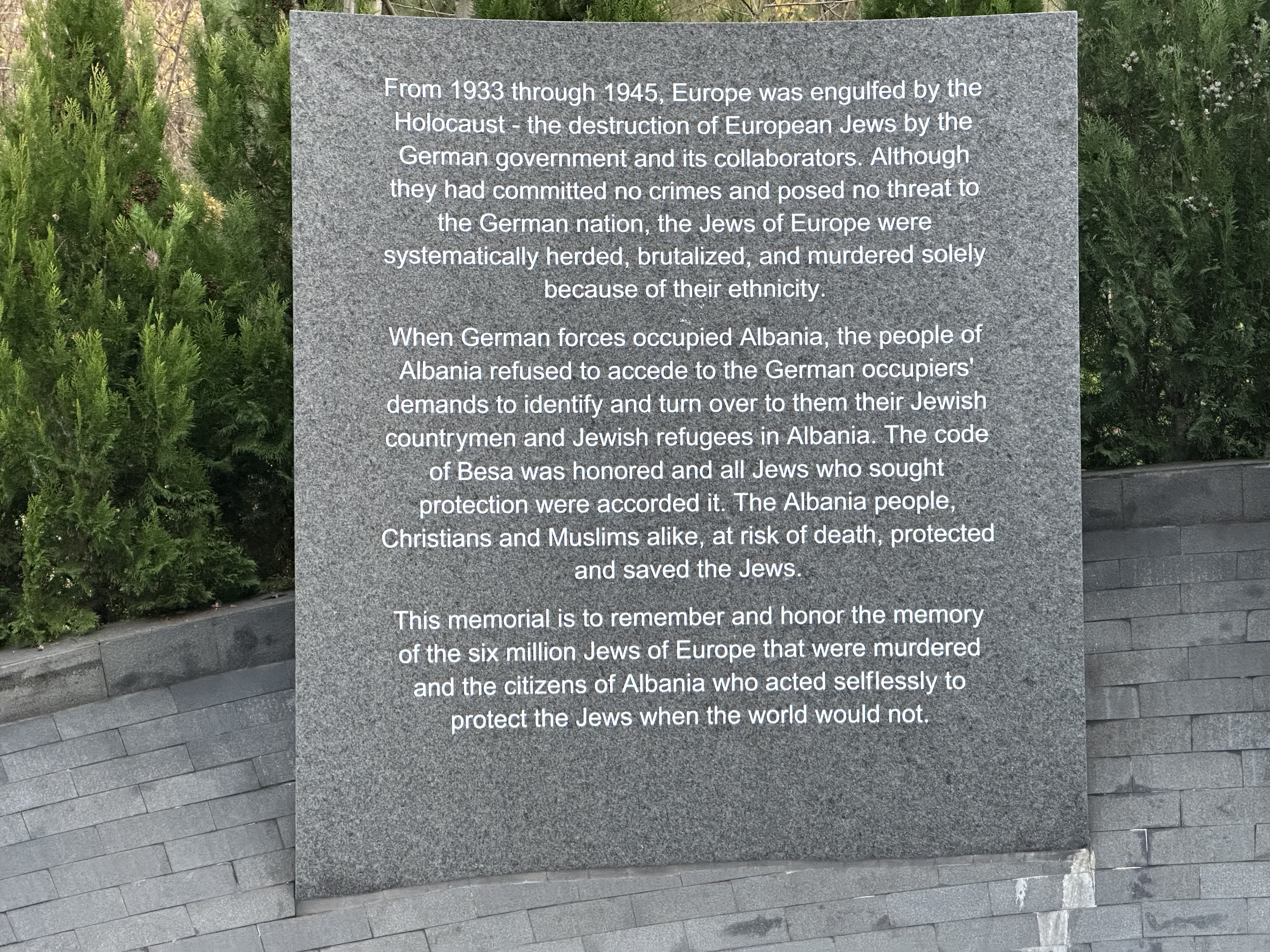
On this picture: I took this in a park in Tirana, December 2023

essays on policing – status update – initiation of work

In a few days I will celebrate my 65th birthday. I became a German police officer in the detective branch at the age of 18. Almost 44 years later, in January 2020, I was up for mandatory retirement. About half of these four decades I rose through the ranks of a national Police in Germany. The other half I spent abroad, in senior headquarter and field positions of the United Nations and the European Union. In these functions of UN peacekeeping and peacebuilding, and EU crisis management, policing always was a cornerstone of my work. In my current work as an adviser contracted by the German Federal Foreign Office, policing is an important element within a larger and holistic framework of support action, too.

So, 45 years of policing experience. Related to work in Germany, South-East and East Europe, the Middle East, Asia, Africa, the Carribean. Living in many places in Germany, and in Belgrade, Brussels, New York, Pristina, Sarajevo.


In my article “Seeing Deeper” I reflected on my personal experience with the fundamental shifts, including within the international peace&security architecture, over those two decades of my contribution to it. Of course, the historical timelines which are preceding the colossal changes of these days, they go way back. Some of those I witnessed in a national capacity, some during my international time. Events like, for example, the fall of the Berlin wall, or 9/11, they are examples for moments that we associate with being triggers for fundamental shifts. Sometimes they are. Sometimes they are just the coordinates in space-time where the underlying energies pop up with explosive momentum. Much later, through an analysis of United Nations peacekeeping, I would revisit the bigger picture in which some of these key events played a role, where they had an impact on what I was involved in at that time, the role of policing in peace operations. I have written about some specific aspects related to what we call “international policing” here.

Over those more than 23 years within an international context of peace&security, I witnessed times when there was a lot of enthusiasm about what policing could contribute to supporting peace processes. Policing, done right, is a key component for supporting processes towards lasting peace, and reconciliation. Therefore, support to the establishment of capable policing, deeply anchored in values and international principles and standards, can be a key enabler for lasting peace, and so much more. Think, for example, gender equality, protection of the vulnerable, protection of minorities, ensuring democratic forms of governance, contributing to justice, and in its very core, promoting human rights.

Because of the many years of my own involvement, I witnessed success and failure. The reasons for it are highly complex. Some sit with grappling to understand and to properly implement policing assistance. Some reasons sit way beyond and made it challenging for all actors with military, police, or civilian tasks, to deliver on what they were expected to. On the policing side, where some of my core experience sits, it includes that we, the so-called international community, struggled with making these policing contributions relevant. Sometimes our collective proverbial mouth was not where our money was. Sometimes the political design of international assistance in or after a conflict or war struggled with applying coherence to expectations, objectives and their implementation, either narrowly speaking for what policing could bring to the table, or related to the respective peace operation at large. When we were successful, we had to see that good news stories rarely stick, they are unfortunately not as visible as their bad-news-siblings. At the same time we saw the political development leading to the erosion of the peace&security architecture into its current deplorable state of affairs. This made it more and more difficult for any form of collective international assistance to prove its positive impact.

We now live in a period where a discussion about policing may feel very counter-intuitive compared to the huge focus on military engagement. Just recently, I argued that in my personal opinion it is time to make a decision to provide the Ukraine with heavy battle tanks. That’s not policing. What I am concerned with is to contribute to a discussion in which we do not loose sight about which ingredients are vital for a peaceful society, and that we include lessons from the past into how we want to move forward in a world in which previous rules of engagement may increasingly become outdated.


“essays on policing” is offering a thematically focused window into my work. My writing about my experiences with policing is not motivated by “setting a record straight about a past long gone”. It is not about a sad look back into the “good old times”. It is not about giving advice with an attitude.

It is about incentivizing a quest in order to find contributions to contemporary challenges, and there is no other way than also to make reference to how we did, and failed, or succeeded, during previous challenges. We can learn only by looking into the past, without getting stuck in it.

I feel the best format for doing this is to choose the writing format of essays. This format allows me to find a balance between solid research and truthful facts, and the inevitable personal and subjective element which forms an essential for my contribution. To some extent it will be a walk on the memoir side of things, but thematically grouped. It won’t be a linear historical account of my work experiences. I will jump back and forth, weaving a narrative for how I came to look at specific things from a vantage point of own experiences, good and bad. It hopefully allows me to stay humble. As I said, it is less about advice and more about storytelling within an ongoing discourse in which we all struggle to find meaningful ways forward, keeping us all together.


“essays on policing” is part of a larger set of writing projects. I have ideas for “essays on peace&security”, for “essays on trauma&reconciliation”. In all of them, there is a deep professional and a deep personal element of experience. Looking at the statistics of this blog, some of the articles which create the most, and the most longstanding interest, are about policing. It feels natural, therefore, to start here.

My plan is that this set of essays is forming a book. As a book, I do not plan to publish it here. I do not even know whether I go for self-publishing, or whether I find a publisher. I am not motivated by profit, but I won’t do it for free either. This is going to be intense work, and a lot of time and effort will go into it.

I plan to regularly update you on the project, here on this blog. Once the structure and the outline of planned content is presented here, my thoughts about how I want to publish, and how you could purchase the book, in case you’re interested, will become clear.

I am inviting you to participate. Please do so by sending me a mail: stefanfeller@mac.com.

Proceeds will go into the future of my youngest children. It will be a tiny part of my efforts to make up for time lost, because of my work, and to make good on where I failed to be sufficiently available for them, for reasons which only include my work, but go far beyond. But that will deserve a closer look within “essays on trauma&reconciliation”.

I am working on a dedicated page on this site where you track progress, and where I will describe the content of essays. Meanwhile, my writing here will continue to go all over the place.


On Sustainability – Origins of my artificial term Durabile

What is the meaning, and the value, of achieving sustainability, in a world which is constantly changing, because there is no way to stop change without freezing out of spacetime?

Is there a way into sustainable growth of something within the outside world of phenomena, such as a continuous eternal growth in wealth, a continuous uninterrupted reduction of poverty, a continuous and never-ending growth of nurturing wholesome values, such as those we consider to be “fundamental”?

And if we would accept that everything changes, sometimes to what we consider being “better”’ and sometimes towards what we would consider to be “worse”, what is the answer then to the question “Why am I investing into something which won’t last?”, “What’s the point of all of these efforts?

Inasmuch as you could say “Well, you’re losing yourself in philosophy again, don’t ya?”, I could also respond that I have heard such questions on countless occasions from likeminded people in the field of humanitarian work and work on peacekeeping and peacebuilding, and I have my own share of moments when I was full of despair and disappointment and struggled with soldiering on. The “March Riots” of 2004 in Kosovo come to my mind as a prominent personal example of such a situation I found myself in, together with thousands of us idealists, Kosovans, soldiers in KFOR, police officers in UNMIK, and all civilian staff in UNMIK and the larger international community.

But also recently, in a coffee chat, when a colleague and friend of mine went on the gloomy side, asking whether all the long-term strategic efforts we are putting into supporting a five-year-initiative have had a real impact. Or, when friends of mine and myself mourned the implosion in Afghanistan. And one year later, we still can’t believe we are witnessing a menacing and extremely dangerous land war of aggression waged against the Ukraine, with every human suffering and every loss of hard-fought values throughout many decades within.

Putting these questions forward, and answering them, is in my experience extremely dependent on the general personal mood one is in. I find myself seeing that my answers will depend on how I feel, at that moment. And because I know that, I have my toolset: Taking a break, zipping my mouth and, if possible, calming the crazy committee of voices in my head, stepping out of the picture and taking a larger vantage point.

So, asking these questions, and writing about what, for example, constitutes sustainability, is the opposite of an abstract philosophical approach. We use phrases like “sustainable solutions”, “domestic ownership”, and a thousand other buzzwords in uncounted strategic and political statements, documents, sessions of the UN Security Council or the EU Political and Security Committee, and annoyingly we throw it on each other in myriads of PowerPoint presentations.

So, it is appropriate and very practical to write about it. Like in my previous article, where I analysed the meaning of the word “truth”, it is also relevant for a word such as “sustainability “.

Sustainability sits at the heart of any strategic approach, and it is reflected in the name of my blog. When I founded this blog in 2014, I looked for an Internet Domain Name which would be unique, artificial, and reflective of the theme of my blog. I combined “durable” with “mobile”, forged these words into one: “durabile”. It is just one of the many miraculous manifestations of the Yin Yang – principle.

I love this artificial word until today. So, where is the Yin and the Yang in “Sustainability”?

On the most fundamental level, I would personally characterise sustainability as a relation between the dynamics of change, and relative temporary stability. Nothing, literally nothing in the world of composite phenomena is able to escape impermanence. It is our day-to-day denial of the fundamental law of impermanence, our clinging to the wish of living in unending happiness, which is limiting our appreciation that sustainability is like the suspensor component in every shock absorber in cars: The shock absorbers attached to wheels are composed of a spring and a suspensor, countering the radical wildness of the spring’s frequency, smoothening the bumpiness of the ride. The right pressure in the tires adds to that, as any overland camper or vanlifer traveling the back country can tell you.


When I had come this far in my writing on a rainy late fall morning, sitting in my favorite street cafeteria in Belgrade, December 01, 2022, I took a deep dive into my memories, and then subsequently deep into my digital archives. Writing about the “March Riots” of 2004, I remembered a morning after these horrible events when I managed for the first time to come up with a formulation of my thoughts on how to move on, and to move constructively forward. My later (and now ex-) wife and I had our first weekend with some sleep, and it was April 07, 2004, when I wrote the following text, which I found just now. Except for Lori, nobody has heard or read the words of this text until now, eighteen years later. And when I read it now, I also understand the sustainability behind the theme of my blog “Durabile”.

So, take your time, read this, and remember: A few days before I wrote “We Are Starting To Wake Up”, we were in one of the worst nightmares one can have been in, and for many of us it felt like the implosion of a lifetime of efforts in the service of peace and security. After reading it, use the following link to watch a video about a travel I undertook in Kosovo, and to Gracanica, just a few weeks ago. In this video I do not make specific reference to what I am writing about below. But you will understand what I am talking about, once you have read the text below.

And then, continue with the final part of this blog entry, please, if you’re still glued to this lengthy, but hopefully interesting, train of thoughts and emotions.


We are starting to wake up. After days and nights being one nightmare we are diving up to the surface. We are faced with a new reality and with new memories. Memories we have to integrate into our lives and into our previous memories, those which created our perception of the reality we would have believed to live in. A reality which happened to become so brutally changed for all of us.

The recalls of these days around mid of March 2004 are new. And radically different. Whatever perception of the reality each one of us had, no one of us would have expected that atrocities on such a large scale could have been able to happen. Day by day new aspects are showing up in our minds, situations that we have not been able to integrate into our memory. As so much has happened, thousand times more than anybody of us could just take in a regular and sequential order. The intensity of these events prevented that anyone of us could realise the full flegded scope of individual memories we have and the corporate memory we just are about to create right now. As we are discussing our individual memories amongst ourselves, the corporate memory is being created.

It is a fundamental human process, one of the strongest and the most unavoidable ones that memories are integrated into the already given. So this is starting to happen with these nightmare-memories as well.

On a normal day memories which are not different from previous ones will just be added. Another Sunday here or there, with the usual procedure of getting up, doing things, seeing relatives, having a meal, playing with the children, having a walk or whatever else, such memories just add.

A death of a relative or a friend, if we had to expect it, if it was obvious that it would happen, it leaves us saddened, full of tears and pain, mourning, but we realise that such things happen, and we integrate this memory. Life goes on, this is what we say and know.

A severe traffic accident, a sudden unexpected death for whatever reasons, it makes us speechless, we try to find explanations. We are saddened, we mourn, we cry, but we raise the question „Why?“. Step by step we integrate these memories as well, but it takes us more efforts and it takes longer. If the given reason for the unexpected is not obvious, we will look for further explanations. As we need explanations in order to integrate the unexplainable into our memories. We do not like open wounds in our memories, we always attempt to heal. If it is impossible to find explanations, we will create some sort of protection around this wound in our memories, as we have to continue to live with our memories, which are, as I said, the fundament of how we perceive the reality. And as I also said: „Life goes on“.

The wish to reestablish normalcy, to find back to a normal pattern and rhythm in our lives, it is overwhelming. No one can endure a traumatization for a longer period of time. When the shelling of Sarajewo would not end, the normal life reestablished itself under most terrific and life-threatening circumstances. If a nightmare interrupts reality for too long, the nightmare will become the daily routine. This fundamental human process which keeps us alive, it will enable to live a regular life under all circumstances. For the one who looks on it from an outer world perpective it might be unimaginable, but the insider knows: „I have to live a normal life even under these circumstances, otherwise I will die, otherwise my soul will die“.

This is not what happened here. The nightmare came to a halt after some days and I pray for that it will not reoccur again. And our daily normalization is already starting.

The internationals, as we call ourselves, are in our offices and attempt to reestablish the work. Frantically, exhausted, traumatized. Whenever having a break, we will talk amongst ourselves, recalling our individual memories and putting them into an explanatory context. As we talk mainly amongst ourselves, the explanations being found are isolated to the extend that they include only limited other views communicating with some local colleagues and friends. The collective memory becoming created is including the explanations created by this process.

Those of us, the Kosovo-Serbs from places which have been burned down to ruins and ashes we will talk amongst ourselves, having to create normalcy under the awful conditions of being displaced, with all homes left burned and destroyed. The individual and corporate memories will exclusively be comprised of how those of us explain what happened. The Kosovo-Serbs returning to their homes in enclaves where they had to be evacuated from, they perceive a new reality including high-level protection again. And they will start to establish some normalcy depending on individual and corporate memory being different from others of us. The explanations about what happened during this nightmare will be exclusively based on restricted, on isolated communication.

Let me have a look on those thousands of us, the Kosovo-Albanians who have been part of violent crowds without committing individual offences. As I do believe and all of us know that there is a difference between the fact that participation in a violent crowd can establish a crime in itself but that in addition to that individual crimes like arsoning, assault and brutal murders have happened. Let me look at first on those of us who participated in violent crowds without individual criminal offences. As these Kosovo-Albanians do create the majority of all participants. And as they come home with a specific recall of the nightmare, in all likelihood a triumphant one. These Kosovo-Albanians who stood in a violent crowd for example moving forward and backward between Caglavica and Pristina, held on distance from a defensive crowd of Kosovo-Serbs by international police officers, Kosovo Police Service officers and KFOR soldiers, they will have returned home to Pristina or elsewhere, living a life there not much different from that one before the nightmare. A return to normalcy is including talks to Kosovo-Albanian friends, no talks to Kosovo-Serbs or other minority members, not much talk to internationals. Reading newspapers in which the International Community is depicted as the real cause of what happened and where still „the others“ are painted as the living and existing evil. Putting this memory into such a context, explaining the nightmare by this. Life goes on on this side as well, perhaps not too much different. Some might regret and have a bad feeling, which they will try to cover and to hide rather quickly, explanations which are putting others into the position of being responsible are most welcome. Some more thoughtful will feel depressed, I would wish to see as many as possible feeling guilty and responsible from an overall perspective. But some weeks from now everything will be normal again.

Those of us, the international police officer and the KFOR soldier, after a couple of months they will go home. An interim normalcy here in Kosovo, some explanations, many of them blaming one group, as another group, minority members had to be protected. This is a reality no one can argue against without being absolutely irresponsible: during these days the minorities amongst us had to be protected against attacks, let us be clear about this. So this officer or soldier will have his picture, his memories and will go home with his explanations.

The Kosovo Police Service officer might be looked upon much different. If he or she is a Kosovo-Serb, he or she acted during those days protecting the own kin. If he or she is a Kosovo-Albanian, the own relatives or friends might have been part of the attacking crowd between Caglavica and Gracanica. And as all groups in Kosovo create their own reality with their own memories and explanations, the Kosovo Police Service as an organizational entity and part of the UNMIK-Police is subject to collective memory and accusations. Either having been not helpful for the Kosovo-Serbs or even participating in the violence or not been seen as a supportive element for the underlying extremism on the Kosovo-Albanian side. I am aware of terrible reports as well as of courageous actions. Establishing the truth will take time, time during which the establishment of the corporate memory and all kinds of explanations and accusations will not stop.

The Kosovo-Serb, who stood in the other crowd, he or she saw houses arsoned, going home to Caglavica or Gracanica, now again under protection by checkpoints. I have been here in 2000 and 2001, I am so familiar with these checkpoints. Checkpoints interrupt communication. When we were able to remove them in 2002, we could see an increased joint live of the ethnic communities. One would see Kosovo-Albanians in restaurants in Lapje Selo, one could speak Serbian in the streets of Pristina. Is the latter possible after the YU-flats had to be evacuated and the Kosovo-Serbs there have been displaced? Is it wanted in a situation where speeches in the Assembly from which I have transcripts earlier this year speak about English as the „second“ language in the school-system in Kosovo? So this Kosovo-Serb will establish normalcy in his or her individual context, the explanations are driven by exclusively this perception.

Many things are being said currently in the public, as all of us attempt to find explanations. We will read about accusations against the international community, but it is being raised by some of us who are not part of this international community. Others will talk about circles of extremists organising this nightmare. But it is public knowledge and not a secret of the Police Commissioner that organised extremists can not act without the underlying readyness of the many to allow this and to participate. Opposed to unorganised mobs we have witnessed directed crowds. A crowd can not act without a leader, but a leader can also not direct without a crowd.

But all of us have one thing in common, we, the Kosovans and the so-called Internationals, all of us who experienced this nightmare, we want to reestablish normalcy as quick as possible. What we are faced with is the danger that we establish separate normalcies. And I have to say that this is one of the fundamental reasons for what happened. Extremists and terrorists and regular criminals can not act to this extent in an environment which does not allow this. The experience is a world-wide one, I can use many many examples.

In a situation where all of us wake up we desperately try to find explanations. And explanations which are deflecting from the own corporate and individual responsibility are most welcome from a psychological perspective. I have to say that those who should not be considered to be part of us, the organised criminals, the extremists and terrorists are the only ones who have the benefit of this separate establishment of reasons why this nightmare could occur.

As a Police Commissioner I am responsible for the security of all of us. And I have to say that the establishment of the Rule of Law, the vigorous prosecutions and conviction of individuals who committed crimes is one of the most powerful instruments in a democratic and peaceful society. But to what extent does this apply in an environment where arrests would be perceived contradictory to the separated explanations about what happened?

The Rule of Law applies to all who wish to have it established in order to prevent that anybody is above it. To what extent the many of us reckognize that all of us are part of the same society? Will the arrest of an individual having committed a crime during this nightmare being perceived the same way amongst all groups which are so separated from each other?

Kosovo is at the crossroads. There is a joint responsibility of the civil society. All of us are part of this civil society. If the reality is different from this, if separated civil societies do exist in Kosovo, there is no joint Rule of Law other than the externally imposed.

So, the civil society is asked to recognize an inseparable responsibility beyond ethnic and religious groups. This civil society are all of us, local and central kosovan politicians, all religious and spiritual leaders, intellectuals and the ordinary man or woman on the streets. As long as we perceive separated realities and why things happened, as long as we communicate along ethnic and religious borderlines, as long as we make a difference between us and the others, nothing will change.

Communication is the ground for reconciliation, the South-African model of reconciliation has been discussed here from time to time and I have had some personal opportunity to explore it more. This is not South-Africa, this is Kosovo, this is the Balkans. But this is a reality of different groups not talking. I would like to see discussions organized by the civil society or it´s political, spiritual and intellectual leaders with Kosovo-Albanians, Kosovo-Serbs and international and local police officers participating who have been part of the same violent situation.

I would like to see really joint perceptions of what happened. May be reconciliation is a dream far along the road. But without inter-society-dialogue even the preconditions for such a dream are missing. And without dialogue there is no joint. I am concerned, as dialogue is also a precondition for a joint recognition for one Rule of Law for everyone within a civil society.


When I came back to Kosovo on many occasions, I was still processing, and healing. I finally healed a few weeks ago, and that’s what that Youtube video is about.

At the same time, impermanence, but also growth, has accompanied me throughout my private life. Those events in March 2004 were the beginning of the end of Lori’s and my time in Kosovo, we knew that we had to hand over efforts, after some final stabilisation. We moved on, and we married, and we gave life to amazing twins a few years later. And we suffered, and we had pain, when things broke apart in 2013, finally. And we moved on, sustainably committed to what was always defining the foundation of our relationship, true love and friendship. We went through these transitions of impermanence, and were rewarded. I have to speak specifically for myself, as I tend to stay on my side of the street: I was rewarded. For sustainable commitment to truth, honesty, compassion, and love, I was rewarded with an uninhibited trust and friendship. I strive for giving that back. And both of us are rewarded with seeing our children growing, with values, with fallible human parents, who commit to sustainability.

So, here you have it, sustainability in the small and the large, because the video also makes clear that process, development, and also the all-pervasiveness of growth and decay, applies to everything. In that sense, the above text feels, to me, like a piece of evidence for that contributing to sustainable solutions does not only matter, but is the only way.


Sustainability built into concepts and efforts works best when I accept the larger validity of impermanence. I spoke of relative and absolute truths in my previous article. Buddhism tells me: Every composite phenomenon is impermanent. Physics does agree, and the Second Law of Thermodynamics is universal within that part of the spacetime continuum which we can observe and measure. In itself, this statement is an axiom, and in my belief system it is an absolute truth. Whether I like it, or not, it is defining our existence in this world of phenomena. Meaning, it doesn’t make a difference whether I like it, or not.

But I can use it to my advantage. Like, that a sustainable commitment to human values is useful for growth of prosperity and happiness of All. I don’t have to be spiritual even to see the advantage. Betterment for All is the sustainable solution for bettering the fate of the individual. Every dictator and selfish autocrat and selfish billionaire dies the same way like I will die. But, as Pema Chödrön says: How we live is how we die (How We Live Is How We Die, 2022 Shambala Publications).


Sustainable commitment to peace and security is my personal means to achieve the happiness which prepares me for every transition in this life, and beyond. In that, I am Durabile.

Distinguish The Signal From The Noise – Also feat.: The Long Term Impact of the Pandemic, and of Conflict and War

Setting the stage: From a conversation with my son

Yesterday afternoon I chatted with my son on FaceTime. He lives in Toronto and is fourteen years old. For him it was morning, and I was amazed seeing him preparing his own breakfast potatoes with an omelette. It looked so good on my phone screen that I could smell and taste it, I wished I would have been there. He promised to make me such a breakfast when I’m in Toronto in a few weeks time.

At one point, the casual conversation about what’s up veered into the parental part: “How’s School Coming On?” – “Good good”. – “Any details to share?” – “No, not really, it’s just good.” – “Do you like your new school?[The kids have entered high school education this summer] – “It’s okay, but have you ever heard somebody saying that school is a place you really enjoy?” – “I understand, fair enough. Wasn’t much different for me, when I was your age. But, just curious: Do you like what they teach you in physics? And what is it they teach you?” – “It’s okay, but I would love you to make more of your tiny explanatory pieces on physics, I always enjoy them.”

Guess what? I was flattered, felt these little pieces of work of mine make sense. I felt motivated to make more of them. Perhaps I will share some of this stuff on my Youtube channel “All Over The Place“. That’s the fun place in my writing and creating. Over here, at durabile.me, it’s more about the serious stuff I like to write about.

What everyone knows, including from own experience, and too often forgets: The importance of education for a society

Yes, school, as I told my son, is also something I remember in a similar way. Necessary, but not a place of daily rejoice, like, getting up and thinking “Yay, I can’t wait until being in class!“. Meeting my class mates always was a mixture of joy and anxiety, I was sort of like Charlie Brown, isolated in many ways, struggling to find friends and appreciation. Meeting my teachers, more often than not, was a mixed bag as well. The subject issues at school, mathematics, physics, chemistry, language, history, geography, some of the stuff I loved, some of the stuff I really struggled with. I could not shrug it off, like Calvin in the comic series “Calvin&Hobbes” does. I often strolled home with my head low between my shoulders, like Charlie Brown in the comic series “Peanuts”.

But it was necessary to learn, and I knew that. Necessary at the very least. Pleasant, preferably. Which is, certainly, part of the art of pedagogy: How to teach knowledge? Being effective in establishing knowledge also needs to mitigate unpleasant experiences. Not everyone of us has a Spartan mentality, like “what does not kill me makes me tougher”. The saying “School prepares for life”, often used and even more often abused, at it’s core it is, of course, true. What I learn at school, it becomes a defining part of everything thereafter. What I don’t learn defines my life in every aspect as well. And this is especially holding true for general skills which I acquire through education. I don’t have to be able to explain Richard Feynman’s quantum mathematics. But a general level of knowledge, combined with education in a general sense, it is setting the stage for anything to follow.

Enter Covid: Millions of children, and millions of their parents and caregivers were all of a sudden reminded of the educational role of schools, through their sudden absence as physical places to go. Places to gather. To socialise. To learn social skills. To be taught knowledge, and to become educated.

The continuing impact of Covid goes way beyond cases of long-Covid

October 24, 2022, the New York Times published an article “Math Scores Fell in Nearly Every State, and Reading Dipped on National Exam“. Here I am quoting the article’s beginning:

U.S. students in most states and across almost all demographic groups have experienced troubling setbacks in both math and reading, according to an authoritative national exam released on Monday, offering the most definitive indictment yet of the pandemic’s impact on millions of schoolchildren. In math, the results were especially devastating, representing the steepest declines ever recorded on the National Assessment of Educational Progress, known as the nation’s report card, which tests a broad sampling of fourth and eighth graders and dates to the early 1990s.

So, here we are with scientific results demonstrating the devastating combined impact of the pandemic and of how we needed to protect ourselves, collectively: In order to reduce casualties, and to reduce suffering by attempting to keep the medical system operational, we took tolls. Mental tolls, physical tolls, emotional tolls, cognitive behavioural tolls, and educational tolls.

Heavy tolls, like that on average, the number of fourth graders and eighth graders being proficient in math and reading took an exceptionally deep plunge towards an abyss. And what is indicative in the U.S. system, from my personal experience it’s true also in Canada, and from what I hear and witnessed in Europe, I have no indication it would be different here. I am sure that there is not a single country which found a mitigation strategy through a form of protracted exclusive home-schooling similarly effective in knowledge transfer as classroom-teaching is.

It is also correct to conclude that what holds true for math and reading is also holding true for general levels of education, social skills, and a general toolset which allows to traverse our contemporary world knowingly: By having a proficient knowledge about our own environment, we go beyond a collective capacity to be economically competitive: Knowledge allows us to make informed decisions, opposed to either making uniformed decisions, or being the proverbial sheep in the herd of individuals being manipulated by those who do, for own and for controlling reasons.

I also happen to think that there is the educational equivalent to what we observe in relation to the distribution of wealth in our societies: Like ever fewer people are getting more wealthy, and ever more people fall into low-income and also poverty, with a shrinking middle-class, the same certainly is true for the distribution of knowledge. If good jobs require a CV with reference to an Ivy-League-College-Education, if creating what drives our economic progress is in the hands of ever fewer people who understand the underlying science, or engineering, it will inevitably also contribute to the growing size of parts of a society which do not hold many economic resources.

But the damage goes further:

Proficient knowledge establishes a general capacity to distinguish the signal from the noise

The less I know in a general understanding about how the world is functionining, the more I am vulnerable for “Scharlatanerie”, and for all the messy speculative stuff from people who believe to know, do actually not know, and create noise, inaccurate information, wrong information, and deliberate misinformation. The last one for a variety of reasons, including attempting to control, but also because sensational stuff simply sells. It always did, in magazines. It increasingly does, on the digital media platforms of this Brave New World.

I’ll use an example, on my topics of scientific interest: I need a basic knowledge about how the James Webb Space Telescope JWST works, in order to filter out those sensational channels where people attract viewers by suggesting JWST has found proof for alien existence. I need a sound knowledge to stay with those channels informing me about most recent discussions in Quantum Mechanics, just to grasp the profound impact of why the 2022 Nobel Price has been awarded to Alain Aspect, John F. Clauser and Anton Zeilinger. My mind “explodes” (or implodes) when I try to understand the rationale which can be found on the Nobel Prize Website. But my general knowledge allows me to appreciate why the entire physics community is abuzz of profound discoveries to come which may, again, make previous knowledge obsolete. Previous knowledge which already has successfully made my mind imploding, just saying.

This is anything but an esoteric discussion. It is, in my view, one of the most crucial and often unappreciated topics in relation to how we protect values in our societies: Through education. At the same time, the relevance goes much beyond the impact of the Covid-19-pandemic.

In literally every conflict- or post-conflict-environment I have been working in, the devastating impact of conflict, violence, hatred, and demolition of infrastructure on the educational system has been larger than life. Where educational capacities remained crippled, or absent, the respective society remained unable to recover as much as everyone hoped. Which, in turn, led to many effects which created the next round of frustration, such as through migrating away, accepting corruption and crime, and a general path towards becoming more prone to the rule of the powerful, instead of the rule of law.

Concluding this one with a view on the war of aggression by Russia raging in the Ukraine: We see systematic attacks on critical infrastructure in the Ukraine, and that includes the shelling of schools and kindergardens. It has a terrible invisible effect: Deploying strategic blows against a society and country by sowing fear includes to make it difficult to uphold a daily life allowing to transmit knowledge to children, very similar to the effects of the pandemic.

There has been a press conference the other day with Ursula von der Leyen, President of the European Commission, and Olaf Scholz, Chancellor of the Federal Republic of Germany, arguing for a “Marschall Plan” for the restoration of civilian capacities in the Ukraine. It is really important news. The longer a society is incapacitated, whether through a pandemic, or conflict, the less the value of general education can be upheld in any country. In turn, fragility becomes systemic.

Collapse of the Afghan National Defense and Security Forces

Afghan Police, near Kunduz, December 2006. Picture taken by the author
Makeshift police checkpoint near Kunduz, used by the Afghan police pictured above. Picture taken by the author, December 2006

Summer 2021, both the Afghan National Government and the international presence in Afghanistan imploded, in whichever sequence and dependency from each other. The Taleban took control. First they promised a more liberal approach, compared with the situation of their first brutal regime, after the collapse of the Soviet invasion into Afghanistan.

In what feels like an endless stream of bad news since then, May 20, 2022 the Taliban’s Ministry for the Prevention of Vice and the Promotion of Virtue ordered that all women must wear a face veil in public, or risk punishment – which was extended to TV presenters. Here one German news coverage on it. Some women protested and refused in public appearances. It is the most recent of many bold and shameful steps imposing restrictions on women. Threats of punishment in case of non-compliance being doled out to the women, their employers, and the familiy members of these journalists led to that the female news presenters had to succumb under pressure.

Do we have the capacity to keep our public awareness focused on what happened in a country in Central Asia, and how we were, and are, collectively contributing to the suffering of its people, whilst a war broke out in the Ukraine?

Are we able to come up with a satisfactory joint assessment of what happened in Afghanistan?

When the catastrophic events of August 2021 occurred, just ten months ago, we were all shocked. Then, new catastrophic events unfolded, and sure this will affect our ability to invest enough time in grappling with an understanding about the complexity of two decades of international engagement, leading to what, seemingly, is a failure of epic dimensions. 24 August 2021 I argued here that we would benefit from a collective forward-looking assessment. Basing conclusions on what is publicly available, not having privileged insider information, the mileage may vary.


May 12, 2022, SIGAR issued an Evaluation Report in the form of an Interim Report: “SIGAR 22-22-IP Collapse of the Afghan National Defense and Security Forces: An Assessment of the Factors That Led to Its Demise“. Like other SIGAR-Reports, this one is available for the general global public.

SIGAR stands for “Special Inspector General for Afghanistan Reconstruction”. This is an Office created by the United States Congress in 2008, to provide independent and objective oversight of Afghanistan reconstruction projects and activities.

May 24, BBC headlined “Afghanistan: UK’s withdrawal a disaster, inquiry concludes“, reporting about the results of an inquiry of the United Kingdom’s Foreign Affairs Committee.

Germany is still preparing to conduct a full fledged and self-critical holistic assessment of what went wrong, and led to the catastrophic situation in Afghanistan during summer 2021.

SIGAR considers that “the single most important near-term factor in the ANDSF’s collapse was the U.S. decision to withdraw the U.S. military and contractors from Afghanistan through the U.S.-Taliban agreement in February 2020, signed under the Trump Administration and confirmed by President Biden in an April 2021 address to the nation.

The statement above is one of six factors which, according to SIGAR, accelerated the collapse of the Afghan Security and Defense Forces (ANDSF) in August 2021. Other factors identified are (2) the change in the U.S. military’s level of support to the ANDSF, (3) the ANDSF never achieving self-sustainment, (4) Afghan President Ashraf Ghani frequently changing ANDSF leaders and appointing loyalists, (5) the Afghan government’s failing to take responsibility for Afghan security through an implementation of a national security strategy, and (6) the Taliban’s military campaign effectively exploiting ANDSF weaknesses.


What is the “ANDSF”? The term ANDSF has been coined to describe what, in a simplification, can be understood as military, and police. If one looks “under the hood” of the development of policing and military capacities in Afghanistan, the number of different entities with abbreviations such as ANP for Afghan National Police, or others, looks more complicated. Using the term ANDSF, both military and policing capacities are being thrown into the same pot. Which is symptomatic for a problem that affected the support of Afghan reconstruction from the beginning.

Of course, SIGAR is taking a U.S. perspective in coming up with nine factors that have led to the situation that, to quote, “after 20 years and nearly $90 billion in U.S. security assistance, the ANDSF was ill-prepared to sustain security following a U.S. withdrawal.” Reading the SIGAR report, the U.S. views of the report may reflect parts of the fundamental problems which we all had, and all contributed to: The fragmentation of international efforts, and the seemingly unsurmountable challenges in facilitating a jointness of strategic viewpoints which would have allowed for, at the very least, more coherence than we witnessed.

In the summary section the report is listing nine factors, though only eight are numbered. SIGAR notes that “no country or agency had complete ownership of the ANDSF development mission, leading to an uncoordinated approach.”

Number 8 reads as follows: “(8) the U.S. and Afghan governments failed to develop a police force effective at providing justice and responsive to criminal activities that plagued the lives of Afghan citizens.”

Within the chapter “Background”, the report spends the three initial paragraphs on describing, in the briefest possible terms, how the United States began training the Afghan National Army ANA from 2002 onwards, and how “Coalition partners” accepted the responsibility for other efforts: “police reform (Germany), counternarcotics (United Kingdom), judicial reform (Italy), and disarmament, demobilization, and reintegration (Japan)“.

The report goes on by saying that, following a United Nations Report in 2004, “in 2005, the United States assumed the lead for developing the ANA and the ANP. In 2006, the U.S. military created CSTC-A as a temporary entity responsible for training, advising, assisting, and equipping the Afghan security forces.

This section is riddled with military terms, and this is indicative for the motivating rationale. Two sentences stand out proving this: “Meanwhile, the Afghan security forces lacked appropriate equipment, which threatened their combat readiness. According to a 2005 U.S. military report, some ANP units had less than 15 percent of the required weapons and communications systems on hand.

Meaning: ANP, the police, being assessed as being “combat ready”, by the U.S. military. It is indicative for what follows, within a sound, though U.S.-centered politico/military analysis of the factors leading to the developments culminating in August 2021. For many pages, the lingo is entirely military, whilst the collective term ANDSF is used for uniformed capacities of the Afghan State. Policing appears to become somewhat an annex. This continues mostly until page 16 of the report, where, for the first time, some substantial reference is made to police issues, by referring to “President Ghani replaced more than half of Afghanistan’s district police chiefs, along with almost all ANA corps commanders, the chief of the army, and the ministers of defense (once) and interior (twice).” After that, the term “police” is only getting some prominence on page 22 again, within a narrative describing Taleban efforts to coerce district police chiefs into surrendering.

Following this detailed narrative, the report explains on page 24 and following pages the nine factors which SIGAR assesses as contribution to “U.S. and Afghan government’s ineffectiveness and inefficiencies in reconstructing Afghanistan’s entire security sector over the 20-year mission.”

In explaining the first factor, namely that “no single country or agency had complete ownership of the ANDSF development” there is another long and self-critical assessment which includes the sentence “Lead responsibility for constructing the Afghan National Police was initially given to Germany in 2002, but was quickly transferred to State, and then to DOD.” This reads like this decision has been a U.S. decision, and that it was taken back. Insofar, the entire report is indicative of a catastrophic development which I witnessed also personally during 2006 and the following years, in my then capacity within the European Union External Action Service. Importantly, I do not challenge the factual correctness of this U.S. view, inside a U.S.-centered perception of what happened. But from all I have been part of, this view will not go unchallenged by others in the international community. For many, this was not a U.S. unilateral decision, like, “to give” lead responsibility to partners. There is a whole record of international conferences from the early years of the development which would describe this very differently. And at the same time, if an internal U.S. decision then “took this back”, my memories do not include neither clear communication, nor that there would have been consent. Riddled with uncommunicated issues, this certainly contributes to the correctly described chaos, in SIGAR’s report.

In explaining the seventh factor, namely that “the U.S. and Afghan governments failed to develop a police force effective at providing justice and responding to criminal activities that plagued the daily lives of Afghan citizens”, the report presents two disappointing paragraphs on page 31. Whilst remaining highly critical about history, reputation, and systemic shortfalls of policing concepts and the Afghan National Police in general, and rightly stressing the importance of community policing and law enforcement capabilities in general, there is an entire absence of mentioning any efforts, whether under German Lead Nation activities, other bilateral, or European Union, efforts which attempted to contribute to Afghanistan’s efforts developing policing concepts, capacities, and capabilities. They often clashed with the U.S. conceptual framework, and the entire SIGAR report in itself is pointing into the direction that this is a crucial part of what happened throughout 20 years.


Mindful of not overstepping mostly self-imposed limitations on how I would like to contribute to public discussion and opinion-making through the means of this little blog, I will, however, make a personal statement:

I have never counted them, but I believe the numbers of police officers who contributed to the effort providing Afghanistan with a capable Police, not a Police “Force”, go into the thousands.

Like all other of these thousands, we were in Afghanistan under the umbrella of Lead Nation concepts, such as the German Police Project Office GPPO, and its later successor, the German Police Project Team GPPT, under national deployments into Provincial Reconstruction Teams PRT or other forms of bilateral contributions, or embedded into military deployment, or under the European Union Civilian Crisis Management Mission to Afghanistan dubbed EUPOL AFGHANISTAN, or in the form of small scale advisory functions within the United Nations Mission UNAMA, and else.

None of this finds mentioning in the SIGAR report. In December 2006 I was leading a European Union Factfinding Mission which contributed to the establishment of EUPOL AFGHANISTAN. For the following years, I contributed to EU headquarters efforts making the EU contribution a part of the international efforts, and hoping for making a difference. Thus, I have personal memories of talks with highest representatives of the international and Afghan national authorities during that time, and they are indicative for the fundamental underlying problems which are outlined in the SIGAR report, as well as for the fact that even how this report is being written from a politico/military U.S.-centric perspective is profound testimony for some of the central elements which haunted us for 20 years. Collectively. I’m seriously stressing that this is, by no means, a criticism towards U.S. policy and implementation. I do stress that we collectively, all of us, were unable to find the coherence which any international assistance to the cause of Afghanistan required.

Many of these thousands of police women and men who have spent tours of duty in Afghanistan have invested hugely, putting lifes and personal relationships at risk, and they all have made friends with Afghani women and men. Many of us felt, like our military friends and colleagues who got attached to Afghanistan’s people, an enduring pain seeing our friends being in danger, having had to flee, to hide, to take duck and cover, attempting to escape from the brutal regime which the Taliban appear to reestablish, within some thinly veiled deception that is vanishing more and more. I am sure that the single-handed absence of any of these parts of the story, within this undoubtedly important SIGAR interim report, hurts many of us.

On a personal level, the experiences with, in, and around Afghanistan have been a key motivating factor to work on answering the question as to whether it is possible to come up with a universal denominator on what we all should, under the umbrella of the United Nations, understand as principles for policing. I have written about the United Nations Strategic Guidance Framework on this blog since its inception. Likewise, the recent article “On Coherence of International Assistance” is motivated by experiences including the international incoherence over 20 years in Afghanistan.


Conducting honest and self-critical assessments on two decades of international military and civilian presence in Afghanistan, following the events in the aftermath of September 11, 2001, is critically important. We need to establish fact-based knowledge how the failure and implosion of the Afghan system of governance under former President Ashraf Ghani was intertwined with the circumstances and the demise of international efforts in Afghanistan. For reasons of accountability, honesty, and as an element which at least will inform us how we can avoid future mistakes.

Starting with honest assessments, secondly a public discussion which assesses how we want to avoid this in the future, and thirdly visibly delivering on conclusions, these three steps together are necessary.

Demonstrating the strengths of a democratic understanding of accountability must be based on the principle that attraction is more important than promotion. Even more important is a collectively accepted international peace&security architecture centered around the United Nations providing perspectives for all of us, globally, and notwithstanding the different cultural, political and faith frameworks within the societies we live in.

National assessments such as the ones which I have referenced in this blog are for starters only. I wish I could be looking forward to an effort to get all of us, Afghanis and “Internationals”, into a concerted effort to come up with an analytical narrative to which we all agree. It may never happen, and it would be really very challenging, and depend on sound political commitment on the side of many.

But it would be more than worth it.

On Coherence of International Assistance

Elements of successful strategic assistance measures

This outline of considerations is based on personal experiences and lessons learned in a specific professional context, and it is based on many years of work in various international capacities. I have recently put this into a specific context and the following is the de-sensitized version which I hope is useful for a more general reflection on international assistance efforts.

  1. Any form of international assistance to domestic, national or regional development of governance happens in different societal and cultural contexts, has to be framed within a specific and complex historical and political environment often including various and very complex stages of post-conflict states of affairs, and depends on political and strategic motivations of (a) States receiving assistance, (b) involved regional and international organizations and (c) donors. There are only limited blueprints available, and no copy/paste strategy works.
  2. Situational ambitions and motivations by all involved actors are driven by the momentary situation and need to be used for, and reconciled with, the requirements forming the basis of long-term strategic and sustainable development based on a vision, a strategic framework, its operationalization, its measurability, and constant evaluation. There is no successful strategic development if it fails to deliver immediate operational impact, nor will quick-impact-projects without an evolving framework of flexible strategic commitment, robust enough to sustain itself in rapidly evolving political and security contexts, be more than piecemeal.
  3. “Local/domestic ownership” and “assistance” are crucial terms. However, they are vulnerable to becoming lip service. Thus, the DNA of any strategic assistance must hard-wire the commitment of all who assist to put beneficiaries into the driver seat and to demonstrate this in all actions. Since growth of confidence, capacity and capabilities of domestic governance are inherently a fundamental objective of such assistance, constant dialogue on all levels needs to mitigate the different motivations of all involved actors, putting the beneficiaries front and center. This requires a high-level agreement of beneficiaries, implementers and donors prior to any development of a concrete assistance strategy. The agreement needs to reflect motivation, commitments, and limiting conditions of all parties involved, and it should be subject to regular proactive evaluation on a high level, bringing all partners in this joint exercise together. In order to get there, operational kick-starter activities need to demonstrate visible commitment to partnership and transparency.
  4. Strategic assistance, if successful, attracts many who are interested to participate. Coherence of efforts must be robustly built in from the outset on, an accountability framework must bring all actors together. It works better if the capacity for growth is built in early. It is particularly relevant to include beneficiaries as partners: If unguided, donors and implementors can develop a mindset based on exclusive talking. This can be very subtle, allowing for claiming that domestic ownership is fully implemented, and the differences only been seen by insiders, but especially being felt by beneficiaries. Donors need constant reminding of what “assistance” means, and implementors will benefit from a larger accountability mechanism which helps them to mitigate their genuine motivation to assist (thus, to work at taking themselves ultimately out of the equation) with their business models (they need to generate projects because it is part of their raison d’être and they have payrolls to serve).

Recommendations

Identify Champions

Beneficiaries with a strong interest in identifying needs on a strategic level and a commitment to implementing governance processes and institutions committed to international principles and standards and resilient against undue political interference and corruption;

International/Regional Organizations with an ability to reflect and integrate regional political and security aspects and a willingness to establish, or significantly contribute to, and politically support, a technical steering process for all aspects of assistance to beneficiaries;

Donors with a willingness to be trailblazers in a partnership approach within a long-term political commitment, bolstered by the ability to significantly contribute to financial funding, political support, and being ready to deploy long-term advisers into the regional context.

Map a path into structured dialogue, based on principles of strong partnership

Champions on the side of international organizations and donors to generate a technical dialogue leading into high-level ministerial support, visibly owned by political stakeholders of beneficiaries.

Use kickstarting assistance in order to establish visibility and demonstrated immediate commitment

On basis of a preliminary needs assessment, from the outset on empowering representatives of beneficiaries, to identify quick-impact projects.

Tie kickstarting assistance into a political dialogue encouraging to express long-term intent and readiness to establish a roadmap

It allows for regional cooperation amongst those who are ready for it, and design a draft roadmap with vision, objectives, first-level operationalization, and benchmarking.

Identify the coordination mechanism which involves stakeholders from all sides allowing for what is needed most: Growing technical dialogue on basis of an understanding of equal partnership. This then is the basis for political operationalization, using these examples as successful templates for stating: “Cooperation works”.